I&B Ministry
Information and broadcasting minister Ashwini Vaishnaw highlights growth of creator economy

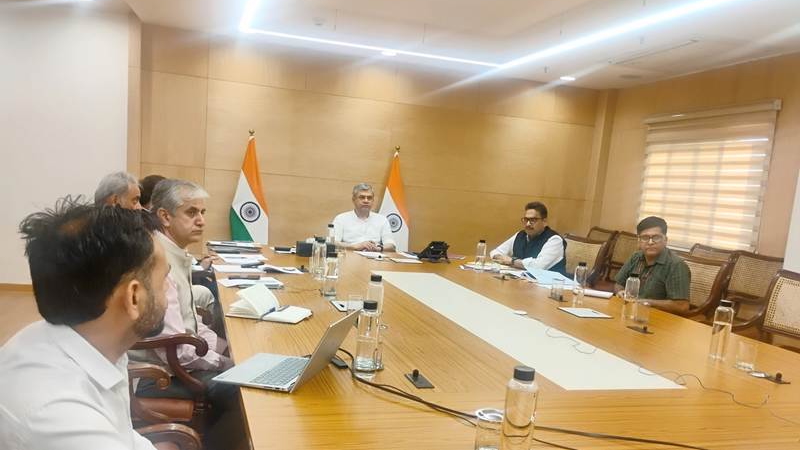
MUMBAI: Union minister of information & broadcasting Ashwini Vaishnaw stated that the media landscape is undergoing a significant shift due to the exponential growth of the creator economy. Speaking to representatives from approximately 20 national and regional media outlets on Saturday, he emphasised the fundamental changes occurring in content creation and its associated economy.
“The world of creators and their economy is going through a fundamental change. With the advent of technology, the old model is giving way to the new model, creating opportunities as well as challenges,” said Vaishnaw.
He highlighted how technology has enabled broader participation in content creation, noting, “Gone are the days when a large studio was necessary for producing content. Today, a creator from a remote village in Jharkhand or Kerala can produce high-quality content and garner millions of views.”

Vaishnaw mentioned the World Audio Visual & Entertainment Summit (Waves), scheduled to take place in Mumbai from 1-4 May, which has already received over 100,000 registrations. He explained that Waves aims to establish itself as a global platform for media and entertainment, similar to the role of Davos for economic policies. The summit will also recognize top innovators with awards for their contributions to the evolving global media and entertainment sector.
Leaders from various media organisations expressed their appreciation for the government’s initiative in conceptualizing Waves as a platform to connect policymakers, creators, industry leaders, technology companies, and start-ups.
Information and broadcasting secretary Sanjay Jaju welcomed the participants and emphasised the importance of collaborative dialogue in shaping the future of the media landscape. He underscored the ministry’s commitment to engaging with stakeholders across different platforms and acknowledged the active participation of media organizations in the lead-up to Waves 2025.
Vaishnaw reiterated that the creator economy is experiencing rapid growth and that prime minister Narendra Modi has acknowledged the contributions of creators to the economy and in promoting India’s soft power globally. He stated that Waves is intended to become a global connector for creators, buyers, and markets, facilitating scalable creative solutions.
Secretary Sanjay Jaju emphasized the significance of collective discussion in determining the future direction of the media industry and the ministry’s commitment to engaging with stakeholders.





I&B Ministry
Devinder Kumar appointed Prasar Bharati chief vigilance officer
Senior IOFS officer to serve three-year term with Level-13 pay scale
MUMBAI: The Centre has appointed Devinder Kumar as the chief vigilance officer of Prasar Bharati, formalising a key oversight role within India’s public broadcasting network.
The appointment was cleared through an official order issued by the Department of Personnel and Training under the Ministry of Information and Broadcasting. Kumar, a senior Indian Ordnance Factory Service officer, will initially serve a tenure of three years or until further government orders, whichever comes earlier.
As chief vigilance officer, Kumar will be responsible for overseeing vigilance and compliance functions within Prasar Bharati, ensuring transparency and accountability across the organisation’s operations.
The role carries a Level-13 pay scale under the central government structure, translating to a salary range between Rs 1,23,100 and Rs 2,15,900. The compensation aligns the position with other senior administrative roles across government departments.
Kumar’s appointment follows due process, including a recommendation from the Central Vigilance Commission, which vets candidates for such critical oversight positions.
Currently serving under the Department of Defence Production, Kumar has been directed to be relieved of his existing duties with immediate effect to assume his new role.
The move comes as Prasar Bharati continues to strengthen its governance framework, with the CVO position playing a central role in maintaining institutional integrity. Kumar’s appointment is expected to bolster internal oversight at a time when accountability remains firmly in focus across public sector organisations.







