News Broadcasting
Industry’s in trouble, but there’s hope


MUMBAI: CNBC‘s “The Entertainment Industry: Taking The Big Leap” brainstorming session held on 19 December in Mumbai, resulted in a lot of soul-searching amongst industry experts and heated debates involving the reasons for 2002 being billed as the year of ‘no-show‘ business.
The interactive session was aimed at generating interest in CNBC‘s new programme That‘s Entertainment. The programme is targeted at the ‘behind-the-scenes‘ happenings and the economics (should we say hard-hit) of the Rs 15 billion media industry.
The panel on the dais had CNBC Mumbai bureau chief Govindraj Ethiraj and his colleague Anuradha Sengupta moderating the discussion and inviting comments from an illustrious gathering comprising of SET India CEO Kunal Dasgupta, IDBI chairman and MD P P Vora, Reliance Entertainment chairman All India Film Producers‘ Council president Amit Khanna, UTV chairman Ronnie Screvwalla, ENIL MD A P Parigi, Shringar Films‘ director Shravan Shroff and Nimbus Communication chairman and MD Harish Thawani.

|
The leaders in the business of entertainment rubbed shoulders with entertainment analysts, celebrities and superstars as the CNBC team sought insights and understanding on what makes the industry tick. The audience comprised of an illustrious gathering of people from various fields such as the film industry‘s producers, distributors, financiers; the TV producers, programmers, actors; radio a KPMG executive director Rajesh Jain kicked off the proceedings with a presentation on the mechanics of the entertainment industry. There were contrasting views offered by the panelists and the members of the audience on several issues: whether the Indian film industry scene was as bad as was perceived; whether the Hindi film industry deserves the attention it gets; whether creativity was being killed by money-minded producers; whether the content creators were in sync with the audience preferences; piracy and pilferage; the alternative streams of entertainments such as gaming, animation, live entertainment and home videos. Finally UTV‘s Biren Ghose summed up the feelings by saying that the entertainment industry must give adequate importance to the four key elements of the entertainment industry: the structural capital, the human capital, the intellectual capital and the customer capital. |
 nd music industry head-honchos; and the media. Offering their views were film directors and producers Ramesh Sippy, Mukesh Bhatt and Manoj Desai; actor-producer Shekhar Suman; UTV COO of animation Biren Ghose; Saregama vice president Atul Churamani; TAM India CEO L.V Krishnan; TV programming executives Rekha Nigam and Nupur Asthana; and indiantelevision.com‘s Anil Wanvari.







News Broadcasting
News18 India launches Command Centre war explainer with Arya
New show shifts from debates to decoding global conflicts and impacts
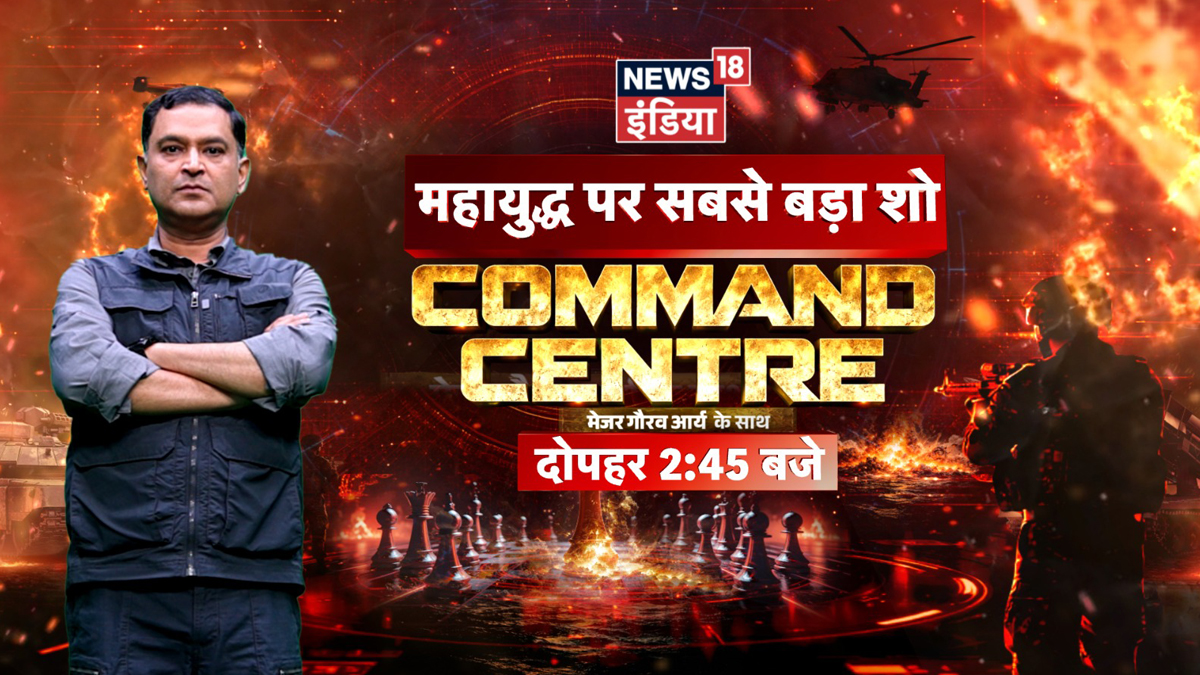
MUMBAI: News18 India has rolled out a new war-focused programme, Command Centre, featuring Gaurav Arya, as it looks to offer viewers a sharper, more grounded take on global conflicts amid rising tensions in West Asia.
Positioned as an “insider war room”, the show moves away from conventional panel debates and instead focuses on explaining military developments, decoding strategy and connecting global events to their everyday impact, from fuel prices to economic shifts.
The format leans heavily on visuals and data. The studio has been designed like a command hub, complete with large LED war maps, real-time graphics and an alert system to track developments as they unfold.
At the centre of it all is Arya, who brings his military background to simplify complex war strategies for viewers. His signature line, “Seedhi baat samjhiye”, anchors the show’s promise of clarity over noise.
News18 India managing editor Jyoti Kamal said, “Command Centre, featuring Major Gaurav Arya is designed to deliver accurate insights and a clear perspective on how evolving conflicts impact everyday life, from household budgets to national security. With expert voices analysing every development in real time, the show goes beyond headlines to decode what’s happening now, what it means, and what could come next.”
Echoing the intent, Gaurav Arya added, “In times of war, confusion is the biggest threat. With News18 India’s Command Centre, we are bringing viewers inside the war room, decoding strategies, tracking every escalation, and explaining, in the simplest terms, what it means for India and for every household. Seedhi baat samjhiye, this is where you understand not just what is happening, but what happens next.”
The weekday show will air in the afternoon slot and will also feature Gaurav Shukla, adding to its editorial depth.
With its mix of analysis, visuals and a clear focus on impact, the show reflects a broader shift in news consumption. Viewers are no longer just watching events unfold, they are looking to understand what those events mean for them.






