News Broadcasting
Indias TV NOW selects GrassValley Solutions to launch first HD news channel

NEW DELHI: The new Malayalam news television channel TV Now is launching a fully-integrated high definition news production using GrassValley.
Operated by the Kerala Chamber of Commerce and Industry, it will deliver programming in high definition to forty million viewers across Kerala. “As the only business consortium to launch a news channel in India, it is important for us to have the most modern technologies in place to reach out to our millions of viewers in a timely and efficient manner”, said TV Now’s Bhagath Chandrashekhar.

TV Now’s new infrastructure will include three GV director non-linear live production systems, the GV STRATUS nonlinear media production tools, nine LDX Flex HD Studio cameras, a Trinix NXT digital video routing switcher, a K2 Summit 3G transmission servicer, EDIUS non-linear editing software, and HD K2 SAN storage. These solutions will enable TV Now to get news to air more quickly and without any interruptions, which is crucial to the smooth running of an operation that airs 24×7.
“With GrassValley’s powerful tool set at our fingertips, we will have an integrated platform that combines production tools and asset management a TV Now so that we can confidently sign-on with state-of-the-art production processes,” said KCCI chairman K N Marzook. “With TV Now, we aim to create an exceptional TV viewing experience and the only way to do that is with superior technology in place”, he added.
“The broadcast market in India is currently going through a period of exciting change and is a vital part of GrassValley’s pathway,” said GrassValley’s Asia Pacific VP Stephen Wong. He said it also marks the first time that GV Director and GV STRATUS will be deployed in India and signifies a powerful step for GrassValley’s presence in India’s growing broadcast market.






News Broadcasting
Kamlesh Singh receives Haldi Ghati Award from MMCF
India Today Group editor honoured for three decades of journalism at Udaipur ceremony.
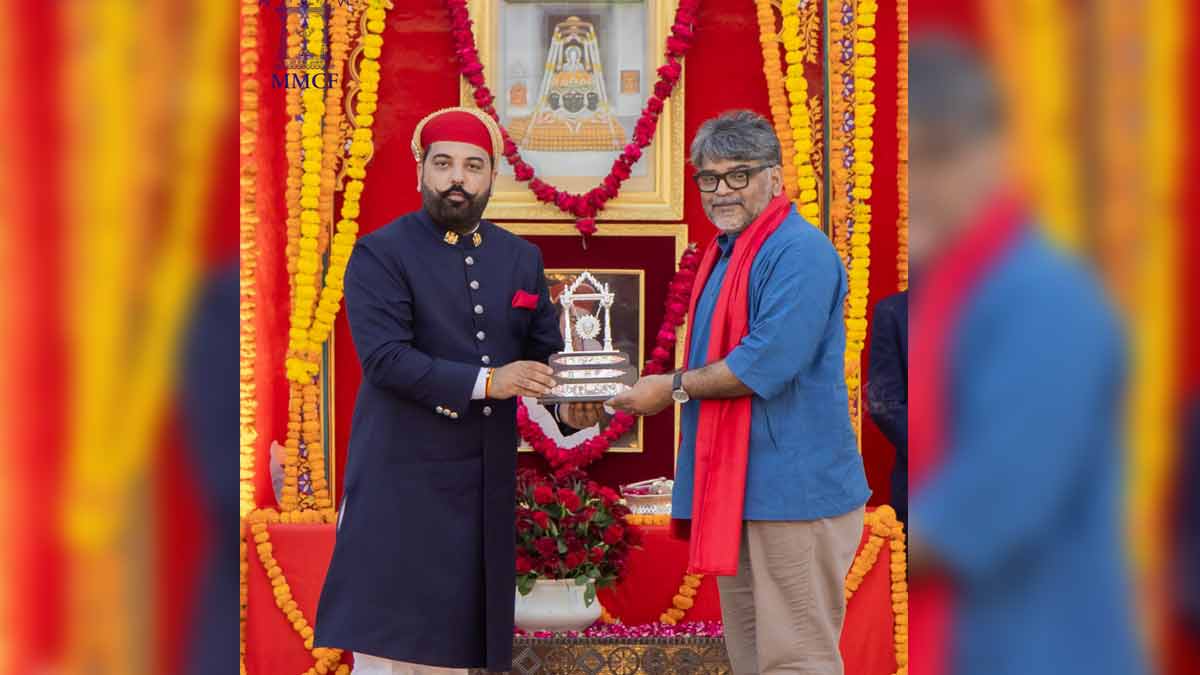
MUMBAI- Kamlesh Singh just turned a lifetime of sharp words into a shiny shield because when journalism wakes up a society, even the Maharana of Mewar wants to pin a medal on it.
The Maharana of Mewar Charitable Foundation (MMCF) conferred its prestigious Haldi Ghati Award on Kamlesh Singh, a senior editor at the India Today Group, during a ceremony in Udaipur on 15 March 2026. The national award, instituted in 1981-82, recognises “work of permanent value that initiates an awakening in society through the medium of journalism.”
Singh, who leads several editorial initiatives including Aaj Tak Radio, the Teen Taal community and The Lallantop, was presented the honour by Lakshyaraj Singh Mewar, Managing Trustee of MMCF. The citation highlighted his three decades of contributions to Indian media, innovations in digital journalism, mentoring young reporters, and his popular podcast persona “Tau” on Teen Taal, which fosters thoughtful public discourse.
The Haldi Ghati Award, named after the historic Battle of Haldighati symbolising valour and resilience, is one of four national awards given annually by MMCF. Past recipients include Tavleen Singh, Piyush Pandey and Raj Chengappa.
Other honourees this year included Padma Vibhushan Pt Hari Prasad Chaurasia, Vedamurti Devvrat Rekhe, Treeman of India Marimuthu Yoganathan, Vir Chakra Capt Rizwan Malik, and US-based researcher Molly Emma Aitken, who received the Colonel James Tod Award for contributions to understanding Mewar’s spirit and values.
In an era where headlines often shout louder than substance, the MMCF quietly reminded everyone that real journalism isn’t about noise, it’s about the quiet, persistent work that stirs society awake, one thoughtful story at a time.