News Headline
‘India’s Space Odyssey’ is the story of ordinary people doing extraordinary work: director Pria Somiah

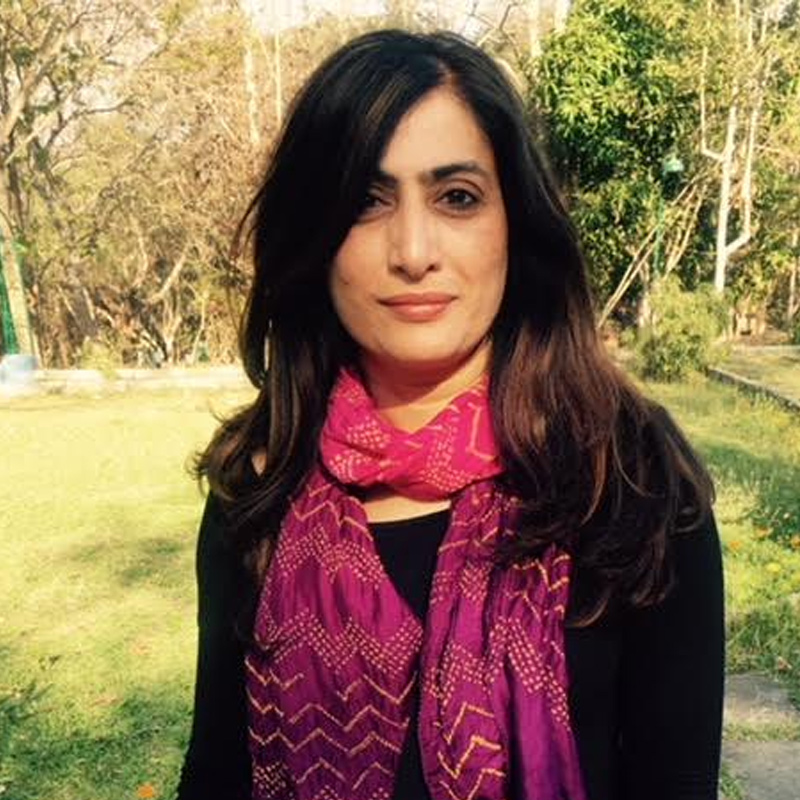
Mumbai: ‘India’s Space Odyssey’, the all-new discovery+ Original currently steaming exclusively on the platform celebrates the 60-year-long successful journey of India’s space programme pioneered by the Indian Space Research Organisation (Isro).
Produced by Miditech Studios and narrated in Hindi by actor and space enthusiast R Madhavan, the documentary depicts how this mission started by Dr Homi Bhabha and Dr Vikram Sarabhai was taken forward by their able successors including the former president of India Dr APJ Abdul Kalam, Prof Satish Dhawan, and Dr G Madhavan Nair.
The documentary captures landmark achievements of India’s Space Programme which help in understanding the tough circumstances under which Isro scripted its success story beginning with SLV3, and more recently the ‘Chandraayan’ and ‘Mangalyaan’ missions as well as the Organisation’s most ambitious ‘Gaganyaan’ programme which will be India’s first manned mission to space.

However, beyond the triumph and celebration is a story of sheer grit and determination that kept the mission going in the face of tribulations, limitations as well as condescension from certain quarters, and this is what director Pria Somiah intended to capture in the 48-minute-long documentary.
Somiah is an award-winning film-maker, having won a Green Oscar and several accolades at New York Festivals World’s Best Television & Film Award, UNICEF Asia Pacific Child Rights Award – Hanoi, International Gold Panda Award, Sichuan TV Festival, Cine Golden Eagle Awards, USA and World Media Festival for documentaries such as ‘Mangalyaan: India’s Mission to Mars’, ‘Megafloods: Kerala’, ‘Mumbai Attack’, ‘IC 814 Hijack’, ‘Silent Screams: India’s fight against rape’, ‘Megastructures: Mumbai’s Chattrapati International Airport’, ‘Skeleton Lake’, ‘Inside: Asia’s Largest Prison’, ‘India’s Game Changers’, ‘Undercover Asia: Girls for Sale’, and ‘Freedom to Love (Honour Killings)’.
As the executive director at Miditech Studios, the television production company with which she has been associated for over 28 years, Somiah is responsible for content strategy and business development for a variety of content formats for internet platforms and international broadcasters such NatGeo, Discovery Channel, BBC World, Disney, Turner, UN Organisations, as well Indian Government Ministries, to name a few.
In this candid interview, Somiah takes us through the making of ‘India’s Space Odyssey’ as well as the thrill and challenges of documenting monumental events that strengthened India’s resolution of becoming a leader in space exploration.
Edited Excepts
On the idea behind India’s Space Odyssey
With new and ambitious missions like Gaganyaan being planned, and the encouragement of the private sector to enter Space Tech, India’s Space program is a highly topical issue. We felt the story of how we got here is an important one to tell.
While documenting the Mars Mission for NatGeo a few years ago, I was involved with a lot of research during which I learnt that 1962 was when India’s space programme actually started and it’s going to be 60 years in 2022. Because this coincided roughly with 75 years of the country’s independence, it was also the perfect timing I thought. And that’s when we pitched the idea of doing a commemorative film to Discovery.
On building the narrative
With India’s Space Odyssey we wanted to put out not just facts, but a holistic understanding of how events unfolded at Isro through national and global events that impacted our space programme, and other significant factors such as India’s policy of non-alignment. So we built the narrative around three themes – scientific milestones, the impact of global events, and then visualising all of this through archive material, biographies, photographs etc.
EMBED: ISO Poster
On the process and elements involved
We waded through archive material from different sources in India as well as Nasa and Roscosmos and interviewed experts from Isro, Nasa, and Glavkosmos to get an Indian and international perspective of how different events unfolded; a sort of anecdotal telling in parts.
Asif Siddiqi, the space historian, and professor at Fordham University, New York, helped context the impact of global politics on India’s space program.
As a storytelling device, hand-drawn animation was used to bring alive a moment in history. These were created by well-known animation director Prakash Moorthy. Especially composed music by Shantanu Sudame set the mood of events as they unfolded. 3D animation done by Purple Monkey was used to visualise the big missions to Moon and Mars. The script was written by Joshua Whitehead.
On the biggest challenge of telling this story
It’s a challenge to tell the story of 60 years in a one-hour documentary so we chose turning points in the history of India’s Space program, e.g., the choice of Thumba, Kerala, as a Rocket launch site and how it was officially designated a UN International Scientific Facility in 1968. This got the world’s space scientists to Kerala and Indian scientists greatly benefited from those interactions as one saw these relationships grow over the decades to come.
Another turning point came with the ability to launch our own satellites. The SLV 3 story, with its initial problems and subsequent success, exemplifies the dedication and innovative, never-say-die spirit of Isro’s scientists.
On the most elating experience while making the documentary
Through this documentary, we have tried to capture the spirit of Isro and the culture of critical analysis it has nurtured over the years where even a junior scientist can question the project director.
These are people without fancy degrees; they come from provincial engineering colleges and have really worked their way up. They have grown within the Isro system working with indigenous technology. The most well-known example is that of one of Isro’s most senior scientists and directors – SATCOM, TK Anuradha who began as a graduate. ‘India’s Space Odyssey’ is thus the story of ordinary people doing extraordinary work.
On the role of media in India’s Space Diplomacy
Whether it’s putting up a fleet of satellites or sending a mission to Mars, these are huge scientific endeavours involving mindboggling complexity. India’s space story is pretty unique in that, unlike certain other organisations we did not have large resources at our disposal. Despite these challenges we are among the top six space agencies in the world today – a victory considered impossible by some around the world.
So, yes, these stories need to be told. After IT, space tech is one of our strengths, and now with the Prime Minister encouraging private players, it will definitely emerge as a big growth area for India. The media has a very big role to play in documenting successes like these.





NEW DELHI: Hamdard Laboratories gathered a cross-section of India’s achievers in New Delhi on Friday, handing out the Hakeem Abdul Hameed Excellence Awards to figures who have left their mark across healthcare, education, sport, public service and the arts.
The ceremony, attended by minister of state for defence Sanjay Seth and senior officials from the ministry of Ayush, celebrated individuals whose work blends professional success with a sense of public purpose. It was as much a roll call of achievement as it was a reminder that influence is not measured only in profits or podiums, but in people reached and lives improved.
Among the headline awardees was Alakh Pandey, founder and chief executive of PhysicsWallah, recognised for turning affordable digital learning into a mass movement. On the sporting front, Arjuna Awardee and kabaddi player Sakshi Puniya was honoured for her contribution to the game and for pushing women’s participation onto bigger stages.
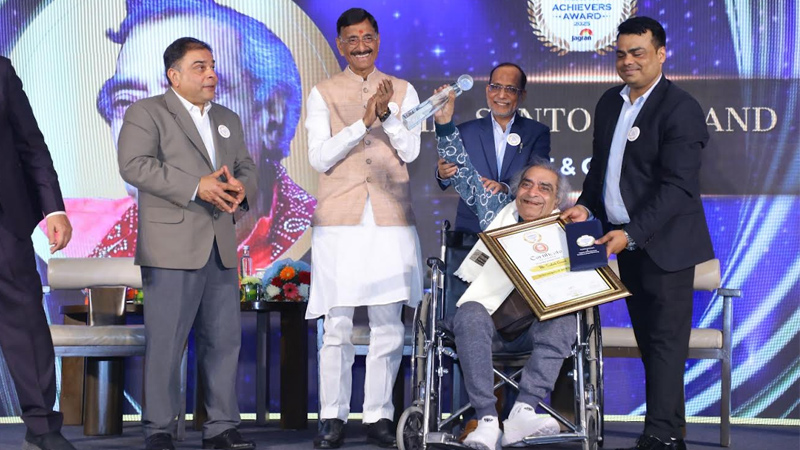
The cultural spotlight fell on veteran lyricist and poet Santosh Anand, whose songs have echoed across generations of Hindi cinema. At 97, Anand accepted the honour with characteristic humility, reflecting on a life shaped by perseverance and hope.
Healthcare honours spanned both modern and traditional systems. Manoj N. Nesari was recognised for strengthening Ayurveda’s place in national and global health frameworks. Padma shri Mohammed Abdul Waheed was honoured for his research-backed work in Unani medicine, while padma shri Mohsin Wali received recognition for his long-standing contribution to patient-centred care.
Education and social development also featured prominently. Padma shri Zahir Ishaq Kazi was honoured for decades of work in education, while former Meghalaya superintendent of Police T. C. Chacko was recognised for public service. Goonj founder Anshu Gupta received an award for his dignity-centred rural development initiatives, and the Hunar Shakti Foundation was honoured for empowering women and young girls through skill development.
The Lifetime Achievement Award went to former IAS officer Shailaja Chandra for her long career in public healthcare and governance, particularly in the traditional systems under Ayush.
Speaking at the event, Hamdard chairman Abdul Majeed said the awards were a tribute to those who combine excellence with empathy. “These awardees reflect Hakeem Sahib’s belief that healthcare, education and public service must ultimately serve humanity,” he said.
Minister Seth struck a forward-looking note, saying India’s young population gives the country a unique opportunity to become a global destination for learning, health and wellness by 2047.
The ceremony also featured the trailer launch of Unani Ki Kahaani, an upcoming documentary starring actor Jim Sarbh, set to premiere on Discovery on 11 February.
Instituted in memory of Unani scholar and educationist Hakeem Abdul Hameed, the awards have grown into a national platform that celebrates those building a more inclusive and resilient India. For one evening at least, the spotlight was not just on success, but on service with substance.