News Headline
India’s pay TV reached a breaking point in 2025

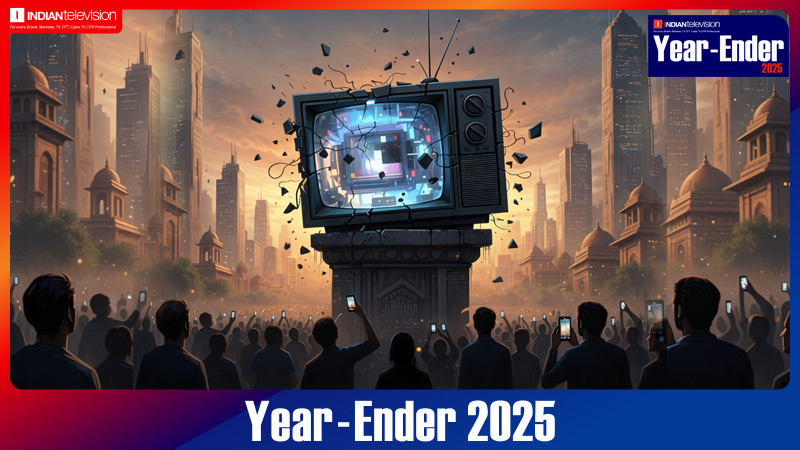
MUMBAI: Lord Yama is keeping a close watch on India’s pay TV’s door, though from a distance, India’s pay-television industry, once the swaggering overlord of 151 million households, spent 2025 watching its empire crumble. By year’s end, the subscriber base had shrivelled to a mere 111 million, a spectacular haemorrhaging of 40 million customers since 2018. The diagnosis? Terminal disruption, with over-the-top platforms administering the final blow.
The numbers tell a tale of slow-motion carnage. Active pay-DTH subscribers slumped to roughly 56.9 million by March 2025, down from a swaggering 70 million at their 2019 peak, according to the Telecom Regulatory Authority of India. Each quarter brought fresh bloodletting. Cable television, once the sturdy backbone of Indian living rooms, fared no better, shedding subscribers like dead skin and haemorrhaging an estimated 577,000 jobs since 2018, according to a study by Ernst & Young and the All India Digital Cable Federation.
Yet obituaries may be premature. Even as viewers fled to Netflix, Amazon Prime Video and the homegrown behemoth JioHotstar, pay TV still commanded India’s largest video segment in 2025. The beast is wounded, not dead, just diminished, desperate and searching for a lifeline.

Revenues proved stickier than subscribers. Ratings agency ICRA forecast a genteel 1-3 per cent contraction in industry revenue for FY2026, hardly a bloodbath, thanks to rising average revenue per user on premium and bundled packages that helped cushion the blow. Private DTH operators saw revenue declines moderate to a manageable 3-4 per cent in FY26, down from steeper drops in previous years, as they pivoted strategically into broadband bundles and slashed subsidy spending.
But margins told a grimmer story. Industry-wide pay-TV margins compressed to roughly 23-25 per cent, with DTH operators still breathing easier at 33-35 per cent whilst multi-system operators wheezed along at an anaemic 6-8 per cent. A survey of over 28,000 local cable operators painted a portrait of quiet desperation: 93 per cent reported their monthly take-home income had declined since 2018, whilst nearly half saw subscriber numbers plunge by over 40 per cent.
The golden age of the remote control is flickering out as India’s legacy broadcasters face a high-definition headache. Whilst the overall Media & Entertainment sector climbed to a sturdy Rs 2.7 trillion, the traditional “idiot box” is losing its grip on the wallet. Pay TV homes shed roughly 6 million subscribers this year alone, caught in a pincer movement between the budget-friendly allure of DD Free Dish and the high-speed charm of Connected TV. Even the heavyweights felt the static: giants like Zee and Sony reported double-digit dips in ad revenue as FMCG brands migrated their budgets from the commercial break to the social media feed.

The plot thickened this year with the blockbuster merger of JioCinema and Disney+ Hotstar into the “JioHotstar” behemoth, a digital titan now commanding half a billion pairs of eyes. This shift turned the living room into a digital battlefield where Connected TV users surged to nearly 130 million. Broadcasters scrambled to rewrite their scripts, frantically pivoting toward “Hybrid Monetization,” desperately trying to trade traditional analogue dimes for digital dollars. In the 2025 landscape, it’s clear that whilst Indians are watching more content than ever, they’re increasingly unplugging the cable to stream their own path forward.
GlobalData projects that India’s combined telecom and pay-TV services revenue will climb from $46.3 billion in 2024 to $61.9 billion by 2029. The gains belong entirely to mobile data and fixed broadband. Pay TV? It’s on the slide, expected to decline steadily as viewers abandon satellite dishes for smartphone screens and smart televisions.
Subscription video-on-demand spending surged 11 per cent in 2024 to Rs 10,060 crore, whilst subscriptions climbed 15 per cent to reach 126 million, roughly 45 per cent of Indian households, according to Futuresource. The star attraction? JioHotstar, the Frankenstein’s monster born from February 2025’s merger of JioCinema and Disney+ Hotstar, which now commands a staggering 56 per cent share of premium video-on-demand consumption, dwarfing Amazon’s 25 per cent and leaving Netflix in the dust.
India generated a jaw-dropping 21.5 billion hours of premium VOD viewing in the second quarter of 2025 alone, according to Media Partners Asia: more than the rest of Asia combined. Content investment surged to $6.2 billion in 2024, up 19 per cent year-on-year, powered by sports rights and regional programming. By 2029, MPA projects that streaming investment will overtake pay TV, climbing from 31 per cent of content spend in 2025 to 38 per cent in 2029, whilst television’s share collapses from 59 per cent to 51 per cent.
The writing on the wall couldn’t be clearer if it were spray-painted in neon: India’s entertainment future belongs to broadband, bundling and binge-watching.

Perhaps the year’s most seismic shift came not from subscribers or streamers but from the boardroom. In November 2024, Reliance Industries and Walt Disney Company completed their $8.5 billion merger, birthing JioStar: India’s largest media and entertainment colossus, controlling over 100 television channels and commanding more than 50 million streaming subscribers across its newly minted JioHotstar platform.
The deal consolidated Reliance’s Viacom18 and JioCinema with Disney’s Star India and Disney+ Hotstar, creating an entertainment juggernaut that produces more than 30,000 hours of content annually and reported revenues of approximately Rs 26,000 crore for the fiscal year ending March 2024. Nita Ambani chairs the venture, with media veteran Uday Shankar as vice-chairman. Reliance pumped Rs 11,500 crore in growth capital into the beast, securing a combined 63.16 per cent stake (16.34 per cent directly, 46.82 per cent through Viacom18), whilst Disney retained 36.84 per cent.
By November 2025, Reliance completed the final piece of the puzzle, merging Star Television Productions (owner of the iconic ‘Star’ brand) directly into JioStar, simplifying ownership and consolidating one of Indian television’s most recognisable marques under a single roof.
The implications are staggering. JioStar now controls marquee cricket rights, dominates Hindi general entertainment channels (Star Plus, Colors), commands regional powerhouses (Star Maa in Telugu, Sun TV in Tamil, Asianet in Malayalam), and sits atop both linear television and digital streaming. Competition authorities fret about content homogenisation and editorial independence. Rivals whisper about market concentration. But for now, JioStar bestrides the landscape like a colossus.
Whilst pay TV as a whole bleeds subscribers, individual channels still command loyal followings. As of March 2025, India boasted 333 satellite pay-TV channels, roughly 36 per cent of all permitted satellite channels, with Star India (now JioStar) commanding 103 channels, nearly one-third of all pay offerings, according to TRAI data. Zee Entertainment followed with 43 channels, Sun TV Network with 31, and Network18 with 18.
In viewership sweepstakes, free-to-air channel Dangal topped the overall charts in early 2025 with 2,638,000 average minute audience, followed by Star Plus (2,533,000), Star Maa (2,385,000), Sun TV (2,155,000) and Sony SAB (1,890,000), according to Broadcast Audience Research Council data. Regional juggernauts dominated their territories: Star Maa led Telugu markets, Zee Kannada topped Kannada viewership, Asianet commanded Malayalam audiences, whilst Sun TV and Star Vijay battled for Tamil eyeballs.
In Hindi news, the ratings race resembled a contact sport. News18 India grabbed top slot in April 2025 with 72,878,000 AMA, narrowly edging out Aaj Tak at 70,562,000, whilst Republic Bharat, Zee News and others scrapped for third place. The anchors (Kishore Ajwani, Amish Devgan, Rubika Liyaquat) turned nightly news into shoutathons, packaging politics, pop culture and neighbourhood gossip with tabloid punch.
Star Sports 1 Hindi remained the sports king, commanding over 2.6 million weekly viewership, fuelled by cricket’s stranglehold on Indian hearts. But even sports channels couldn’t escape the streaming onslaught: JioStar’s control of Indian Premier League streaming rights on JioHotstar proved far more valuable than linear broadcast.
Regulation remained centre stage throughout 2025. DTH operators lobbied furiously for licence-fee parity with cable and OTT platforms (neither of which face similar fees) arguing that the imbalance crushes cashflow and distorts competition. Their pleas fell largely on deaf ears.
Meanwhile, broader reforms floated about, including proposals to boost audience measurement panel sizes and modernise television rating point systems to capture connected TV and OTT viewing. Such changes could redraw commercial landscapes for broadcasters and distributors alike, though tangible action remained elusive.
TRAI reported one headend-in-the-sky operator with over one million subscribers amongst major multi-system operators at end-March 2025: a sign that bundled, high-quality regional offerings retain pockets of demand in select urban markets. But HITS platforms remain niche curiosities rather than mainstream challengers.
The DTH oligopoly remained largely intact, albeit besieged. Tata Play clung to leadership with roughly 31-32 per cent market share, followed closely by Bharti Telemedia’s Airtel Digital TV at 30 per cent, whilst Sun Direct TV and Dish TV India split the remainder. But leadership means little when the kingdom shrinks.
Tata Sons received Competition Commission of India clearance in March 2025 to acquire an additional 10 per cent stake in Tata Play, raising its ownership to 70 per cent: a move signalling consolidation ambitions that could potentially reshape satellite distribution. Rumours swirled about a possible Tata-Airtel merger to create a $1.6 billion powerhouse, though nothing materialised by year’s end.
Dish TV, battling churn and margin pressure, phased out set-top-box subsidies and diversified into OTT aggregation and smart device ecosystems, pivoting from pure-play satellite provider to hybrid entertainment platform.
Whilst DTH operators nurse their wounds, cable television (the OG of Indian home entertainment) faces an even grimmer predicament. Multi-system operators, once the undisputed kings of distribution, watched their fiefdoms crumble as subscribers fled to streaming platforms and regulatory burdens multiplied.
The MSO landscape remains brutally concentrated. India’s top 15 MSOs control roughly 78 per cent of the cable market despite representing less than 1.5 per cent of the 1,143 operational MSOs, according to TRAI data. This creates a two-tiered system: a handful of giants with national or multi-state reach, and hundreds of smaller, regional operators struggling for survival.
GTPL Hathway emerged as India’s largest digital cable MSO by 2025, commanding 9.5 million active subscribers across 1,500 towns in 26 states. The Gujarat-based operator (offering 950-plus channels including 95 HD channels) pivoted aggressively into broadband services, adding 1.05 million broadband subscribers and posting Rs 3,507 crore in revenue for FY25, up 8 per cent year-on-year.
In November 2025, GTPL launched a game-changing move: GTPL Infinity, a headend-in-the-sky platform delivering approximately 800 channels (including 100 HD) via satellite across India. Powered by one of the world’s largest C-band teleport setups in Ahmedabad, the platform allows local operators to go live within 24 hours with minimal investment: a direct challenge to DTH’s satellite monopoly. The company’s broadband arm generated Rs 545.6 crore in FY25, signalling its transformation from pure-play cable operator to converged entertainment provider.
Den Networks, owned 78.62 per cent by Reliance Industries since 2018-19, claims to be India’s largest cable distribution company by subscriber count, reaching 13 million households across 450-plus cities in 13 states. However, industry observers note that “subscriber count” metrics can be misleading: active paying subscribers often number far fewer. Den offers over 450 channels and up to 45 HD channels, along with Den TV+, an OTT platform exclusively for its cable and broadband subscribers offering 130 live channels and 2,500-plus movies.
The Delhi-NCR stronghold operator has been pivoting hard into broadband, having acquired 106,000 broadband subscribers at the time of Reliance’s acquisition. Den’s focus on the economically important Hindi-speaking markets belt gives it strategic importance despite margin pressures.
Hathway Cable & Datacom, also majority-owned by Reliance (71.95 per cent stake acquired in 2018-19 for Rs 4,120 crore combined), operates across Delhi, Karnataka, Madhya Pradesh, Maharashtra, Rajasthan, Tamil Nadu, West Bengal and Telangana. With approximately 11 million subscribers (though wireless broadband penetration remains at roughly 1.77 million households), Hathway was the first company to provide internet using CATV networks in India and the first cable operator to launch digital platforms in 2006.
Hathway’s historical significance is undeniable: it launched India’s first digital video recorder services in 2009 and pioneered cable broadband internet. But by 2025, the company found itself playing catch-up in the convergence game, bundling broadband with cable TV in a desperate bid to retain relevance.
Siti Networks, once India’s largest MSO with 11.13 million active subscribers in 2019, has seen its fortunes decline sharply. The Essel Group-promoted operator (though the group now holds merely 6.1 per cent stake) operates across 15 states with 15 digital head-ends and over 33,000 kilometres of optical fibre and coaxial cable. By late 2025, Siti’s market capitalisation had shrunk to Rs 34 crore, with shares trading at Rs 0.39: a far cry from its glory days.
Siti attempted innovation through infrastructure sharing, inking a landmark deal with NxtDigital’s HITS platform to deliver signals via satellite to local cable operators in markets where terrestrial networks proved too costly. The company also launched Watcho, an OTT streaming platform, and introduced Next Gen Siti PlayTop Magic Android TV set-top boxes. But these moves felt more like life support than revival.
Fastway Transmissions, a joint venture between Gurdeep Singh and Digicable Network India operating primarily in north India (Punjab, Himachal Pradesh, Haryana, Chandigarh), carved out a niche in tier-two and tier-three cities. Offering cable TV across 140 cities and broadband across 21 cities, Fastway deployed over 7,000 kilometres of underground cable network and 1,000-plus kilometres of underground fibre in cities like Amritsar, Jalandhar, Ludhiana, Bathinda and Chandigarh.
The operator launched a hybrid Android TV set-top box in September 2022: the FW+ Ultra 4K STB with Dolby Vision and Dolby Audio, powered by Netplus Broadband, bundling unlimited internet, premium OTT content and voice calls starting at Rs 699. It’s the classic MSO playbook: if you can’t beat streaming, bundle it.
Smaller regional players like Asianet Satellite Communications (Kerala), Kerala Communicators Cable, Tamil Nadu Arasu Cable TV Corporation (TACTV), and UCN Cable Network occupy specific geographic niches but lack the scale to compete nationally. The All India Digital Cable Federation (whose members include GTPL Hathway, Hathway Cable & Datacom, Den Networks, Fastway, Siti Networks, Nxt Digital, Asianet and Kerala Communicators) has been lobbying furiously for regulatory relief, warning that over 100 million “TV-dark homes” remain unconnected whilst existing operators bleed subscribers and revenues.
The cable MSO sector’s survival strategy is brutally simple: bundle broadband with TV, slash costs through infrastructure sharing, chase rural markets via satellite platforms, and pray that convergence saves you before streaming kills you. By 2025, it’s unclear which prayer gets answered first.
Perhaps 2025’s most consequential shift: pay TV is no longer about TV alone. The economics of entertainment now lean sharply toward integrated broadband bundles, where television becomes the sweetener in a larger connectivity package.
Telecom-TV bundles from Airtel, Jio and various ISPs blur the line between OTT and DTH. IPTV customer bases have quadrupled in recent periods, offering live TV plus internet on a single bill: potentially a lifeline for legacy players smart enough to pivot. Connected TV penetration jumped from 30 million households in 2024 to a projected 76 million by 2030, according to industry forecasts.
In many Indian households, broadband is now the lead dog: pay TV merely the tag-along. Rising consumer preference for OTT, mobile viewing and on-demand content continues to bite chunks from linear’s share. DTH operators increasingly peddle hybrid entertainment ecosystems that marry satellite delivery with OTT and smart TV experiences. Devices blending linear and broadband streaming are strategic priorities, as are partnerships for curated OTT content bundles to stanch subscriber bleeding.
Interactive tools, voice-controlled user interfaces and better recommendation engines are creeping into pay-TV boxes and apps, whilst IPTV options gain traction as operators chase convergence. But these are defensive manoeuvres by a besieged industry, not bold offensive strikes.

Yet turn off the metro noise and head inland: linear television is alive, kicking and very much holding the remote in tier-two, tier-three, tier-four towns and rural India. Whilst smartphones have stolen youth attention spans, free and pay TV continue to dominate the family screen: cheap, dependable and habit-forming.
The real muscle lies with free television. DD Free Dish and free-to-air cable channels have become the great levellers, delivering movies, soaps, news and devotion at a one-time cost. For millions of rural and small-town homes, free TV is not a downgrade: it is the default. Zero monthly bills trump fancy apps every time.
Pay TV, meanwhile, still packs punch in tier-two and tier-three markets. Cable and DTH remain the preferred choice for households hooked on flagship Hindi GECs, regional heavyweights, kids’ fare and, above all, live sport. Price hikes and NTO rejigs have dented ARPUs, but they have not killed the habit. Families grumble, then pay up, especially during cricket season.
Viewing patterns are starkly split. Rural and tier-four India runs on free TV. Tier-three towns mix free and paid. Tier-two homes are hybrids: TV for the family, OTT for the youth. Metros may be binge-streaming, but Bharat is still appointment viewing country.
The pressure points are clear. Music channels have been YouTubed to death. English entertainment barely registers outside big cities. Younger viewers snack on short video. Yet soaps still summon daily audiences, mythologicals still pull crowds and election coverage still turns TV into prime-time theatre.
For advertisers, the lesson is blunt: linear TV remains the fastest way to buy scale beyond the top eight cities. Free TV delivers reach on the cheap; pay TV delivers stickiness and spenders. Ignore either, and brands risk vanishing from the world where most Indians still watch together.
By 2025’s close, Indian pay TV resembled less a stable plateau and more a declining one with isolated pockets of innovation and desperation. Subscribers are slipping; revenues are contracting; technological reinvention accelerates; regulatory reforms remain in play.
The battle lines are brutally clear: survive as a hybrid entertainment platform or risk obsolescence. Linear TV still reaches tens of millions, but the smart money is on broadband-centric ecosystems where live TV, OTT and interactive services converge. Market projections suggest modest growth ahead, but it’s the growth of a corpse kept artificially warm by bundling and broadband, not the vigorous expansion of a healthy organism.

In metro India, pay TV is sick. In tier-two cities, it’s morphing. In Bharat’s heartland (where free TV is backbone, pay TV is upgrade, and OTT is side dish) television is ageing loudly, confidently and very much in control of the remote.
2025 wasn’t the end of pay TV, just perhaps the beginning of its prolonged, undignified decline in the cities, and its stubborn, defiant survival in the hinterland. The dish on the roof may still point skyward in towns and villages, but in urban India, viewers have already looked elsewhere. The revolution won’t be televised, because in the metros, everyone’s already streaming it. But switch off the city lights, and television’s flickering blue glow still illuminates millions of living rooms where families gather, remotes in hand, habits intact, and streaming subscriptions unaffordable or simply unwanted.
The empire is crumbling at its edges whilst the heartland holds firm. That’s not a death: it’s a retreat. And in India, where metros bark but Bharat bites, a strategic retreat might just be survival.





NEW DELHI: Hamdard Laboratories gathered a cross-section of India’s achievers in New Delhi on Friday, handing out the Hakeem Abdul Hameed Excellence Awards to figures who have left their mark across healthcare, education, sport, public service and the arts.
The ceremony, attended by minister of state for defence Sanjay Seth and senior officials from the ministry of Ayush, celebrated individuals whose work blends professional success with a sense of public purpose. It was as much a roll call of achievement as it was a reminder that influence is not measured only in profits or podiums, but in people reached and lives improved.
Among the headline awardees was Alakh Pandey, founder and chief executive of PhysicsWallah, recognised for turning affordable digital learning into a mass movement. On the sporting front, Arjuna Awardee and kabaddi player Sakshi Puniya was honoured for her contribution to the game and for pushing women’s participation onto bigger stages.
The cultural spotlight fell on veteran lyricist and poet Santosh Anand, whose songs have echoed across generations of Hindi cinema. At 97, Anand accepted the honour with characteristic humility, reflecting on a life shaped by perseverance and hope.
Healthcare honours spanned both modern and traditional systems. Manoj N. Nesari was recognised for strengthening Ayurveda’s place in national and global health frameworks. Padma shri Mohammed Abdul Waheed was honoured for his research-backed work in Unani medicine, while padma shri Mohsin Wali received recognition for his long-standing contribution to patient-centred care.
Education and social development also featured prominently. Padma shri Zahir Ishaq Kazi was honoured for decades of work in education, while former Meghalaya superintendent of Police T. C. Chacko was recognised for public service. Goonj founder Anshu Gupta received an award for his dignity-centred rural development initiatives, and the Hunar Shakti Foundation was honoured for empowering women and young girls through skill development.
The Lifetime Achievement Award went to former IAS officer Shailaja Chandra for her long career in public healthcare and governance, particularly in the traditional systems under Ayush.
Speaking at the event, Hamdard chairman Abdul Majeed said the awards were a tribute to those who combine excellence with empathy. “These awardees reflect Hakeem Sahib’s belief that healthcare, education and public service must ultimately serve humanity,” he said.
Minister Seth struck a forward-looking note, saying India’s young population gives the country a unique opportunity to become a global destination for learning, health and wellness by 2047.
The ceremony also featured the trailer launch of Unani Ki Kahaani, an upcoming documentary starring actor Jim Sarbh, set to premiere on Discovery on 11 February.
Instituted in memory of Unani scholar and educationist Hakeem Abdul Hameed, the awards have grown into a national platform that celebrates those building a more inclusive and resilient India. For one evening at least, the spotlight was not just on success, but on service with substance.






