News Headline
India’s media machine is accelerating while the world slows to a crawl: PwC’s Rajesh Sethi

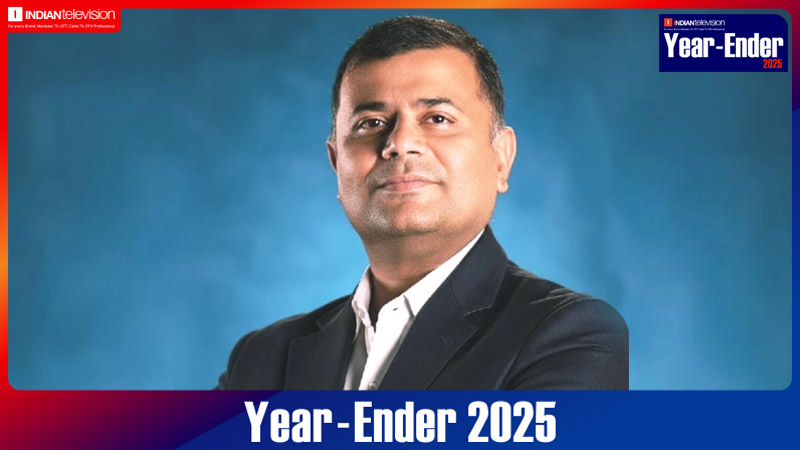
MUMBAI: India’s sports and media ecosystem is having a blockbuster year, but behind the flashy scoreboards lie silent battles for talent, revenue stability and technological readiness. Cricket continues to rule the nation, with women’s sport finally seizing its overdue spotlight, yet the real power shift is happening online.
Rajesh Sethi, partner and leader for media, entertainment and sports at PwC India, says the Women’s Premier League may have dazzled screens, but the sector’s biggest hurdles rarely make headlines. “Infrastructure gaps at smaller venues are holding back production quality and long-term talent pipelines,” he notes. Add piracy, soaring media rights fees and viewer fatigue from juggling multiple streaming subscriptions, and suddenly the golden age of sports broadcasting looks more like a high-wire act.
Advertising volatility has not helped either. The collapse in real-money gaming spending left cricket broadcasters scrambling to fill revenue gaps. Scheduling clashes have stretched resources thin. And as India demands more women in commentary boxes and broadcast crews, the professional talent pool has failed to keep pace, leaving broadcasters reliant on a tiny group of voices.

If there is a clear winner this year, Sethi says it is digital streaming. “OTT platforms drew record audiences with exclusive sports rights. Mobile-first access is fuelling adoption in urban and semi-urban markets, while features like multi-camera angles and live stats keep fans glued,” he explains. With advertisers chasing precision and younger fans ditching appointment TV, digital has become the new centre of gravity.
TV, though, is no relic. It remains the go-to for mass reach, especially in rural India, but investors are following the growth curves, not nostalgia. “Television is steady, but OTT is where the innovation and upside lie,” says Sethi.
Print, meanwhile, refuses to follow the global script. With a projected 3.3 per cent rise, the old ink-and-paper workhorse is thriving in India’s tier-2 and tier-3 cities. “Trust in print is extremely high. Rising literacy is driving readership, especially where newspapers symbolise prestige for first-generation literate households,” Sethi points out. Hyper-local content and cost-effective advertising keep the presses rolling.
And then there is AI, hyped, hustled and somehow still half-baked. Sethi argues that India’s media firms are stuck in “proof-of-concept purgatory”. “AI adoption must move beyond isolated pilots. Content creation sometimes lacks cultural nuance and regional language depth. Advertising personalisation misfires. Piracy enforcement needs teeth.” His prescription is clear. Industry-wide integration, governance frameworks and AI Centres of Excellence to kill fragmentation.
So, how does he sum up the year? In one word: transformative. Digital-first strategies have moved from ambition to inevitability. Regional and hyper-local content is no longer side content. It is the content. And the business model itself is mutating at speed.
India is not just rewriting the playbook. It is changing the game, and the whistle has only just blown for the first half. The next season will be unmissable.






NEW DELHI: Hamdard Laboratories gathered a cross-section of India’s achievers in New Delhi on Friday, handing out the Hakeem Abdul Hameed Excellence Awards to figures who have left their mark across healthcare, education, sport, public service and the arts.
The ceremony, attended by minister of state for defence Sanjay Seth and senior officials from the ministry of Ayush, celebrated individuals whose work blends professional success with a sense of public purpose. It was as much a roll call of achievement as it was a reminder that influence is not measured only in profits or podiums, but in people reached and lives improved.
Among the headline awardees was Alakh Pandey, founder and chief executive of PhysicsWallah, recognised for turning affordable digital learning into a mass movement. On the sporting front, Arjuna Awardee and kabaddi player Sakshi Puniya was honoured for her contribution to the game and for pushing women’s participation onto bigger stages.
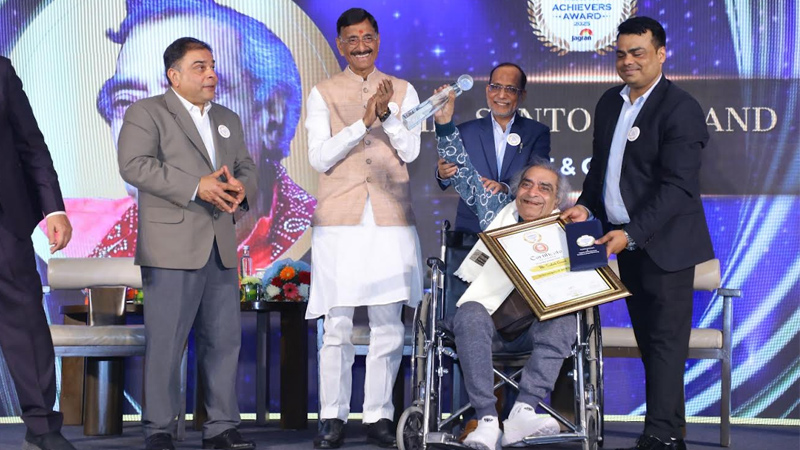
The cultural spotlight fell on veteran lyricist and poet Santosh Anand, whose songs have echoed across generations of Hindi cinema. At 97, Anand accepted the honour with characteristic humility, reflecting on a life shaped by perseverance and hope.
Healthcare honours spanned both modern and traditional systems. Manoj N. Nesari was recognised for strengthening Ayurveda’s place in national and global health frameworks. Padma shri Mohammed Abdul Waheed was honoured for his research-backed work in Unani medicine, while padma shri Mohsin Wali received recognition for his long-standing contribution to patient-centred care.
Education and social development also featured prominently. Padma shri Zahir Ishaq Kazi was honoured for decades of work in education, while former Meghalaya superintendent of Police T. C. Chacko was recognised for public service. Goonj founder Anshu Gupta received an award for his dignity-centred rural development initiatives, and the Hunar Shakti Foundation was honoured for empowering women and young girls through skill development.
The Lifetime Achievement Award went to former IAS officer Shailaja Chandra for her long career in public healthcare and governance, particularly in the traditional systems under Ayush.
Speaking at the event, Hamdard chairman Abdul Majeed said the awards were a tribute to those who combine excellence with empathy. “These awardees reflect Hakeem Sahib’s belief that healthcare, education and public service must ultimately serve humanity,” he said.
Minister Seth struck a forward-looking note, saying India’s young population gives the country a unique opportunity to become a global destination for learning, health and wellness by 2047.
The ceremony also featured the trailer launch of Unani Ki Kahaani, an upcoming documentary starring actor Jim Sarbh, set to premiere on Discovery on 11 February.
Instituted in memory of Unani scholar and educationist Hakeem Abdul Hameed, the awards have grown into a national platform that celebrates those building a more inclusive and resilient India. For one evening at least, the spotlight was not just on success, but on service with substance.






