Hindi
Indian director Sarthak Dasgupta wins Sundance-Mahindra filmmaking award


MUMBAI: Indian filmmakers are going places. Sarthak Dasgupta from India and three other directors have won the 2013 Sundance-Mahindra Global filmmaking award that supports the emerging independent talent from around the world.
Dasgupta, who has previously written and directed award-winning film The Great Indian Butterfly, won the award this time for The Music Teacher. The other winners include Jonas Carpignano from Italy-US for A Chjana, Brazilian director Aly Muritiba for The Man Who Killed My Beloved Dead and Vendela Vida and Eva Weber for Let the Northern Lights Erase Your Name, a UK-Germany-US co-production.
Each of the four winning filmmakers will receive a cash award of $10,000, attendance at the Sundance Film Festival and creative and strategic support.

This is the second year that one of the four award recipients is an Indian. Last year‘s winner was Shonali Bose for her project Margarita, With A Straw.
The awards were presented at a private ceremony at the 2013 Sundance Film Festival in Park City, Utah (US) by Rohit Khattar, Chairman, Mumbai Mantra, Michelle Satter, Founding Director, Feature Film Programme, Sundance Institute and Paul Federbush, International Director, Feature Film Programme, Sundance Institute.
“At a time when there is no dearth of issues around the world that are crying out to be heard, the Global Filmmaking award recognises independent filmmakers who give expression to those voices,” said the Mahindra Group chairman and managing director Anand Mahindra in a statement.
“The Mahindra Group is proud to assist the Sundance Institute in this endeavour, which, in line with the Group‘s ‘Rise‘ philosophy, aims to drive a positive change in communities across the world,” he added.
The nomination committee for the Indian Award winner included prominent names from Indian cinema like Sharmila Tagore, Anil Kapoor, Rajkumar Hirani, Ramesh Sippy, Shabana Azmi, Shyam Benegal, Anjum Rajabali, K Hariharan and Ira Bhaskar.
The Sundance Institute-Mahindra Global Filmmaking Award is part of a multifaceted collaboration that exemplifies a commitment to and support of world cinema by the Mahindra Group, one of the largest industrial conglomerates in India, and the non-profit Sundance Institute, one of the world‘s leading cultural organisations.
This is the third and the last of the three-year collaboration between the two organisations.
The Sundance-Mahindra Group‘s collaboration also includes the Mumbai Mantra Sundance Institute Screenwriters Lab in India, which provides an annual opportunity for eight screenwriters from India to develop their works under the guidance of accomplished international screenwriters.






Hindi
Zee5 and Applause Entertainment team up for whodunnit ‘Everybody Loves Sohrab Handa’
Rajat Kapoor directs star-studded murder mystery streaming from 10 April.
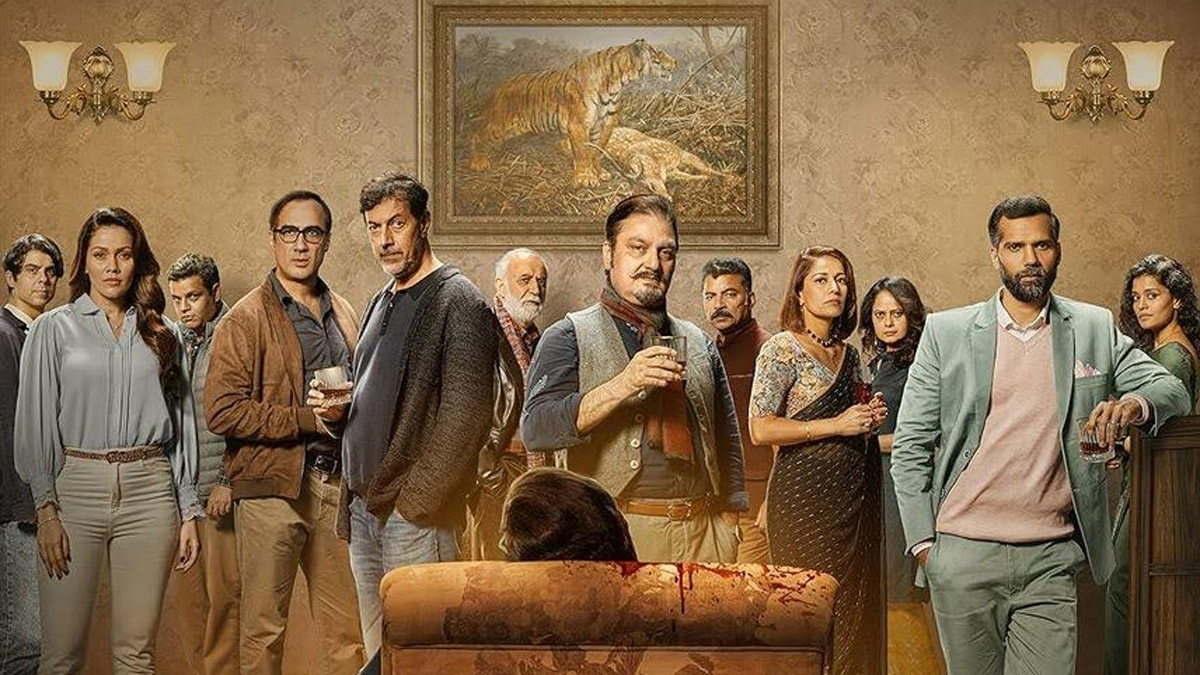
MUMBAI: Zee5 is serving up another killer collaboration and this time, the murder mystery comes with a generous side of dark humour and family dysfunction. The streaming platform has partnered with Applause Entertainment and Mithya Talkies to bring Everybody Loves Sohrab Handa, a fresh, twisted whodunnit written and directed by acclaimed filmmaker and actor Rajat Kapoor. The film will stream exclusively on Hindi Zee5 from 10 April.
The movie reimagines the classic murder mystery genre with a contemporary, darkly comic edge. It revolves around a group of friends and family who smile, drink, and celebrate together until the silence snaps and long-buried secrets spill out. The stellar ensemble cast includes Vinay Pathak, Ranvir Shorey, Waluscha De Sousa, Saurabh Shukla, Chandrachoor Rai, Neil Bhoopalam, Koel Purie, Palomi Ghosh, and Rajat Kapoor himself.
This latest offering continues the successful partnership between Zee5 and Applause Entertainment, which has previously delivered diverse hits such as Mithya, Bloody Brothers, and Jab Khuli Kitaab.
&TV Business Head of hindi Zee5 and chief channel officer Kaveri Das said, “Our collaboration with Applause Entertainment has consistently delivered distinct, high-impact storytelling. Everybody Loves Sohrab Handa is a natural progression, reinforcing our focus on genre-led content with a compelling whodunnit premise and a strong ensemble cast.”
Applause Entertainment business head for movies Sunil Chainani added, “This film adds yet another compelling layer to our slate with Rajat Kapoor’s unmistakable voice.”
Rajat Kapoor shared, “What interested me was not just the mechanics of a whodunnit, but the emotional violence that precedes physical violence. These are people who smile at each other, but there’s so much that is not said.”
The film promises razor-sharp writing, layered performances, and simmering tension, inviting viewers not just to solve the crime but to unravel the complex relationships at its heart.
If you love a good murder mystery served with wit and emotional depth, Everybody Loves Sohrab Handa looks set to be your next addictive watch. Mark your calendars, the whodunnit drops on Hindi Zee5 from 10 April.






