Gaming
India Today group unveils AI pop stars in groundbreaking musical initiative

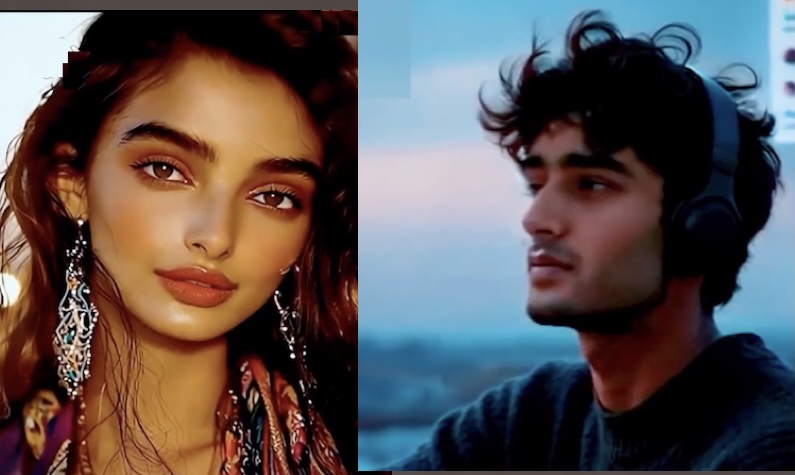
MUMBAI: The India Today Group (ITG) has orchestrated another technological crescendo in its innovation symphony, launching a revolutionary new music genre called A-Pop featuring two virtual vocalists who promise to hit all the right algorithmic notes.
Just two years after introducing Sana, reportedly India’s first AI news anchor who has since evolved from digital debutante to virtual veteran, the media powerhouse is now harmonising human creativity with artificial intelligence in the musical realm.
“A-Pop is more than a genre — it is a fluid, evolving, and collaborative creative process,” explains ITG vice chairperson & managing director Kalli Purie. “It merges human imagination with AI capabilities, producing music that is unrestricted by conventional limitations.”

The virtual virtuosos making their melodic debut are Aishan and Ruh, each with carefully crafted personalities that blend the authenticity of human backstories with the boundless potential of digital existence.
 Aishan, a 22-year-old musical wunderkind with roots in Bareilly and Jodhpur, has been fine-tuning his craft since 17. This digital dream weaver blends indie acoustic, pop and R&B into a sonic tapestry that reflects his fabricated yet relatable life experiences. When not composing computer-generated compositions, this binary Bieber can be found embracing mountain scenery, sporting designer trainers, and maintaining his “old-money” aesthetic.
Inspired by new people and sounds, his lyrics reflect his thoughts and experiences. An ambivert, he connects with fans but values his quiet moments. A Nainital soul, he’s drawn to the mountains, while also being a dog lover, bike enthusiast, sneakerhead, and food explorer, all with a classy, old-money style.
His virtual counterpart Ruh, a 24-year-old Delhi native, embodies the spirit of freedom in both personality and performance. This pixelated pop princess brings vibrant energy to new-age music while ostensibly travelling the world, absorbing diverse cultural influences that inform her distinctive sound. Her programming prioritises authenticity and self-expression, values designed to resonate with the group’s younger audience demographic.
 With an extroverted, vibrant personality, she embraces adventure and travel, exploring new cultures to create new-age pop music. A passionate music lover, she uses it to express herself boldly and authentically. Driven by personal freedom, self-expression, and individuality, she inspires others to live authentically and pursue their passions without fear of judgment.
“Our latest foray into music is a sterling example of what the fusion of human creativity and AI can produce,” notes Purie. “A team of music professionals spent relentless hours over several weeks working with AI-led technology to create this pioneering work.”
The virtual vocalists represent a new movement where the boundaries between human and machine creativity become increasingly blurred. Their songs may feature human-written lyrics with AI composition, or machine-generated verses with human musical arrangements, all delivered through synthesised voices that never tire or demand royalties.
Unlike their flesh-and-blood counterparts, these digital divas can produce multilingual music, engage with fans around the clock, and personalise content based on audience preferences—offering a performance that’s literally inhuman in its consistency and availability.
For listeners keen to tune into this binary balladeering, Aishan and Ruh’s musical offerings are available across all major streaming platforms, including YouTube, Spotify, Amazon Music, Apple Music, and Saavn. Fans can also follow their carefully curated digital lives on social media, where these virtual performers will be hitting high notes and high engagement metrics for the foreseeable future.






Gaming
Dream Sports sees 100 plus exits after gaming ban forces overhaul
Company splits into eight units as real money gaming law hits revenue.

MUMBAI: For a company built on fantasy leagues, reality has suddenly rewritten the rulebook. More than 100 employees have exited Dream Sports, the parent of Dream11, after the company reorganised its operations following India’s ban on real money online gaming. The shake up came after the Promotion and Regulation of Online Gaming Act, 2025 came into force in August 2025, prohibiting games where users deposit money expecting winnings. The regulation struck at the heart of the fantasy gaming industry and dramatically affected Dream Sports’ core business, wiping out about 95 percent of its revenue and all of its profits.
In response, the Mumbai based company shifted into what chief executive officer Harsh Jain described as “startup mode”, splitting its operations into eight independent business units in December.
Around 700 employees were reassigned across these newly formed ventures based on their experience and interests. However, roughly 15 percent opted to leave the company.
A spokesperson for Dream Sports said many of those who exited were experienced professionals accustomed to running scaled businesses rather than early stage ventures.
“Since some of these employees were experienced with running high scale businesses and not startups, around 15 percent chose to leave and join other scaled companies or start ventures of their own,” the spokesperson said.
Despite the departures, the company noted that the attrition rate is only slightly higher than its earlier level of around 10 percent before the ban. Dream Sports now has close to 950 employees and is not currently hiring, choosing instead to focus on stabilising its existing workforce.
The restructuring has transformed Dream Sports from a fantasy gaming company into a broader sports entertainment platform. The eight units now operate independently, each focusing on different segments of the sports and technology ecosystem.
These include Dream11, sports streaming platform Fancode, sports travel service DreamSetGo, mobile game Dream Cricket and artificial intelligence initiative Dream Sports AI, which includes sports analytics platform Dream Play.
Other ventures include fintech product Dream Money, open source initiative Dream Horizon and the philanthropic arm Dream Sports Foundation.
As part of cost saving efforts, Dream Sports also relocated its headquarters from Bandra Kurla Complex to Worli earlier this year. The new office, called Dream Sports Stadium, brings teams from its various brands together under one roof to improve collaboration and operational efficiency.
Jain had earlier said the company removed bonus lock in timelines for employees hired in recent years, allowing those who wished to leave to exit with pro rata payouts.
“We want people who are fully into the startup mode and willing to work for it, and we will share that reward if it comes,” he said.
Founded in 2008 by Harsh Jain and Bhavit Sheth, Dream Sports was last valued at 8 billion dollars after raising 840 million dollars in 2021 from investors including Falcon Edge Capital, DST Global, D1 Capital Partners, RedBird Capital Partners, Tiger Global Management, TPG and Footpath Ventures.
The new gaming law has forced several companies in the fantasy gaming sector to either shut down or pivot their business models, signalling a significant reset for one of India’s fastest growing digital entertainment industries.







