I&B Ministry
India to digitise all services, says I&B MoS Rathore


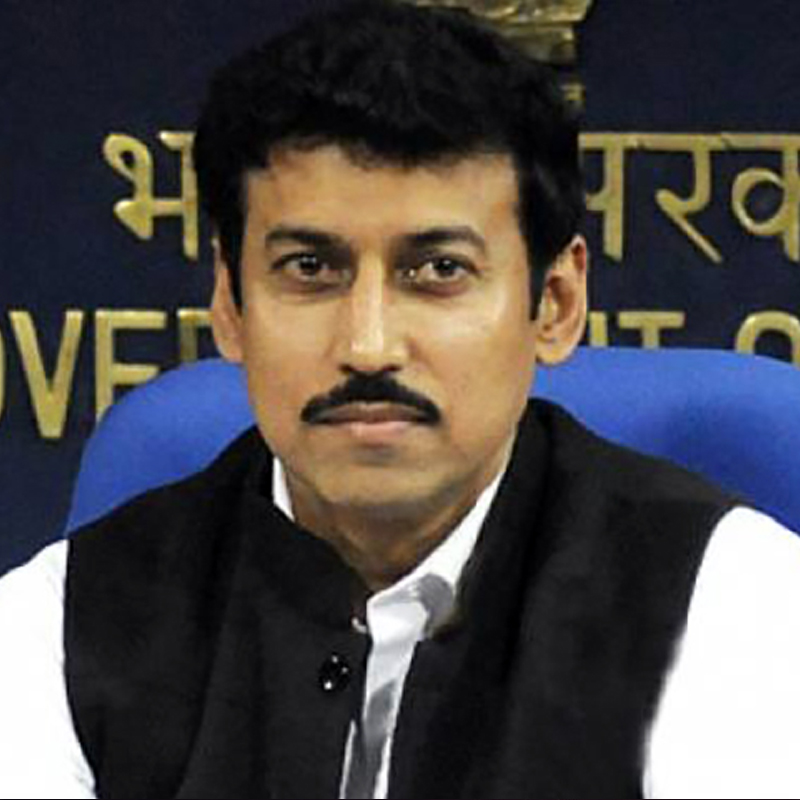
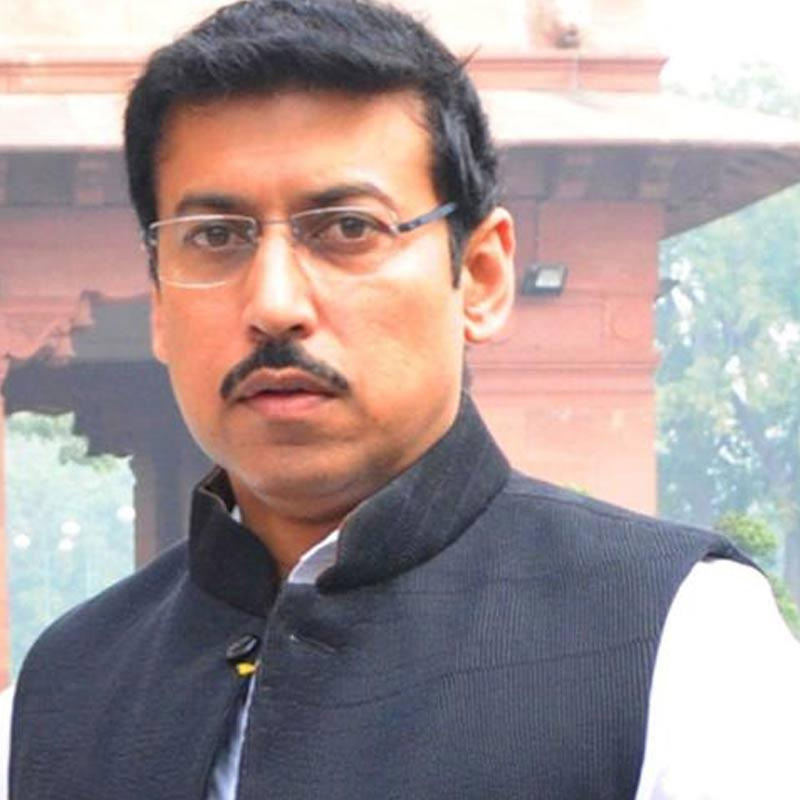
NEW DELHI: Minister of State for Information & Broadcasting Rajyavardhan Rathore has said that the government is making all efforts to digitalise the whole spectrum of services available to the citizens. He said that convergence of array of services to empower citizens through mobile technology was already happening.
Speaking after giving away the awards at the conclusion of the 47th International Film Festival of India in Panaji in Goa yesterday evening, Rathore said the Film Facilitation Office (FFO) set up by the government was a step towards facilitating single window clearance for filmmakers, promote India as a filming destination and provide the platform for film tourism in the country.
He said films were not only a means for entertainment but a powerful art form which heralded social change. He added that it was a testament to the power of fluency and persuasion that cinema was the only art form that is deemed fit to be regulated by an Act of Parliament.

The role of Cinema to bridge cultures was experienced in IFFI with the partnership between India and the focus country for the year 2016 – South Korea — through films which acted as gateway for further cultural exchanges.
Rathore said multiplexes had revolutionised the film-viewing experience with the top films grossing box office returns due to the multiplex boom. A paradigm shift in technology also enabled the mobile viewing boom in the country. This enabled individuals to shoot films based on one’s taste and perception of the given environment. This acted as a big fillip to young filmmakers and it was evident from the record number of entries at the Swachh Bharat Film Festival organised by the ministry.
(Speaking at another event earlier in the day, Rathore said IFFI provided a unique platform for experts from across the globe to share their behind the screen experiences and stories. The effort was to provide a rich experience for all the delegates and film fraternity.
Rathore said Films were an effective tool as a medium of communication and appreciated the efforts of NFAI in depicting the struggle of freedom fighters through this exhibition on cinema. Linking the issue of films with the demonetisation scheme of the Government, Rathore said this initiative of the Government would bring transparency in the film industry and would curb the use of black money.)
Iranian film “Daughter” bagged the Golden Peacock for best feature film at the Festival with a certificate and a cash prize amount of Rs Four million, shared between the Director and the Producer equally. Iranian actor Farhad Aslani won the ‘Best Actor’ award for his portrayal of the strict father in the same film, picking up the Silver Peacock and Rs 1 million in cash prize. The film had also won the best film award in the Moscow International Film Festival earlier this year.
The awards were given away by Rathore in the presence of the Goa governor Mridula Sinha, the chief minister Laxmikant Parsekar and the chief guest S S Rajamouli.
The ‘Best Director’ award was given to Baris Kaya for the film “Rauf”, who bagged the Silver Peacock Trophy and cash prize of Rs 1.5 million. Elina Vaska won the Best Actress Award for the film “Fellow Mud”, getting the Silver Peacock Trophy and cash Prize of Rs One million. The Special Jury award was given to Lee Joon-ik for the Direction of the movie “The Throne” with the Silver Peacock Award and a cash prize of Rs 1.5 million.
The ICFT –UNESCO Gandhi Medal was awarded to Turkish film maker Mustafa Kara’s ‘Cold of Kalandar’. This award, instituted by the International Council for Film & Television, Paris, and UNESCO is given to a film that portrays the Gandhian values of peace and harmony. ‘Cold of Kalandar’, set in a mountain village in the Black Sea region is also Turkey’s official entry for ‘Best Foreign Language Film’ category of Oscar Awards.
The Canadian multi-lingual entry ‘The Apology’ by Toronto based Tiffany Hsiung won the Special Mention under the ICFT-UNESCO Gandhi Medal competition. In all seven films, including an Indian film ‘Allama’ by T S Nagabharana, were in the fray for this award.
Earlier, Parsekar said that collaboration between the central and state governments and the film industry made this edition of IFFI a great success which not only promoted Indian Film Industry but also promoted Goa as a creative hub.
Rajamouli said the biggest beneficiaries of such film festivals are young filmmakers who gets a platform to see the best of films across the globe and learn from the vision of reputed film makers around the World.
I and B additional secretary Jayashree Mukherjee said IFFI besides showcasing films also provided a large number of avenues for learning in form of workshops and master classes.
The closing ceremony witnessed glitz and glamour through the scintillating musical performances representing a rich musical culture of India composed by Sachin Jigar.


I&B Ministry
IT Rules tweaks are clarificatory, not expansion of powers: MeitY
Govt signals flexibility as platforms push for clarity on user content rules
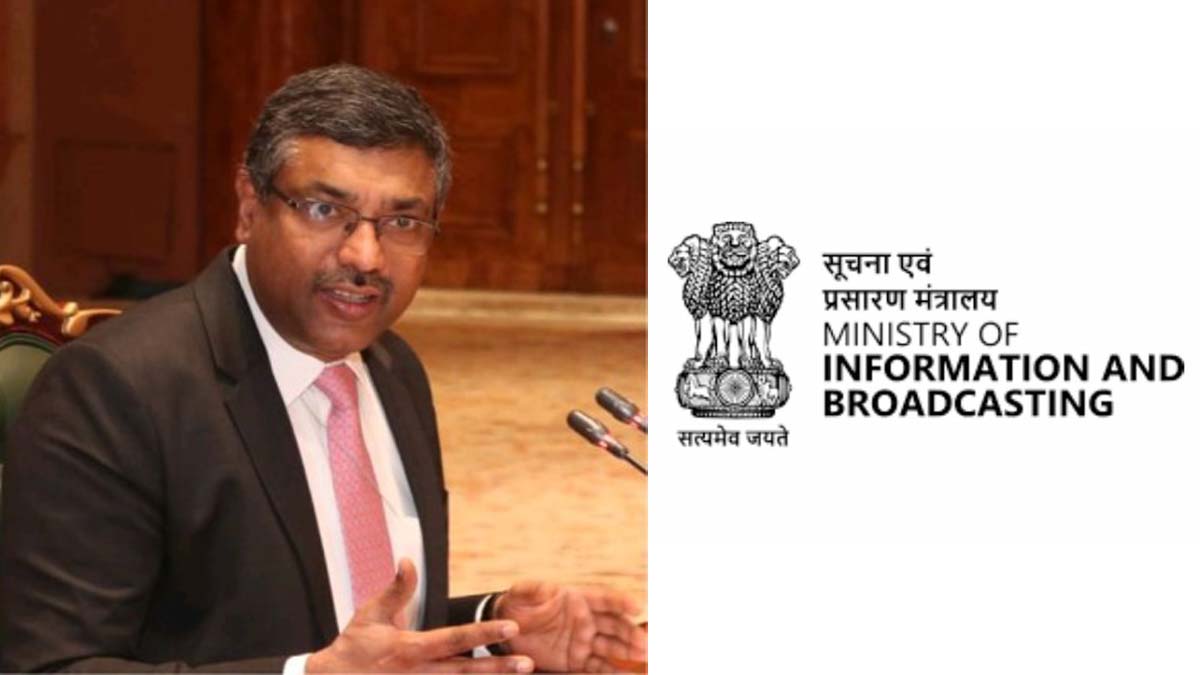
NEW DELHI: The Centre has sought to dial down concerns over its proposed amendments to the IT Rules, with Ministry of Electronics and Information Technology secretary S Krishnan asserting that the changes are intended as clarifications rather than an expansion of regulatory powers.
Pushing back against criticism from platforms and civil society, S Krishnan said the amendments “do not in any way actually give us wider powers” and are meant to remove ambiguity in how existing provisions are applied. He added that the trigger came largely from within the ecosystem, with intermediaries themselves seeking clearer guidance on compliance, takedowns and record preservation.
At the heart of the debate is the growing friction between platforms and policymakers over responsibility for user-generated content. Intermediaries have argued that they should not be treated on par with publishers, particularly when content is created and uploaded by users. Krishnan acknowledged this concern, noting that “a sharper distinction” between user content and publisher content is needed and is currently under examination.
The issue becomes more complex in enforcement scenarios. While registered publishers can be directly asked to modify or remove content, intermediaries often lack control over the original creator. “In such cases, the intermediary cannot direct those changes,” Krishnan explained, underlining the need for procedural nuance.
Another key proposal under discussion is to bring user-generated news and current affairs content within a more unified regulatory ambit, potentially under the Ministry of Information and Broadcasting. The move follows suggestions that a single authority should handle such content, regardless of whether it originates from a publisher or an individual user.
Even as the government frames the amendments as a tidy-up exercise, fault lines remain. Industry players have flagged concerns over compliance burdens, especially for smaller businesses, and questioned whether advisories could effectively become binding without explicit legislative backing. Krishnan said the government is mindful of these risks and is exploring ways to ease obligations, including possible relaxations under certain provisions.
The ministry is also considering consolidating multiple advisories and guidelines into a more structured framework, a step widely seen as addressing long-standing confusion over what platforms are expected to follow.
On takedowns, the government has reiterated that due process will remain unchanged. Krishnan stressed that actions will continue to be governed by established procedures, with reasons recorded and review mechanisms in place. He also pointed to the surge in deepfakes and synthetic media as a factor behind rising content disputes, calling it a “scale challenge” for regulators.
Interestingly, Krishnan also framed social media platforms as commercial entities rather than pure vehicles of free expression, hinting at a broader shift in regulatory thinking as platform economics come into sharper focus.
With stakeholders seeking more time and, in some cases, a rollback of the proposals, the government has kept the consultation process open-ended. Krishnan said further revisions remain on the table, signalling a willingness to adapt the draft based on feedback.
For now, the message from MeitY is clear: the rules may not be tightening in intent, but the effort to define them more clearly is well underway.






