I&B Ministry
India stresses need for Indo-African ICT cooperation


NEW DELHI: Sharing expertise and growing businesses. India has a vast experience in setting up of ICT infrastructure and the experience can be leveraged by the government as well as private sectors in African nations, Communications Minister Manoj Sinha said.
The minister was inaugurating the 2nd edition of the Indo-Africa ICT Expo at KICC, Nairobi, from 1 to 3 September, with the help of India’s Telecommunication Equipment and Services Export promotion Council (TEPC) in conjunction with NASSCOM, and ICT Authority of Kenya last weekend.
He said: “To explore synergies on the ground, I have with me about 100 ICT companies from India participating in this event that will facilitate growth of business opportunities in our nations.” This event is supported by India and Kenya. Kenya ICT Minister Joe Mucheru was also present on the occasion.

The event, aimed at enhancing cooperation between African countries and India in the ICT sector, also saw attendance of various senior government officials from neighbouring countries such as South Sudan ICT & Postal Services Deputy Minister Akol Paul Kordit with a big delegation, Uganda ICT Principal Secretary Jimmy Pat Saamanya, and Malawi ICT and Civic Education Secretary Justin Adack K Saidi. Business leaders from India, Kenya, Tanzania, Uganda, the UK, Israel, South Sudan, Rwanda, Mauritius and Commonwealth Telecom Organization were also present.
Sinha stressed that India had conditions similar to those in the African nations. The country also had special ties with East African countries. Together, India saw many opportunities for cooperation and transfer of expertise in the areas of setting up ICT infrastructure, solutions and application development, skill development and innovation that could be leveraged by the governments as well as the private sector in the continent. India was keen to find ways to increase business between India and Africa in ICT sector, he said.
Kenya minister Mucheru called upon the local businesses to tap into the huge reservoir of knowledge their Indian counterparts had and develop technology-based solutions for Kenyan, African and the global market. He also noted that there were numerous opportunities for partnerships between both, public and private, sectors of Kenya and India. He said India and Africa continued to witness exponential growth in the telecommunication and information technology segments. It is thus essential to evaluate the areas where the two regions could cooperate so as to further enhance lives of the people through technology.
The second edition of the expo-cum-conference saw over ICT companies participating from India showcasing their latest products and solutions to explore synergies on the ground.
A key highlight of the event on 1 September 2016 was the ICT Ministers Round Table Meeting on ‘Digital Dreams of the Developing Nations’, wherein ICT Ministers/Secretaries leading high-level government and business delegations from India, Kenya, South Sudan, Uganda and Malawi participated. Government-to-Government bilateral talks were also held between the Indian Government officials and government delegations from Kenya, Uganda, Malawi and South Sudan.
A NASSCOM statement said, “Africa is turning into one of the fastest growing regions in the world, offering huge domestic market potential and growing economically at more than 5% per year. This event only reiterates the fact that India and Africa are well on their way to collaborate and become the next global leaders in technology. Africa is turning into one of the fastest growing regions in the world, offering huge domestic market potential and growing economically at more than 5% per year. During the last two years, the focus has been on the SME sector engagement and a number of the participating delegate companies have achieved their biggest success in Africa.”
The sessions at the conference were aligned with theme “Digital Dreams of Nation”. The event was attended by over 2500 visitors and over 300 conference delegates with a world-class speaker panel. The expo was designed to bring together thought leaders across the entire ICT value chain to discuss solutions to regulatory and business issues.
The event also had more than 400 Business-to-Business meetings between Indian and African countries. Over 10 MoUs worth Rs. 40 crore business were signed. In addition, there was a demand for setting up of training centre and technology transfer.
TEPC is also organizing Buyer-Seller business meets in New Delhi where potential buyers from across the globe are invited to meet the telecom equipment and services suppliers of India to develop long-term business relations. The event for 2016 has been planned from 3 to 5 October 2016 in New Delhi and Bangalore. Sinha invited business delegations from participating countries to join the event in India.







I&B Ministry
Digital radio, D2M tech set to reshape broadcasting and public messaging
Govt pushes next-gen delivery while TRAI tightens grip on spam ecosystem
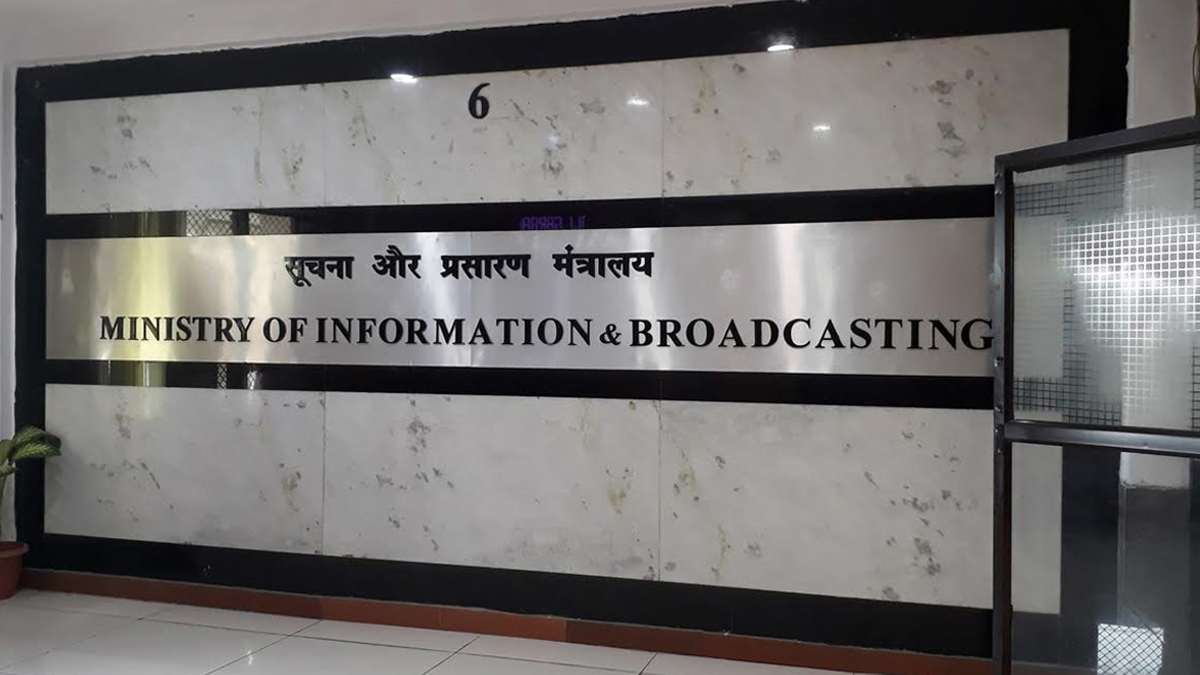
NEW DELHI: India’s broadcasting and telecom landscape is undergoing a quiet but significant upgrade, with digital radio and Direct-to-Mobile (D2M) technologies emerging as powerful tools for mass communication, while regulators step up efforts to tackle spam calls.
According to the Ministry of Information and Broadcasting, digital radio and D2M are poised to transform how content reaches audiences by making more efficient use of spectrum. In simple terms, multiple channels can now be delivered over a single frequency, opening the door to a wider range of free-to-air content.
D2M technology takes this a step further by enabling video, audio and data to be broadcast directly to mobile handsets without relying on SIM cards or mobile data. The result is a resilient and cost-effective data pipe that can deliver everything from entertainment and education to critical emergency alerts, even in low-connectivity scenarios.
At the same time, the Telecom Regulatory Authority of India is tightening its grip on unsolicited commercial communication, better known as spam calls. The regulator has deployed a distributed ledger technology platform to bring transparency and accountability into the system.
Through this blockchain-based setup, consumers can register their preferences on receiving promotional messages, while businesses and telemarketers must also sign up and operate within defined rules. The platform also includes a complaint mechanism that allows users to report spam, with complaints shared across telecom operators for coordinated action.
The government’s broader push is being supported by infrastructure upgrades under the Broadcasting Infrastructure and Network Development scheme. Implemented through Prasar Bharati, the initiative focuses on modernising networks such as Akashvani and Doordarshan, including digitisation and adoption of next-generation broadcast equipment.
In a written reply in the Lok Sabha, Ministry of Information and Broadcasting minister of state for information and broadcasting L. Murugan said these steps are part of a larger effort to promote emerging technologies and strengthen the country’s broadcasting backbone. The response came to a query raised by member of Parliament Rao Rajendra Singh.
Together, these developments point to a dual-track strategy: expanding access to reliable, low-cost content while cleaning up the communication ecosystem. As digital pipes get smarter and spam filters sharper, India’s airwaves may soon feel a lot less noisy and far more useful.






