Animation
India – S. Korea join hands for co-productions in broadcasting, animation


NEW DELHI: After inking film co-production deals with China, India has now signed an agreement with South Korea to increase audio-visual exchange between the two countries. The deal was signed today during Prime Minister Narendra Modi’s visit to South Korea.
The co-production agreement includes cooperation between the film industries of the two countries to promote export of Indian films and will act as a catalyst towards creating awareness about India and its culture.

This will also help in increasing bilateral trade between both countries. The agreement was signed under the provisions of India-South Korea Exchange Programme.
The agreement also covers animation and broadcasting programmes and would enable opportunities for collaboration between Indian and Korean film industries, and facilitate collaboration and exchange.
Producers from both countries will get an opportunity to pool their creative, artistic, technical, financial and marketing resources to co-produce films.
This will lead to exchange of art and culture among the two countries, and co-productions would provide an opportunity to create and showcase the ‘soft power’ of India.
Additionally, it would lead to generation of employment among artistic, technical as well as non-technical personnel engaged in the arena of film production including post-production and its marketing, thus adding to the country’s Gross Domestic Product (GDP).
The utilization of Indian locales for shooting raises the visibility and prospects of India as a preferred film shooting destination across the globe would be promoted. This in turn will lead to the inflow of foreign exchange into the country. It will also lead to transparent funding of film production.
The audio-visual co-production agreement would open up new frontiers for the film industries of both countries and is expected to open doors for wide ranging collaboration and lead to strengthening of India’s cultural presence in an important part of the world.





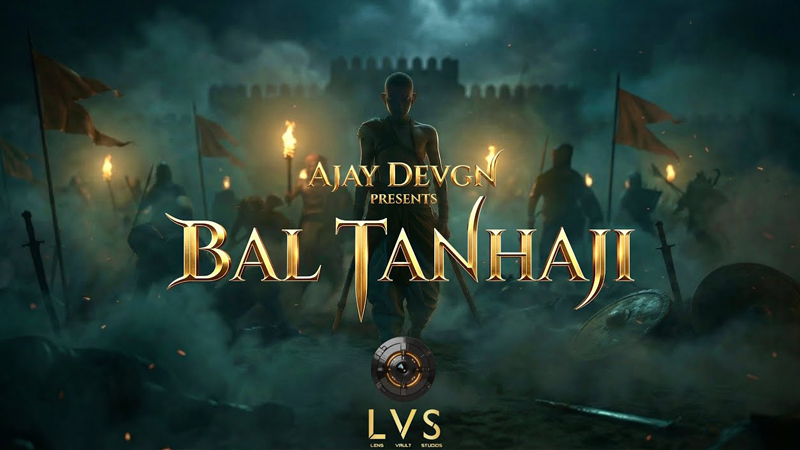
MUMBAI: History is getting a fresh rewrite this time with code, creativity and a longer arc in mind. Lens Vault Studios has announced its first original production, Bal Tanhaji, marking the official entry of the newly launched, tech-driven studio into India’s evolving entertainment landscape.
Arriving six years after the box-office success of Tanhaji: The Unsung Warrior, the new project expands the universe rather than revisiting familiar ground. Bal Tanhaji explores uncharted narrative territory, signalling a clear shift from one-off cinematic spectacles to long-format, world-building storytelling designed for digital-first audiences.
At the heart of this ambition is Prismix Studios, the in-house generative AI and technology arm powering the creative engine behind the show. The studio’s approach blends storytelling with next-generation tools, aiming to reimagine how Indian IPs are created, scaled and sustained beyond theatrical releases.
For Lens Vault Studios chairman Ajay Devgn the new venture represents a deliberate step beyond traditional cinema. The focus is firmly on building long-form intellectual properties across fiction and non-fiction, tailored to changing viewing habits and platform-led consumption. He said the studio intends to explore formats that remain largely untapped, while drawing on the team’s experience with large-scale cinematic storytelling.
Lens Vault Studios founder and CEO Danish Devgn echoed that sentiment, describing Bal Tanhaji as the studio’s first generative-AI-led IP and the starting point of a broader vision. The aim, he noted, is to carry forward the legacy of the Tanhaji universe while connecting with younger audiences through a blend of powerful narratives and emerging technologies.
With Bal Tanhaji, Lens Vault Studios is planting its flag early not just launching a show, but signalling a larger play for cinematic universes that live, grow and evolve across platforms. If this debut is any indication, the future of Indian storytelling may be as much about imagination as it is about innovation.






