Hardware
India lucrative market for 4K UHD STBs: Grand View Research

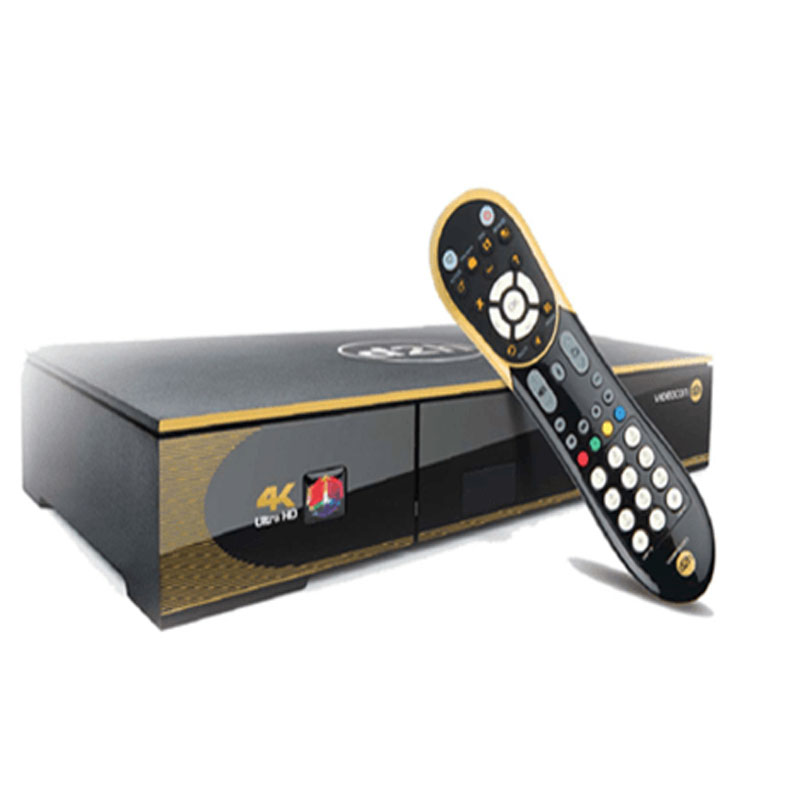
MUMBAI: Here’s a view on the demand for 4K or ultra high definition (UHD) set-top boxes (STBs) in India.
American research firm Grand View Research Inc has forecast in a new report that India is “poised to emerge as a lucrative market for UHD STBs with the country expected to witness a CAGR substantially higher than the regional (Asia Pacific) average. Several DTH operators such as Tata Sky, Videocon, and Airtel have launched UHD STBs and are attempting to achieve a higher rural penetration with affordable regional packages.”
The report says that the APAC 4K STB market was valued at just over $50 million in 2015 and will witness a high growth over the next eight years with India leading the charge.

The Grand View Research Inc analysis states that the global 4K STB market size is projected to reach $7.18 billion by 2024. The growing inclination of the global public towards UHD video viewing can be attributed as the major reason for the 4K STB market growth.
The demand for media-rich home entertainment services among consumers is increasing and is anticipated to fuel market growth. The growth is further fostered by favourable government initiatives, large-scale digitization programs, and mandatory installation of set-top boxes. Improved standard of living owing to increased purchasing power is positively impacting the industry growth.
The initiatives undertaken by the Federal Communications Commission for supporting third-party STB manufacturers is paving the way for the expansion of the Ultra High-Definition (UHD) STB industry. The market is anticipated to gain traction in Asia Pacific owing to the strong presence of low-cost set-top box manufacturers, especially in countries such as Korea, Taiwan, and China.
The increasing penetration of 3D and 4K TVs and escalating demand for large screen displays are fuelling the demand for UHD STBs. Smart features such as STB operability through voice commands given by remote control unit (RCU) is garnering high potential. The computational capabilities of STBs in combination with the advent of quality standards to satiate growing customer expectations have culminated in the STB market growth.
Further key findings suggest:
Internet Protocol Television (IPTV) 4K STBs accounted for over 20 per cent of the market share in 2015 and are expected to witness considerable growth over the forecast period. Increasing broadband penetration can be attributed as the major reason for the rise in the market share of IPTV 4K Set-top Box devices.
The IPTV STB product segment is projected to gain traction owing to benefits such as integration of TV, PC, home phone, and wireless devices offering a high quality of viewing experience to the end-users.
Key industry participants include ZTE Corporation, SAGEMCOM, Arion Technology, Roku, and Infomir. Manufacturers are emphasizing on UHD STBs incorporated with interactive 4K content to gain a competitive edge in the industry.
Technology giants such as Apple have managed to make their mark in this competitive industry. The Apple TV device aids the streaming of (Over-The-Top) OTT content and other videos over the internet. The launch of advanced OTT devices such as Google Chromecast media streaming device and Amazon’s Fire TV STBs have opened up new avenues in the industry







Hardware
India clears Rs 1.6 lakh crore semiconductor projects under Semicon India
Ten projects cleared as production begins and design ecosystem gathers pace
NEW DELHI: India’s push to become a global electronics powerhouse is gaining momentum, with the Semicon India Programme driving the creation of a full-fledged semiconductor ecosystem from design to manufacturing.
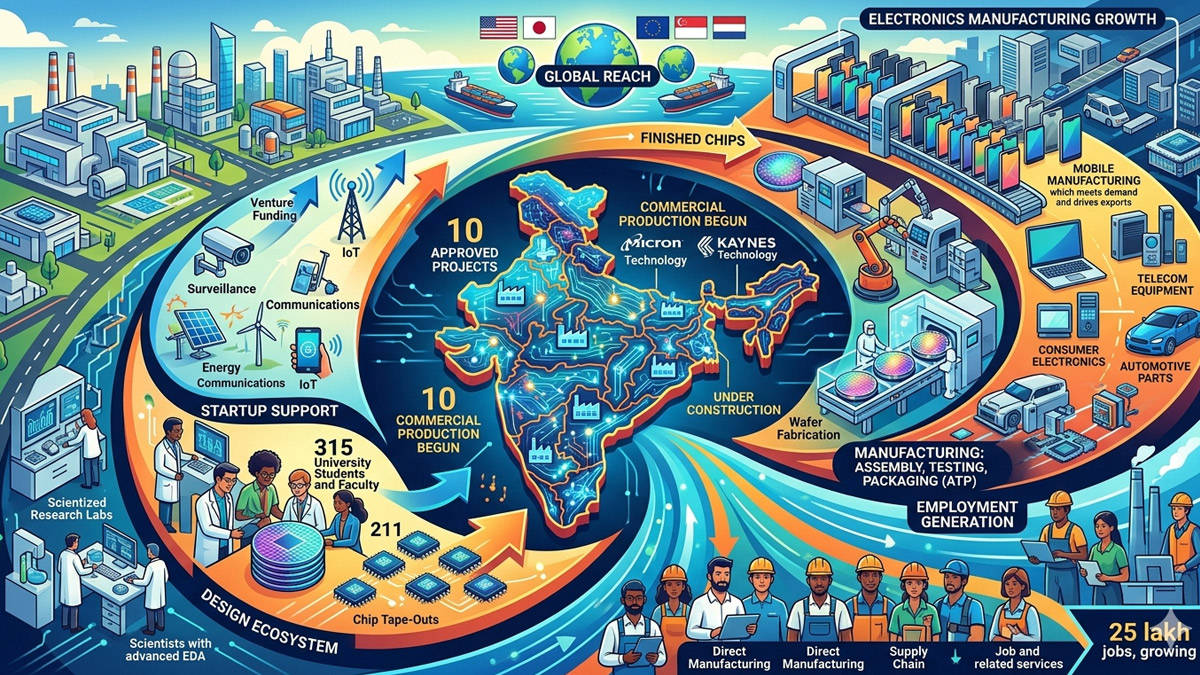
Launched in 2022, the programme aims to build capabilities across the entire value chain, including chip design, fabrication, assembly, testing and packaging. In just four years, the government has approved 10 semiconductor projects with a combined investment commitment of around Rs 1.6 lakh crore.
Two of these facilities have already begun commercial production, including units led by Micron Technology Inc. and Kaynes Technology India Limited. Two more plants are expected to go live later this year, signalling that India’s chip ambitions are moving from blueprint to factory floor.
The broader electronics manufacturing story has also seen sharp growth over the past decade. Production has jumped from roughly Rs 1.9 lakh crore in 2014-15 to about Rs 12 lakh crore in 2024-25, while exports have surged nearly eightfold. Mobile phone manufacturing, once heavily import-dependent, now meets almost all domestic demand and has become a major export driver.
Alongside manufacturing, the government is investing heavily in design capabilities. Through access to advanced chip design tools provided free to 315 universities, students and researchers have clocked over 200 lakh hours of usage. This effort has already resulted in 211 chip tape-outs from 75 institutions.
Support for startups is also picking up pace. Twenty-four chip design projects have been approved, targeting sectors such as surveillance, energy, communications and IoT. Of these, 14 companies have collectively raised over Rs 650 crore in venture funding, while several designs have progressed to fabrication, including at advanced nodes.
To strengthen supply chains, India has also signed semiconductor cooperation agreements with countries including the United States, Japan, the European Union, Singapore and the Netherlands. These partnerships aim to reduce global dependencies while boosting domestic capabilities.
The employment impact is equally significant. The electronics sector now supports an estimated 25 lakh jobs, with mobile manufacturing alone accounting for nearly half. As more semiconductor units come online under the India Semiconductor Mission, indirect job creation across supply chains is expected to rise further.
Sharing these updates in Parliament, Ministry of Electronics and Information Technology minister of state Jitin Prasada underscored the government’s focus on building a resilient, end-to-end semiconductor ecosystem.
With factories taking shape, designs moving to silicon and investments flowing in, India’s semiconductor story is steadily shifting gears from ambition to execution.






