Hindi
India lags behind in co-productions


PANAJI: Co-productions in making films is the norm all over the world but India appears to be lagging behind because of lack of knowledge of how such projects can be executed.
This was the general consensus at an Open Forum on ‘Exploring New Horizons: International Co-productions” organised by the IDPA and the FFSI in association with the IFFI Secretariat and the ESG.
Introducing the subject, film entrepreneur Bhuvan Lall who moderated said there had been no Indian film in the competition at Cannes since 1997. He also said co-productions was becoming the norm and a large number of films at most festivals were co-produced by persons from different countries.

Suneera Nerissa Madhok who is an advocate specialising in film and entertainment stressed the need to know the laws of the countries with which one co-produced a film. She said a single-page agreement was generally no use and one had to study the media law in India and the country of co-production. She also advised that in case of disputes, it was cheaper to go in for arbitration than protracted court cases.
She stressed the need for a unified platform to help co-productions. She said many countries gave subsidies and it was important to know about them. Issues about intellectual property should also be in place before any project is launched.
She announced that lawyers like her had set up a new organisation – EMILA – to help those in film and entertainment draw up their contracts.
Renowned filmmaker Shaji N Karun said he had made his film ‘Vanaprastham’ with finance from France, and this had helped him show it in Cannes. He was once again making a co-production, this time with France and Poland, on a film about music known as ‘Gatha’. But he stressed that all his co-productions had been with independent producers and not government or other financial institutions. He claimed that it was the first film to be shot in Panasonic and Dolby Digital.
He stressed that he had made some mistakes during his first co-production and learnt the lesson that one has to understand the conditions in the country of co-production.
Referring to overseas filmmakers coming to India to shoot, he said things had changed and India had both trained manpower and the latest technology to help those who came. But he regretted that as India did not have a Film Policy, problems like single-window clearance were not coming through.
Marian Klotz of Memento Films in France said her company was into co-productions , though its main work was to market independent films and create a new cinema. She said people with good subjects often approached her company. She said it was possible to get financing from France without having a French element. However, she said it was necessary for the subject to be good and interesting and for the project to have a strong producer.
Ravi Khamboj of Sevenseas Films of Australia said he was on the lookout for good co-production ventures with Indian filmmakers. At present he was doing a television series called ‘Namastey Good Day’ with India’s Mike Pandey in which the aim was to take Indian celebrities to Australia’s lesser known tourist spots and bring Australian celebrities to Indian tourism spots. He claimed that the film delegation from Australia to the Film Bazaar was the largest with 18 persons. There is 40 per cent subsidy for shooting in Australia. He stressed the need for India to have good line producers who could take care of filmmakers from overseas coming to India to shoot their films.
Bikash Mishra of DearCinema.com said India had signed co-productions with nine countries but this had not led to any co-productions. Most co-productions happened on a person to person level. He said the co-production section of the Film Bazaar organised at IFFI every year was a great beginning. As far Europe was concerned, co-productions were very common.



Hindi
Zee5 and Applause Entertainment team up for whodunnit ‘Everybody Loves Sohrab Handa’
Rajat Kapoor directs star-studded murder mystery streaming from 10 April.
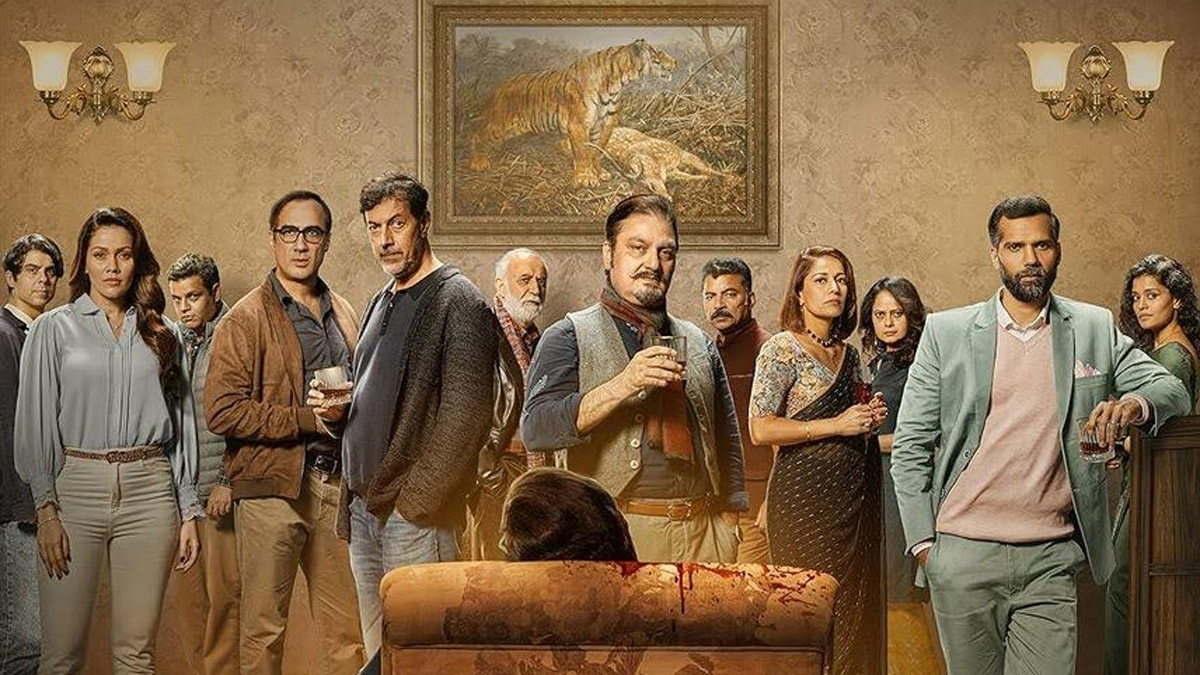
MUMBAI: Zee5 is serving up another killer collaboration and this time, the murder mystery comes with a generous side of dark humour and family dysfunction. The streaming platform has partnered with Applause Entertainment and Mithya Talkies to bring Everybody Loves Sohrab Handa, a fresh, twisted whodunnit written and directed by acclaimed filmmaker and actor Rajat Kapoor. The film will stream exclusively on Hindi Zee5 from 10 April.
The movie reimagines the classic murder mystery genre with a contemporary, darkly comic edge. It revolves around a group of friends and family who smile, drink, and celebrate together until the silence snaps and long-buried secrets spill out. The stellar ensemble cast includes Vinay Pathak, Ranvir Shorey, Waluscha De Sousa, Saurabh Shukla, Chandrachoor Rai, Neil Bhoopalam, Koel Purie, Palomi Ghosh, and Rajat Kapoor himself.
This latest offering continues the successful partnership between Zee5 and Applause Entertainment, which has previously delivered diverse hits such as Mithya, Bloody Brothers, and Jab Khuli Kitaab.
&TV Business Head of hindi Zee5 and chief channel officer Kaveri Das said, “Our collaboration with Applause Entertainment has consistently delivered distinct, high-impact storytelling. Everybody Loves Sohrab Handa is a natural progression, reinforcing our focus on genre-led content with a compelling whodunnit premise and a strong ensemble cast.”
Applause Entertainment business head for movies Sunil Chainani added, “This film adds yet another compelling layer to our slate with Rajat Kapoor’s unmistakable voice.”
Rajat Kapoor shared, “What interested me was not just the mechanics of a whodunnit, but the emotional violence that precedes physical violence. These are people who smile at each other, but there’s so much that is not said.”
The film promises razor-sharp writing, layered performances, and simmering tension, inviting viewers not just to solve the crime but to unravel the complex relationships at its heart.
If you love a good murder mystery served with wit and emotional depth, Everybody Loves Sohrab Handa looks set to be your next addictive watch. Mark your calendars, the whodunnit drops on Hindi Zee5 from 10 April.






