iWorld
India hits a high note but royalties fall out of tune beyond digital

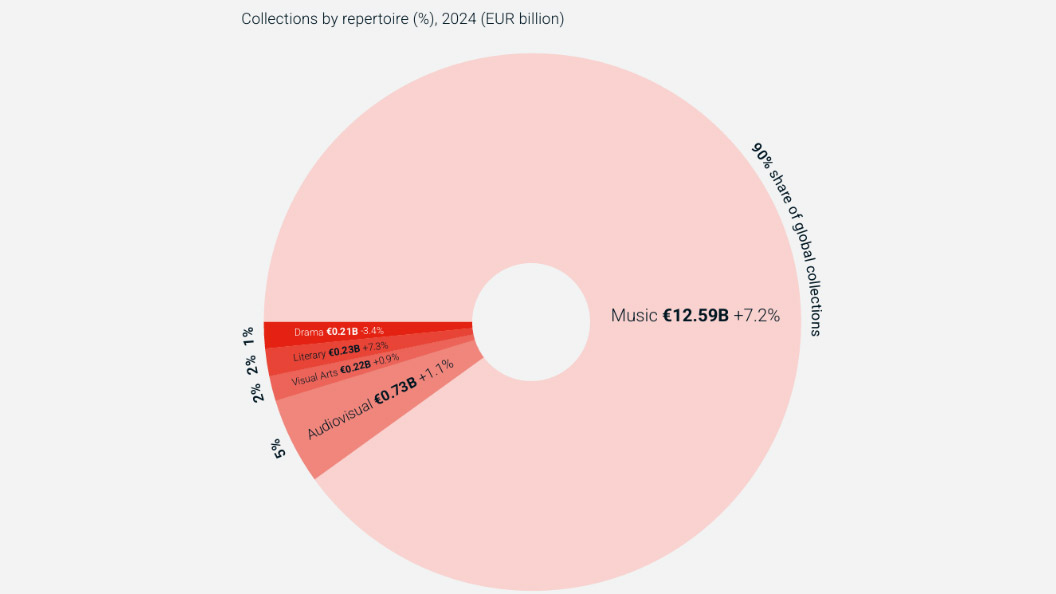
MUMBAI: The numbers may be soaring, but the melody beneath India’s music economy is far from smooth and that’s the tune the Indian Performing Right Society (IPRS) is striking as it interprets the CISAC Global Collections Report 2025, which marks another record-breaking year for global royalties.
CISAC reports that creator collections worldwide climbed to EUR 13.97 billion in 2024, with digital income alone crossing EUR 5 billion for the first time. India features prominently among the world’s fastest-growing markets but with a catch. The country’s growth is almost entirely riding on streaming, exposing a structural imbalance masked by impressive year-on-year spikes.
According to CISAC, India’s creator revenues surged 40.5 per cent in 2024, reaching EUR 80.5 million, a dramatic rise from just EUR 5.4 million a decade earlier, placing IPRS as the fourth-largest society in the Asia-Pacific region. A staggering 82.7 per cent of these earnings came from digital platforms, buoyed by a significant back payment and the ongoing shift from free to paid streaming.

Traditional revenue streams, however, continue to drag. While live and background collections crossed EUR 10 million for the first time, amounting to 14 per cent of the market, broadcast income slumped to 2.3 per cent owing to deferred payments and widespread non-compliance.
The contrast becomes sharper against global benchmarks. Internationally, TV and radio broadcasting account for 28 per cent of royalty collections, while live and background contribute 26 per cent. In India, both sectors remain severely underdeveloped, even as the country becomes a magnet for large-scale music events from Lollapalooza India to Rolling Loud and the Cherry Blossom Festival. Despite booming footfall and rising ticket sales, publishing income from live events remains disproportionately low.
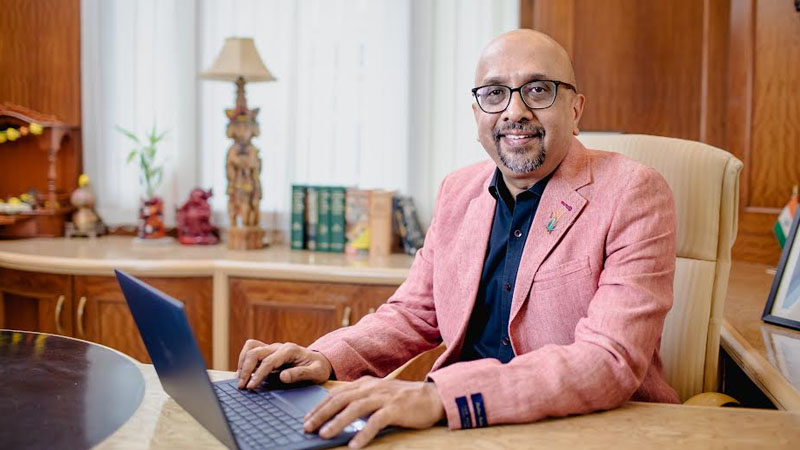
“The CISAC report validates India’s position as a dynamic and rapidly growing music market, but it also signals the urgent need for greater compliance across the ecosystem,” said IPRS CEO Rakesh Nigam. “Digital platforms cannot be the sole driver of creator income. Broadcasters, radio networks, event organisers, venues everyone who uses music must recognise their duty to pay for what they use. Fair remuneration is the bedrock of a healthy creative economy.”
IPRS’s own FY 2024–25 Annual Report tells a similar story of rapid ascent coupled with structural fragility. The society recorded its strongest-ever performance, with total collections up 42 per cent to Rs 741.6 crore, while royalty distributions rose 21 per cent to Rs 608.8 crore. Streaming revenue alone grew 59 per cent, crossing Rs 600 crore. Membership, meanwhile, has crossed 20,000, underscoring India’s expanding creator base.
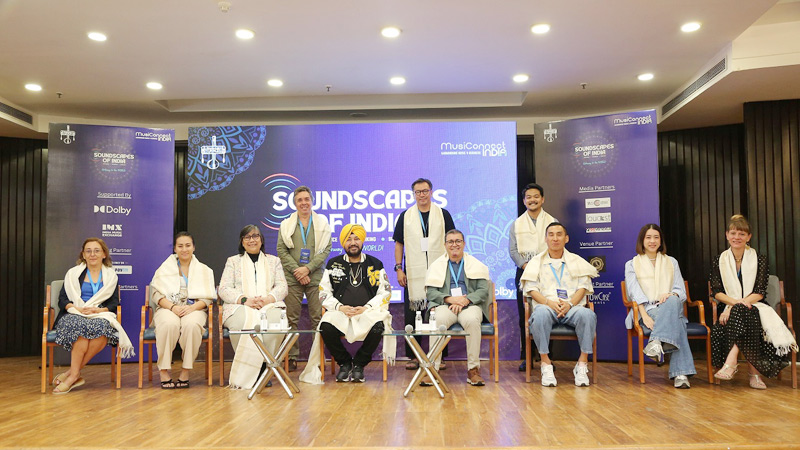
The broader ecosystem is also strengthening through initiatives such as the KOLAB songwriting residency, the Music Showcase Festival Soundscapes of India, and IPRS’s metadata accuracy hitting 96 per cent. But without stronger compliance from broadcast, radio, commercial establishments, and live events, IPRS warns that the long-term sustainability of creator earnings remains vulnerable.
The CISAC report also sounds the alarm on another front: generative AI. It forecasts that AI-generated outputs could reach EUR 40 billion by 2028, making up 60 per cent of music library catalogues and potentially causing a 24 per cent decline in creator revenues.
CISAC President Björn Ulvaeus urged policymakers to act decisively, “Progress and disruption can exist side by side. But we must ensure respect for human authorship is not pushed aside in the race for innovation.”
Under India’s Copyright Act, 1957, strengthened by the 2012 Amendment, creators retain an inalienable right to royalties for lyrics and compositions, a right frequently undermined by non-compliance.
MUMBAI: The numbers may be soaring, but the melody beneath India’s music economy is far from smooth and that’s the tune the Indian Performing Right Society (IPRS) is striking as it interprets the CISAC Global Collections Report 2025, which marks another record-breaking year for global royalties.
CISAC reports that creator collections worldwide climbed to EUR 13.97 billion in 2024, with digital income alone crossing EUR 5 billion for the first time. India features prominently among the world’s fastest-growing markets but with a catch. The country’s growth is almost entirely riding on streaming, exposing a structural imbalance masked by impressive year-on-year spikes.
According to CISAC, India’s creator revenues surged 40.5 per cent in 2024, reaching EUR 80.5 million, a dramatic rise from just EUR 5.4 million a decade earlier, placing IPRS as the fourth-largest society in the Asia-Pacific region. A staggering 82.7 per cent of these earnings came from digital platforms, buoyed by a significant back payment and the ongoing shift from free to paid streaming.
Traditional revenue streams, however, continue to drag. While live and background collections crossed EUR 10 million for the first time, amounting to 14 per cent of the market, broadcast income slumped to 2.3 per cent owing to deferred payments and widespread non-compliance.
The contrast becomes sharper against global benchmarks. Internationally, TV and radio broadcasting account for 28 per cent of royalty collections, while live and background contribute 26 per cent. In India, both sectors remain severely underdeveloped, even as the country becomes a magnet for large-scale music events from Lollapalooza India to Rolling Loud and the Cherry Blossom Festival. Despite booming footfall and rising ticket sales, publishing income from live events remains disproportionately low.
“The CISAC report validates India’s position as a dynamic and rapidly growing music market, but it also signals the urgent need for greater compliance across the ecosystem,” said IPRS CEO Rakesh Nigam. “Digital platforms cannot be the sole driver of creator income. Broadcasters, radio networks, event organisers, venues everyone who uses music must recognise their duty to pay for what they use. Fair remuneration is the bedrock of a healthy creative economy.”
IPRS’s own FY 2024–25 Annual Report tells a similar story of rapid ascent coupled with structural fragility. The society recorded its strongest-ever performance, with total collections up 42 per cent to Rs 741.6 crore, while royalty distributions rose 21 per cent to Rs 608.8 crore. Streaming revenue alone grew 59 per cent, crossing Rs 600 crore. Membership, meanwhile, has crossed 20,000, underscoring India’s expanding creator base.
The broader ecosystem is also strengthening through initiatives such as the KOLAB songwriting residency, the Music Showcase Festival Soundscapes of India, and IPRS’s metadata accuracy hitting 96 per cent. But without stronger compliance from broadcast, radio, commercial establishments, and live events, IPRS warns that the long-term sustainability of creator earnings remains vulnerable.
The CISAC report also sounds the alarm on another front: generative AI. It forecasts that AI-generated outputs could reach EUR 40 billion by 2028, making up 60 per cent of music library catalogues and potentially causing a 24 per cent decline in creator revenues.
CISAC President Björn Ulvaeus urged policymakers to act decisively, “Progress and disruption can exist side by side. But we must ensure respect for human authorship is not pushed aside in the race for innovation.”
Under India’s Copyright Act, 1957, strengthened by the 2012 Amendment, creators retain an inalienable right to royalties for lyrics and compositions, a right frequently undermined by non-compliance.
The principle, IPRS stresses, is simple, if you use music, you must pay for it. And unless India expands royalty adherence beyond digital, the country risks building a booming music economy on a single, shaky pillar, one algorithm update away from collapse.
The principle, IPRS stresses, is simple, if you use music, you must pay for it. And unless India expands royalty adherence beyond digital, the country risks building a booming music economy on a single, shaky pillar, one algorithm update away from collapse.



Gaming
Interio by Godrej partners with FAU-G Bharat League 2.0 Finals
Furniture brand showcases ergonomic gaming chairs at major Mumbai esports event.

MUMBAI: Interio by Godrej has levelled up its game, this time by giving India’s competitive gamers a comfortable place to sit while they dominate the leaderboard. The leading furniture brand from Godrej Enterprises Group collaborated with Dot9 Games for the FAU-G Bharat League 2.0 Finals held in Mumbai. The offline tournament brought together over 100 competitive players for intense esports action.
As part of the partnership, Interio by Godrej showcased its specially designed ergonomic gaming chair, engineered to support long hours of gameplay with superior posture support, comfort, and overall wellbeing. Players got to experience the chairs first-hand during the high-intensity matches.
The event was graced by movie superstar and OG Khiladi Akshay Kumar, who felicitated the winners, adding star power and highlighting the growing mainstream appeal of esports in India.
Interio by Godrej head of marketing communications Reshu Saraf said the collaboration was driven by the evolving needs of India’s gaming community. “Players are investing significant time and skill into their setups. We wanted to show how thoughtful furniture design can enhance the overall gaming experience without compromising on comfort,” she noted.
Dot9 Games co-founder & CEO Deepak Ail added that comfort and physical wellbeing are becoming essential for sustained performance in competitive gaming. “Interio by Godrej’s gaming chairs added real value to the experience at the finals,” he said.
Beyond the event, Interio extended exclusive discounts on the gaming chairs to FAU-G players across its database to improve accessibility for the community.
This partnership reflects Interio by Godrej’s strategy to design products that respond to modern lifestyle shifts while strengthening its presence in India’s fast-growing esports ecosystem.
When gamers spend hours locked in battle, the right chair can mean the difference between victory and back pain. Interio by Godrej has clearly understood the assignment and delivered a comfortable win for players and the brand alike.






