Cable TV
India cancels over 1,000 cable TV licences as digital revolution leaves operators behind

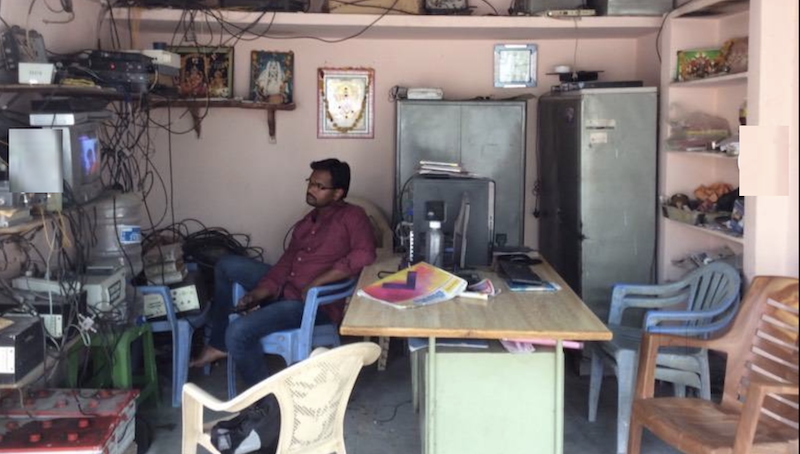
NEW DELHI: India has cancelled or allowed to expire the registrations of 1,072 multi-system operators (MSOs) as of 31 October according to a government document, in what amounts to a brutal reckoning for an industry that failed to keep pace with regulation.
The ministry of information and broadcasting’s list reads like a roll call of the defeated. From Mumbai’s Hathway Cable & Datacom to Reliance Jio Media, from metropolitan giants to village networks in Mizoram and the Andaman Islands, the casualties span every corner of the country.
The reasons for cancellation paint a damning picture. Non-compliance accounts for the vast majority—846 operators simply failed to meet regulatory requirements. Another 199 surrendered their registrations voluntarily. Security clearance denials by the home ministry claimed 13 operators, whilst 12 died or had their companies dissolved. Just two registrations were cancelled as duplicates.

The crackdown accelerated dramatically in August 2023, when 322 registrations were terminated in a single day—all for non-compliance. The wave of cancellations has continued steadily since, with operators in states from Kashmir to Kerala facing the axe.
Some of the cancelled operators had been in business for over a decade. Asiant Network, which received its registration in June 2012, saw it expire in June 2022. Others barely lasted a few years before surrendering their licences.
The digitalisation of India’s broadcasting sector, mandated by the Telecom Regulatory Authority of India, has proved too much for smaller players. Many operators in tier-2 and tier-3 cities—with names like Lucky Star Vision in Chhattisgarh and Om Cable Network in Gujarat—simply couldn’t afford the technological upgrades.
The list includes several subsidiaries of larger groups that once dominated regional markets. Hathway alone lost multiple registrations, including Hathway New Concept Cable & Datacom and Hathway Rajesh Multichannel. Even telecom heavyweight Reliance Jio Media surrendered its MSO registration in September 2022.
Regional operators have been hit hardest. In Maharashtra, dozens of small-town cable networks—from Ganapati Digital Network in Amravati to Matoshree Dish Cable Service in Warora—have vanished. Tamil Nadu lost operators serving everywhere from Coimbatore to Kanyakumari. The northeastern states saw networks in Manipur, Mizoram and Tripura fold.
The ministry’s document shows cancellations dating back to 2013, but the pace has intensified. Between 2020 and 2024, hundreds of operators either gave up or were forced out. The expired registrations—those that simply weren’t renewed—tell their own story of an industry in retreat.
What remains is a consolidated market dominated by a handful of players and direct-to-home satellite services. For India’s cable wallahs, the small-time entrepreneurs who once controlled the nation’s television access neighbourhood by neighbourhood, the game is up. The digital age demanded compliance, investment and scale. Most could deliver none of the three.
Meanwhile the country has just 818 registered multi-system operators (MSOs) as of 31 October 2025 which have registered themselves as running their operations with the MIB —a stark reminder of how digital disruption has upended traditional broadcasting.
The list, maintained by the ministry of information and broadcasting, reveals a fragmented sector dominated by a handful of giants and hundreds of small players struggling to stay relevant. Den Networks, Hathway Digital and Siti Networks lead the pack, but the real story lies in the margins—dozens of proprietorships and partnerships with names like “Maa Laxmi Cable Network” and “Shri Balaji Digital” clinging to local markets across tier-two and tier-three towns.
Maharashtra leads with the highest concentration of operators, followed by West Bengal and Karnataka. Many licences carry cryptic notations: “provisional registration”, “compliance status: non-compliant”, “MSO registration suspended”. Some have been cancelled, revoked, then reinstated—a bureaucratic dance that mirrors the sector’s turbulence.
The pandemic accelerated what was already inevitable. Streaming platforms like Netflix, Amazon Prime and JioHotstar, have lured younger viewers away, whilst regulatory changes including mandatory tariff orders have squeezed margins. Several operators have seen their registrations extended “provisionally” multiple times, suggesting they’re operating in regulatory limbo.
Yet pockets of resistance remain. Regional players like Tamil Nadu Arasu Cable TV Corporation and Godfather Communication continue operating under provisional licences, fighting court battles over security clearances. New registrations still trickle in—fifteen fresh licences were issued between January and October 2025—but whether these represent genuine business opportunities or entrepreneurial delusion remains unclear.
For India’s cable operators, the writing isn’t just on the wall—it’s streaming in high definition.






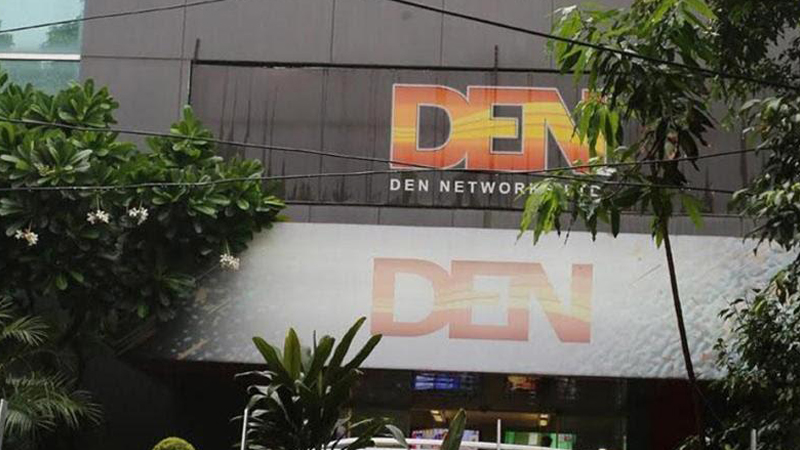
MUMBAI: When margins wobble, liquidity talks and in Q3 FY25-26, cash did most of the talking. Den Networks Limited closed the December quarter with consolidated revenue of Rs.251 crore, marginally higher than the previous quarter but down 4 per cent year-on-year, even as profitability stayed resilient on the back of strong cash reserves and disciplined cost control.
Subscription income softened to Rs.98 crore, slipping 3 per cent sequentially and 14 per cent from last year, while placement and marketing income offered some cheer, rising 15 per cent quarter-on-quarter to Rs.148 crore. Total costs climbed faster than revenue, up 7 per cent QoQ to Rs.238 crore, driven largely by higher content costs and operating expenses. As a result, EBITDA dropped sharply to Rs.13 crore from Rs.19 crore in Q2 and Rs.28 crore a year ago, pulling margins down to 5 per cent.
Yet, the bottom line refused to blink. Profit after tax stood at Rs.40 crore, up 15 per cent sequentially and only marginally lower than last year’s Rs.42 crore. A healthy Rs.57 crore in other income helped cushion operating pressure, keeping profit before tax at Rs.48 crore, broadly stable quarter-on-quarter despite the tougher cost environment.
The real headline-grabber, however, sits on the balance sheet. The company remains debt-free, with cash and cash equivalents swelling to Rs.3,279 crore as of December 31, 2025. Net worth rose to Rs.3,748 crore, while online collections accounted for 97 per cent of total receipts, underscoring strong cash discipline across operations, including subsidiaries.
In short, while Q3 showed signs of operating strain, the financial backbone remains solid. With zero gross debt, steady profits and a formidable cash war chest, the company enters the next quarter with flexibility firmly on its side proving that in uncertain markets, balance sheet strength can be the best growth strategy.






