Cable TV
Important to have a product portfolio that can stand the next decade of digital growth: NxtDigital CEO

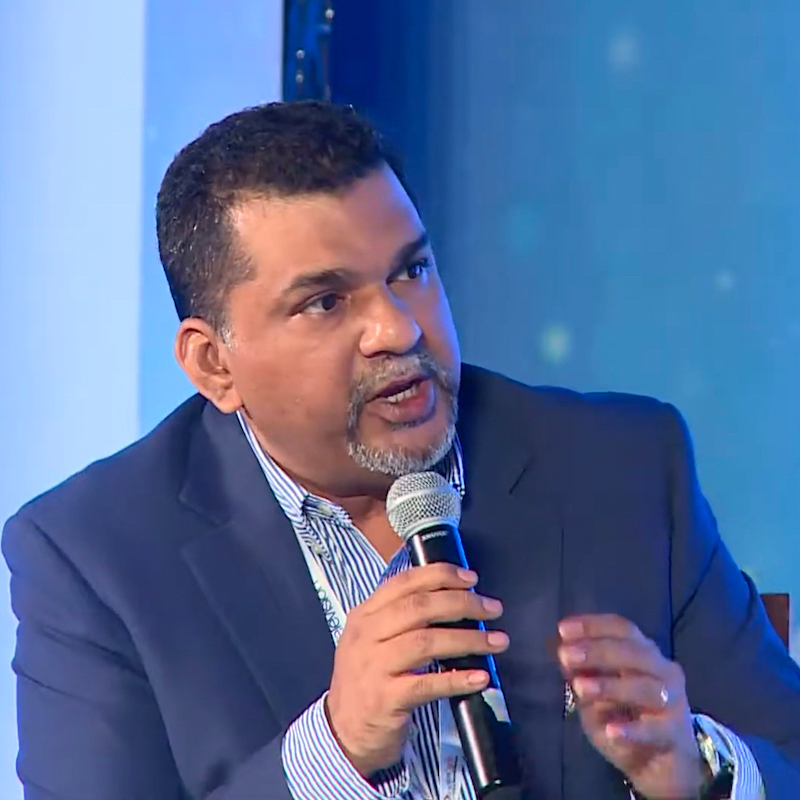
Mumbai: NxtDigital has upskilled 30-35 per cent of its workforce in digital technology, in addition to making a complete shift to the pre-paid model through enabling digital payment mechanisms, said MD and CEO Vynsley Fernandes as he talked about the company’s transformation from a cable company into a digital platforms company.
Fernandes was in a fireside chat with Indiantelevision.com group founder CEO and editor-in-chief Anil Wanvari at the 18th edition of Video & Broadband Summit (VBS 2022) organised by Indiantelevision.com on Wednesday.
Pandemic as the trigger point

The digital metamorphosis of NxtDigital, as well as the ecosystem as a whole, started a couple of years back in 2019 when the new tariff regime (NTO) was introduced, but it was the pandemic that actually gave impetus to it. “One of the biggest learnings from the pandemic was that digital aspirations are not limited to the city dweller. The tier 2, 3, and 4 towns, even though poorly connected to both TV and broadband, are equally aspirational. At least 60 per cent of our base comes from the semi-urban, semi-rural and rural markets, and yet there’s still significant growth that has to be achieved,” said Fernandes.
Realising the importance of supporting these markets, the company set up digital Nxthubs at locations across India to deliver digital TV with up to 650 channels, broadband, and OTT.
Also read : NxtDigital launches 40 NxtHubs across India
The pandemic also forced the traditional distribution platforms that were facing challenges due to changing consumer preferences, to look at new strategies for growth, and new technology for fresh, and innovative products. This, combined with the realisation that customers increasingly want a single window to manage their multiple products and solutions, led NxtDigital to launch three new offerings including an advanced android set-top box, TV stick, and a combo product providing access to around 700 TV channels, OTT content (including regional) and broadband with speeds up to 1000 Mbps. The company had also introduced a work-from-home bundle during the pandemic.
“We have been extremely cognisant of the fact that times are changing, and we need to be at the forefront to be able to harness technology to deliver the best experience to customers,” said Fernandes.
Also read : Nxtdigital launches ‘live’ TV stick and Android STB
Working with broadcasters and LMO/digital service partners
Transformation is never an easy process. Like any other change that is met with resistance in the beginning, it took some effort for NxtDigital to convince and train its digital service partners, also the Last Mile Owners (LMOs), to support the implementation of the fully digital payments enabled, pre-paid model.
And the results have been quite positive. “While individual verticals may have seen some softening, the absolute growth in terms of revenue for the LMOs saw an uptick because of the increased ticket size allowed by the combo product (Broadband + OTT+ Digital TV). Our partners are now, in fact, excited to know about the next digital service they can offer customers,” shared Fernandes.
As far as broadcaster partners are concerned, he added that even though they have largely been supportive, there’s the need at the top of the pyramid for more patience and the understanding that the industry is still in a state of flux. It will take some time for the metrics to be worked out, and for the results to start manifesting as significant gains.
“Though we can’t yet call it significant, there has been steady growth in the business quarter-on-quarter, and this not necessarily from just the video business, but also broadband and OTT. The overall pie has definitely grown, and the stakes are only getting better from here as long as collaborations and innovation come into play,” asserted Fernandes.
Also read: I&B ministry lays down guidelines for infrastructure sharing by MSOs
Appreciating the government’s new guidelines for infrastructure sharing, he remarked, “A DPO can no longer say that it cannot service a client/region because of the high cost of connectivity. As we see a lot more infra sharing happening, broadcasters will also be a beneficiary to that growth.”
Word of Caution
As a word of caution, Fernandes pointed out four themes that players need to align themselves with to thrive in the digital future.
Commenting on the fate of cable and broadband he noted, “Cable will continue to grow, more so with I&B Ministry’s infrastructure sharing guidelines for MSOs announced last December. However, there will be significant growth in broadband. This has also been indicated by Trai’s recommendation on AGR (adjusted gross revenue) that will encourage cable operators to provide broadband services. The one thing that’s clear is that the government is looking at facilitating the growth of the industry.”
Fernandes’ third observation was that broadband over satellite and regionalised OTT will start to make inroads over the next couple of years. Lastly, the characteristics of the business will impact single product companies. In the ‘and’ world that awaits, cable or broadband or OTT alone will find it difficult to survive. The future will belong to those who are able to leverage technology to combine them externally and internally into a robust product.
Fernandes believes that NxtDigital’s product portfolio comprising broadband, HITS, digital cable television, content syndication, and teleshopping will stand the company in good stead. He surmised by saying that “It is necessary to have a product portfolio that can stand the next decade of digital growth.”
The day-long virtual summit held on 19 January was co-powered by broadpeak. Disney Star was the presenting partner, while NxtDigital was the summit partner.





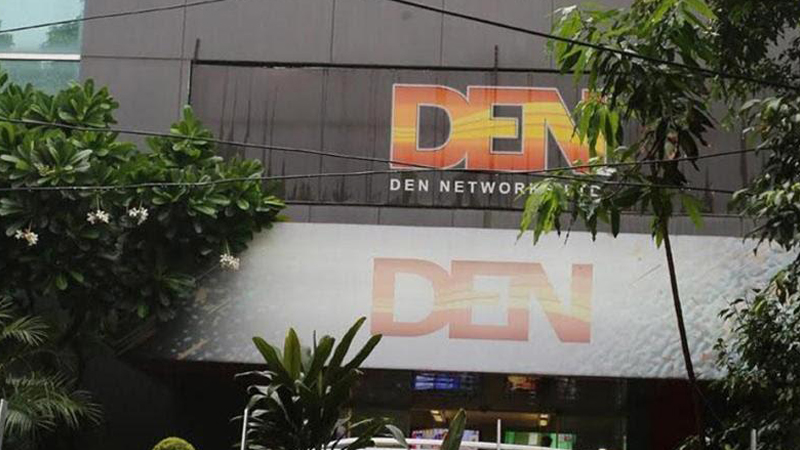
MUMBAI: When margins wobble, liquidity talks and in Q3 FY25-26, cash did most of the talking. Den Networks Limited closed the December quarter with consolidated revenue of Rs.251 crore, marginally higher than the previous quarter but down 4 per cent year-on-year, even as profitability stayed resilient on the back of strong cash reserves and disciplined cost control.
Subscription income softened to Rs.98 crore, slipping 3 per cent sequentially and 14 per cent from last year, while placement and marketing income offered some cheer, rising 15 per cent quarter-on-quarter to Rs.148 crore. Total costs climbed faster than revenue, up 7 per cent QoQ to Rs.238 crore, driven largely by higher content costs and operating expenses. As a result, EBITDA dropped sharply to Rs.13 crore from Rs.19 crore in Q2 and Rs.28 crore a year ago, pulling margins down to 5 per cent.
Yet, the bottom line refused to blink. Profit after tax stood at Rs.40 crore, up 15 per cent sequentially and only marginally lower than last year’s Rs.42 crore. A healthy Rs.57 crore in other income helped cushion operating pressure, keeping profit before tax at Rs.48 crore, broadly stable quarter-on-quarter despite the tougher cost environment.
The real headline-grabber, however, sits on the balance sheet. The company remains debt-free, with cash and cash equivalents swelling to Rs.3,279 crore as of December 31, 2025. Net worth rose to Rs.3,748 crore, while online collections accounted for 97 per cent of total receipts, underscoring strong cash discipline across operations, including subsidiaries.
In short, while Q3 showed signs of operating strain, the financial backbone remains solid. With zero gross debt, steady profits and a formidable cash war chest, the company enters the next quarter with flexibility firmly on its side proving that in uncertain markets, balance sheet strength can be the best growth strategy.






