Independent
IFFI 2025: A father, a son, and an unfinished film about Kashmir

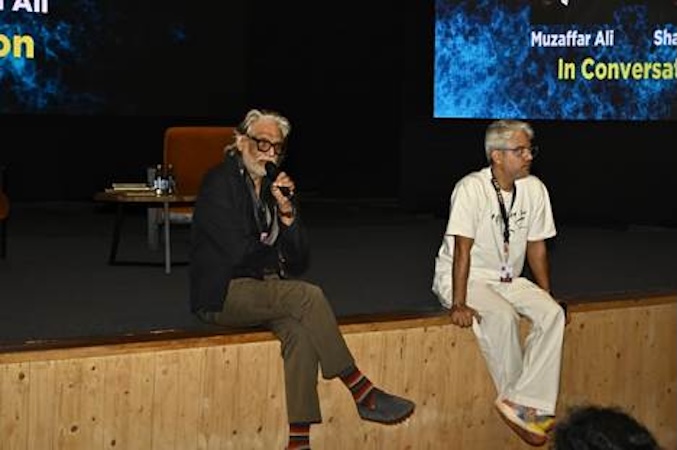
GOA: Some legacies are inherited. Others are rescued from the wreckage. At the International Film Festival of India (IFFI) today, Shaad Ali sat across from his father, Muzaffar Ali, and walked him through a career that began with childhood sketches and ended—provisionally—with an unfinished film about Kashmir.
The session, titled Cinema and Culture: Reflections from Two Eras, was moderated by Shaad himself, with filmmaker Ravi Kottarakara opening proceedings with a tribute to the duo. What followed was less interview than excavation: memory, failure, poetry, and the stubborn refusal to let go of a dream called Zooni.
Muzaffar Ali, whose Umrao Jaan remains a touchstone of Indian cinema, traced his origins not to film but to art and poetry. Cinema, he said, came later—a space where imagination could escape the “predictable imagery of mainstream storytelling.” Calcutta opened that world. Gaman, his 1978 film about migration and displacement, won the Silver Peacock at IFFI but left him unmoved. “Success did not make me feel empowered,” he said. “It only reminded me that new struggles were always waiting ahead.”

The craft, he explained, grew from rootedness. Music flowed from poetry and philosophy. Umrao Jaan’s melodies demanded humility and collaboration. “Poetry makes you dream, and the poet must dream with us,” he said.
Then came Zooni, the bilingual Kashmir project that collapsed under the weight of logistics, culture, and seasons. Muzaffar Ali called it “a dream beyond many dreams” and painful in its failure. But Shaad is now restoring it—revisiting negatives, soundtracks, and his father’s cinematic vision. A video titled Zooni: Lost and Found, screened at the session, captured their journey: dreams, setbacks, and the hope of reimagining what was lost.
During the Q&A, Muzaffar Ali was asked about reviving films that reflect Kashmir’s real culture, not just its peaks and valleys as a backdrop for songs. His answer was sharp: “Kashmir has everything. You don’t need to invite talent, you need to grow it there. Zooni, he insisted, was conceived as exactly that kind of film.
Whether the son can finish what the father started remains uncertain. But the inheritance is clear: cinema as devotion, not decoration. And some dreams, it turns out, refuse to stay buried.






MUMBAI: While Hindi cinema churns out its usual fare of high-octane spectacles and star vehicles, a parallel universe of Indian cinema has been quietly collecting accolades on the world stage. These are films without marquee names, films that premiered at Cannes and Sundance, films that made critics weep and festival audiences stand in ovation. Yet back home, most of them barely managed a whimper at the box office.
It’s a peculiar paradox. International juries hand them top prizes, streaming platforms chase their rights, and foreign critics pen glowing reviews. But in India, these films struggle to find screens, audiences, or even basic awareness. They’re the best-kept secrets of Indian cinema, hiding in plain sight.

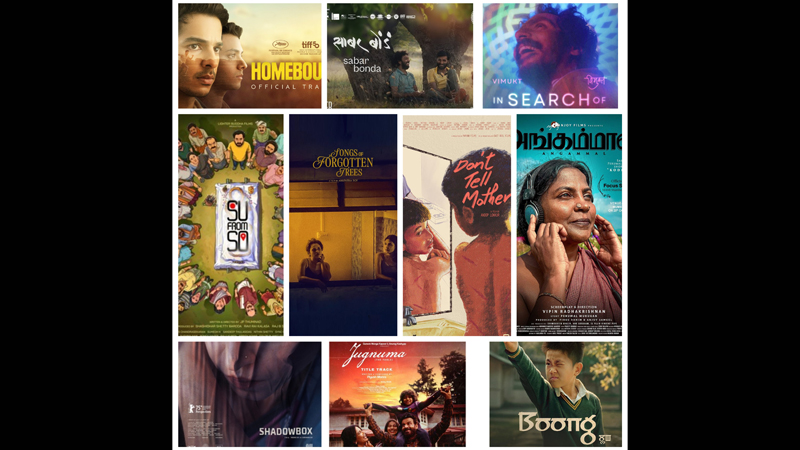
Homebound might be the poster child for this phenomenon. Neeraj Ghaywan’s searing drama about migrant workers journeying home during the pandemic premiered at Cannes in the prestigious Un Certain Regard section. Martin Scorsese signed on as executive producer. It became India’s official Oscar entry for 2026. At the Toronto International Film Festival, it finished as second runner-up for the People’s Choice Award. Yet when it released theatrically in September 2025, it collected just Rs 3.04 crore. Netflix picked it up, where it finally found a wider audience, but the theatrical indifference speaks volumes about how little appetite exists for such stories in multiplexes.

Don’t Tell Mother takes us into even more uncomfortable territory. Anoop Lokur’s Kannada-language drama about a nine-year-old boy navigating violence at school and emotional suffocation at home had its world premiere at the 30th Busan International Film Festival. Produced by Mikayl Henke and Matthew Jenkins, and co-produced by Karan Kadam and Nishil Sheth, the film examines how fear, shame, and patriarchy shape childhood through a child’s unflinching gaze. It had limited prestige screenings in Bengaluru and Mumbai but hasn’t properly released yet. Mubi is expected to stream it in 2026. The theatrical revenue? Negligible. But the international critical response? Rapturous.

Sabar Bonda (or Cactus Pears, as it’s known internationally) won the Grand Jury Prize in the World Cinema Dramatic category at Sundance. Not a minor feat for any film, let alone a Marathi-language debut exploring queer desire in rural Maharashtra. Director Rohan Parshuram Kanawade crafted something rare: a film about grief and suppressed longing that feels both deeply local and utterly universal. It managed a respectable Rs 3 to 4 crore at the Indian box office in September 2025, which counts as a strong indie performance. But for a Sundance winner, you’d expect more buzz, more screens, more conversations.

Vimukt (In Search of the Sky) took home the Netpac Award for Best Asian Film at TIFF. Jitank Singh Gurjar’s portrait of an elderly couple bringing their mentally challenged son to the Maha Kumbh Mela is achingly tender, filmed with a documentary-like intimacy in the heart of Braj. It got limited screenings through PVR INOX’s “Director’s Rare” programme and earned less than Rs 50 lakh. Netflix is apparently in talks, but for now, it remains largely unseen.

Songs of Forgotten Trees made history at Venice. Anuparna Roy became the first Indian woman to win the Best Director prize in the Orizzonti section for her film about two migrant women forming a fragile bond on Mumbai’s fringes. It’s currently touring international festivals and hasn’t even attempted a proper Indian release yet. The film exists in that rarefied space where critical prestige and commercial viability rarely overlap.

Jugnuma: The Fable became the first Indian film ever to win Best Film at the Leeds International Film Festival. It premiered at Berlinale in the Encounters section. Shot on 16mm film stock, Raam Reddy’s mythic journey through Himalayan landscapes stars Manoj Bajpayee and Tillotama Shome. It released in September 2025 and is now streaming on Zee5, where it earned somewhere between Rs 5 to 6 crore. Not terrible, but hardly the returns you’d expect for a film of this pedigree.

Baksho Bondi (Shadow Box) premiered at Berlinale and earned Tillotama Shome the Best Actor (Female) award at South Asia Fest in Toronto. This gritty, experimental Bengali film about a working-class woman shouldering economic survival whilst her husband battles PTSD released in August 2025. It made roughly Rs 1.5 crore and is now available for rent on Apple TV and Prime Video. Brilliant, difficult, necessary cinema that most people will never see.

Angammal won Best Indie Film and Best Actress at the Indian Film Festival of Melbourne 2025. Based on a story by celebrated Tamil writer Perumal Murugan, it follows an elderly widow in rural Tamil Nadu quietly rebelling against social conventions. It released on December 5, 2025, made about Rs 2 crore, and is streaming on SunNXT. Another powerful film that barely registered beyond festival circuits.

Boong premiered at TIFF and received a Special Mention at IFFM 2025. The film tells the story of a young boy searching for his missing father against Manipur’s troubled backdrop. Produced by Farhan Akhtar’s Excel Entertainment, it managed just Rs 80 lakh to Rs 1 crore during its limited September release. No OTT platform has been announced yet. Director Lakshmipriya Devi crafted something tender and politically resonant, but it vanished almost instantly from theatres.
Honourable mention: Su From So

Not every indie film gets ignored, though. Su From So is the glorious exception that proves the rule. JP Thuminad’s strange, eerie comedy about a coastal Karnataka town descending into collective madness became a breakout hit on the international festival circuit. Then something remarkable happened: it also became a massive commercial success in India. Released on July 25, 2025, it earned Rs 125 crore worldwide, making it one of the highest-grossing Kannada films ever. It’s now streaming on Amazon Prime Video.
Su From So shows what made it different. Perhaps its genre-bending approach, mixing folklore with horror and humour in ways that felt fresh. Perhaps it simply caught the zeitgeist. Or perhaps it’s a reminder that Indian audiences will embrace unconventional cinema when it’s marketed properly and given a proper release. The question is why this level of support remains so rare.
The pattern is clear and depressing. Indian indie films win at Sundance, Cannes, Venice, Berlin, and Toronto. They collect prizes, critical raves, and international distribution deals. Then they come home to empty theatres, minimal marketing budgets, and audiences who’ve never heard of them. The multiplexes won’t give them screens. The distributors won’t take risks. The audiences won’t show up, partly because they don’t know these films exist.
It’s a strange kind of cultural blindness. We celebrate when an Indian film does well abroad, but only if it arrives with the right pedigree or star power attached. These smaller, fiercer, more personal films get lost in the shuffle. They’re too art house for mainstream audiences, too unmarketable for wide release, too challenging for easy consumption.
Yet they represent some of the most vital, urgent cinema being made in India today. They tackle caste, class, gender, sexuality, and trauma with unflinching honesty. They experiment with form and language. They trust their audiences to think, feel, and engage. They’re the films future generations will study when they want to understand what India actually felt like in 2025.
For now, though, they remain hidden treasures, waiting to be discovered by viewers willing to look beyond the multiplex offerings. The world has already noticed them. Perhaps it’s time India did too.






