DTH
IDOS 2016: The DD FreeDish alternative for TV channels & advertisers

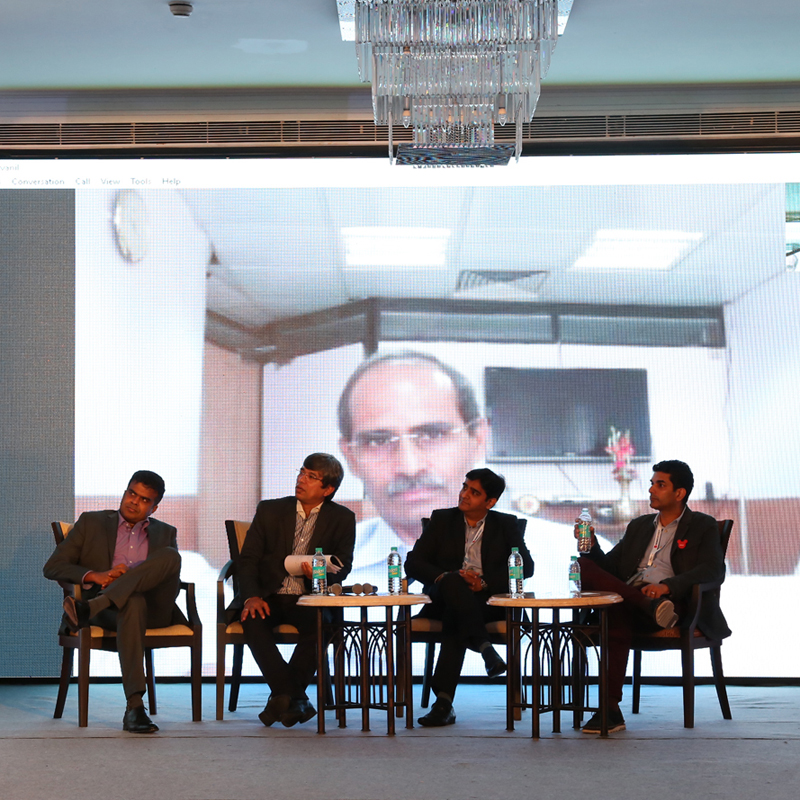
GOA: Has the pubcaster DD’s free to air platform FreeDish emerged as a viable proposition for advertisers? What are its expansion plans, going forward? These were some of the questions posed by the Indiantelevision.com founder, CEO & Editor in chief Anil Wanvari at IDOS 2016 in Goa during the session on FTA channels to SAB Group CEO Manav Dhanda, B4U broadcasting division COO and CFO Sandeep Gupta, Starcom India group CEO Mallikarjun ‘Malli’ Das, and DD’s FreeDish deputy director-general (engineering) AK Jha.
Jha started out by saying that the DTH platform has 55 private tenants including those from the majors – Sony Pictures Television Networks, Star India, and Zee TV – as well as from smaller broadcast networks such as B4U and the SAB group. “We want more such customers to come on our platform,” he expressed. He, however, confessed that getting an exact count of the number of subscribers was difficult as FreeDish was only a platform and the STBs were distributed by recognized vendors. “But, by extrapolating TRAI DTH data, conversations with STB manufactures and chipset suppliers, our estimates are that it could be anywhere between 20 million and 40 million. We would safely put it at about 25 million,” said Jha.
Gupta and Dhanda explained why the two networks have taken the FTA route on the DTH platform.

“As a broadcaster, we wanted to be on every platform. Since our focus was to be present everywhere, we got on to it very early when there were very few tenants. Although we were pay channels, we were FTA on DD FreeDish. B4U Movies was the Star Plus of DD direct is what MSOs told us. Only after BARC data rolled out did we come to know that rural has got so much of weightage. Otherwise, FreeDish was only one of the means of getting ourselves available everywhere,” said Gupta.
Added Dhanda: “We wanted to build the maximum reach. We have five channels. We are also on cable, DTH and other platforms. It was not triggered by the advent of BARC data which suggests you need to be there. There is a cost for entry. Distribution and content are major costs for broadcasters. As a broadcaster, we want ROI. Syndicated content channels like us have not managed to build a compelling pay TV channel proposition. Hence, it is safe to go to FTA.”
But, is it good to go FTA on DD FreeDish? Since the only revenue stream is from advertising, is the platform attracting advertiser interest?
“FTA has just come into focus as BARC gave a new set of lenses. Earlier, TAM used to measure LC1 but media planners did not take it seriously as they were urban focused. Now with the 6,000 metres under BARC’s rural sample, it has taken on a different hue,” said Malli. “There are three segments advertisers look at from an audience segmentation – HD – 9 million-10 million homes; the fat middle with all the pay channels. And, there is the rural which is FTA. For brands, which are purely rural, it makes sense to go FTA. Distribute the spends over 30-40 weeks on an FTA media outlet, rather than finish it over eight to nine weeks on the more expensive pay channels. Some money is going into FTA from existing TV channel spends, some is coming from local cable, wall paintings and OOH.”
But, are media buyers buying air time on channels on FreeDish purely for the rural audiences or for urban and rural audiences as defined by BARC? “When media planners are buying for rural, it makes sense,” he said. “When they look at rural+urban, they start looking at old currencies, and things don’t move. There’s still some confusion. Once these old data currencies are exhausted, and some new benchmarks are set for rural, the ad dollars will start flowing in aggressively. HD channels have only nine to 10 million subscribers, yet planners are putting the advertiser’s money into them. Whereas FTA has a larger reach, but the currency dynamics need to be taken care of.”
Is there a ROI coming in for advertisers? “It’s a little too early. The plane has to yet land,” opined Malli. ”Retailers, distributors and sales people say, take Star Plus. The rural sample is 6,000 metres. We have to triangulate what the trade says with the BARC data, as they will want the spectacular as they will want the ads to be in the biggest properties. Currently, we have put the money for our clients on FTA. We have to get a larger body of evidence.”
Jha said that DD FreeDish is augmenting its capacity by 24 channels and gearing up for this by moving to MPEG4 STBs, which are going to be made available to subscribers soon. “Currently, we are empanelling the STB manufacturers for MPEG4 boxes,” he explained. “Within four months, the STBs will roll out. Post that, the existing subscribers will be able to receive the 80 channels, whereas the new subscribers with MPEG 4 boxes will get 104 channels after the auctions conclude and tenants got on board.”
Malli expressed that this was good news, it was not something that the advertising community would put its money immediately on .”At least, we know what we are investing in with the MPEG-2 boxes now,” he said. “We will have to see how many MPEG4 STBs roll out, how they are accepted before we put our might behind them.”
Jha responded to this by saying that, in the new regime of MPEG4, DD FreeDish will be able to tell the advertiser community, exactly how many subscribers there were because the conditional access was being built in to the STBs. “Over time, we hope the entire universe of FreeDish will migrate to the new boxes,” he said.
Jha is bullish about the prospects of free TV. “Customers in rural areas cannot afford the high sticker prices of Rs 3,000-7,000 per year that commercial DTH players are charging consumers,” he said. “Customers need to pay just Rs 2,000-Rs 3,000 for the STBs once to be able to receive a bouquet of good channels free. Hence, we are quite confident of DD FreeDish and the alternative we offer to Indian TV viewers.”





DTH
DD Free Dish e-auction revenue dips to Rs 642 crore as slot sales fall
Revenue dips as revised norms reshape bidding in 94th round
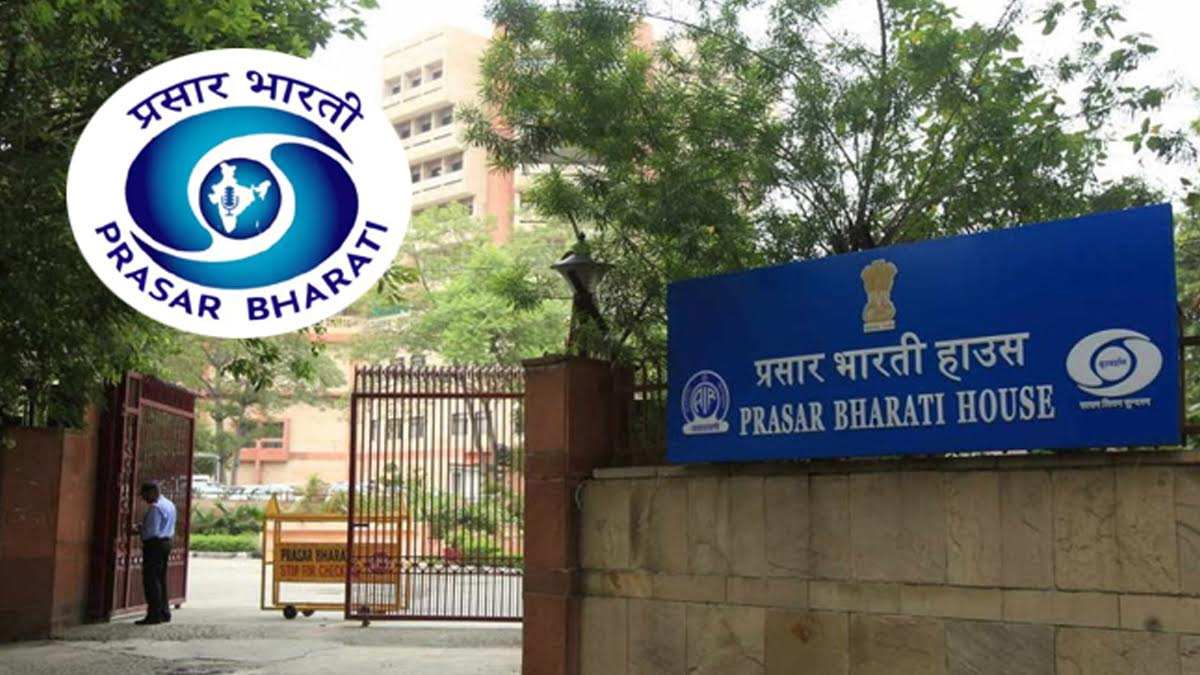
NEW DELHI: Prasar Bharati’s DD Free Dish has closed its 8th annual, and 94th overall, e-auction for MPEG-2 slots with total collections of Rs 642 crore for the period April 1, 2026 to March 31, 2027.
That is lower than last year’s Rs 780 crore haul, with 55 slots sold compared with 61 in FY25–26. The softer topline reflects both a slimmer inventory and a recalibrated auction framework.
This was the first auction conducted after amendments to the e-auction methodology, including tighter eligibility norms and a revised reserve price structure for MPEG-2 slots. The stated aim was greater transparency and more serious participation. The immediate outcome appears to be more measured bidding in certain categories.
Day one set the tone. Eight slots were sold, six in the premium Bucket A+ and two in Bucket A. The strong early action in A+, which typically houses Hindi GECs and movie channels, reaffirmed the enduring appeal of mass Hindi programming on the platform.
Among the broadcasters securing slots in the initial rounds were Zee Entertainment Enterprises, Sony Pictures Networks India, Viacom18’s Colors network, Sun Network and Shemaroo Entertainment. Their continued presence signals that, despite the pull of digital platforms, Free Dish remains a strategic must have for legacy networks chasing scale in price sensitive markets.
The final bouquet of 55 channels leans heavily towards Hindi news, movies, devotional fare, Bhojpuri and regional programming.
In Hindi news, familiar heavyweights such as Aaj Tak, ABP News, India TV, News18 India, Republic Bharat and Zee News made the cut. Entertainment and movie offerings include Colors Rishtey, Star Utsav, Dangal TV, Sony Pal, Shemaroo TV, Goldmines, B4U Movies and Zee Biskope. Devotional viewers will find Aastha, Sanskar and Sadhna Gold among the selected channels.
Regional representation includes Sun Marathi, Fakt Marathi, PTC Punjabi and GTC Punjabi.
Equally telling were the absences. Broadcasters such as Big Magic, Filamchi Bhojpuri, India News, Bharat Express, Movieplex Maithili, TV9 Marathi, Shemaroo Marathibana, Zee Chitra Mandir and Satsang did not participate. The pullback is particularly visible across Marathi, Bhojpuri, Maithili and spiritual programming. Industry observers point to the revised reserve prices, tighter eligibility norms and a reassessment of commercial viability as possible factors.
DD Free Dish continues to beam into over 40 million homes, largely in rural and semi urban India. For advertisers and broadcasters alike, it offers efficient access to Bharat markets where pay TV penetration remains uneven and OTT subscriptions are limited.
The moderation in revenue this year may be read as a pause rather than a retreat. Fewer slots, a reworked auction playbook and evolving broadcaster strategies have clearly shaped outcomes. Yet premium Hindi entertainment retains its pull, and the platform’s mass reach remains hard to ignore.
As the FY26–27 line-up settles in, the mix of winners and walkaways will define the private satellite channel landscape on DD Free Dish for the year ahead.