Event Coverage
IDOS 2015: The Broadband Drive

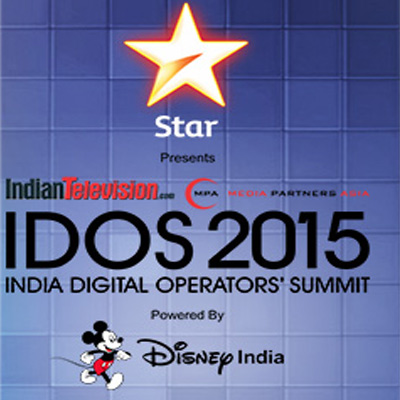
GOA: The penultimate session of the Indian Digital Operators Summit (IDOS) 2015 was a panel discussion on ‘The Broadband Drive.’
The session was moderated by Indiantelevsion.com founder, CEO and editor-in-chief Anil Wanvari and Media Partners Asia executive director and founder Vivek Couto. The other members of the panel were Maharashtra Cable Operators Foundation (MCOF) president Arvind Prabhoo, Hathway MD & CEO Jagdish Kumar, Ortel Communications Limited head of broadband Servises Jiji John, Lukup Media founder and CEO Kallol Borah and Broadcom India MD, head – business development, India and South-East Asia Rajiv Kapur.

The session began with Jagdish Kumar saying that earlier, Hathway had positioned itself as a cable company that also offered internet, and now it had started positioning itself as one that offered both cable and broadband. Hathaway had doubled its turnover from broadband as compared to last year. However, the company had yet to firm up plans for OTT, said Kumar.
Kumar was of the opinion that the government should take the eight per cent revenue share from data revenue of the cable industry only after higher internet penetration levels took place after two or three years. “This has to be looked upon as an infrastructure development,” he added.
“Average revenue per user (ARPU) is not the driver for broadband to be taken up as a business by MSOs or LMOs. It is margins that actually matter. The reason why MSOs and LMOs have taken up broadband is because there was a requirement,” said John.
In his view, access devices have multiplied over time and with that the consumer wanted to see videos on whatever device, whenever, and wherever. “While mobile internet is the only option when one travels, it is wired broadband that offers the proper stable throughput. Systems such as DOCSIS 3.0 offered a better experience than television did,” John added.
For Ortel, broadband was an important stream and DOCSIS 3 was being tested in a limited way. Ortel garnered subscriber numbers in three digits during the pilot phase revealed John. “We have now started offering video free to broadband customers,” said John.
The company is looking at charging a customer approximately Rs 1000 – 1200 for 10 mbps broadband and Rs 1999 for 50 mbps. “This will subsidise content charges to broadcasters for the free video offerings to subscribers,” he said.
Similarly, Hathway was also considering bundling of HD content free along with broadband, according to Kumar.
India has its own unique business and environmental challenges, which include unpredictable power and last mile cable laying amongst others. However, technology was available to serve India and/or China specific solutions, said Broadcom’s Kapur. “On the subscriber side, PC penetration is low and operators saw the STB only as a live video delivery necessary evil. Some operators would proactively drive broadband, while others would react only,” he said.
Emphasising that if broadband was considered as a ‘use case’ as opposed to a pipe, Kapur said that services delivered to the consumer could be quite game changing. “Broadcom is very bullish about broadband in India. Broadband is the only answer for a cable operator to retain customers as well as raise ARPUs. Progressive minded cable operators will take advantage of the fact that networks could be two way and will establish a service that would retain a customer with a higher ARPU. The higher ARPU customers were in turn needed to subsidise the lower ARPU customers. Rather than government driven, a private sector sustainable business and profitability driven long term sustainable business model is required,” Kapur opined.
The pipe is already in place said MCOF’s Prabhoo. “The question is about how one utilises it. There is enough fibre waiting to be exploited for Phase III of digitisation. MCOF is educating its members about the ways to monetise the pipe. On an experimental basis, MCOF tied up with a PSU, a national ISP that brought the pipe to a particular place, and from there, over the last 20 days, we have connected 25 branches of a nationalised bank with secured leased lines. This would be scaled up to about 125 over the next few days. Over the next three months, this would further be scaled up to 525 branches across the state of Maharashtra,” he informed.
This would help build LMOs confidence that they could deal with a PSU explained Prabhoo.
Also, some MCOF members had established WiFi service hotspots, which had initially offered high speed internet free of charge for the first six months, and now could be availed though a voucher at a small price of Rs 5 for three hours, or Rs 10 per day from small vendors such as a ‘paan shop.’ Prabhoo claimed that through the commissions on voucher sale alone, a paan shop owner’s earnings had gone up by Rs 8000 per month.
Bullish on the broadband sector in India, Prabhoo said that he envisioned a number of innovations coming into the business.
Explaining his company’s product, Lukup Media’s Borah said that it offered on-demand multiscreen TV service and operates as an OTT platform through a multiscreen home gateway that brought internet delivered content to television and other consumer devices. In the coming months, Lukup also planned to bring linear broadcast TV channels and internet access though a single connection.
Questioning as to why cable companies were not sharing infrastructure in the way telcos were, Wanvari of the opinion that cable companies could compete on products. Kumar agreed that there was merit in cable companies sharing infrastructure for a lot of backend processes and expected this to evolve naturally over a period of time. On the other hand, Prabhoo said that LMOs would be willing to upgrade their infrastructure to work with telcos for providing broadband.




Event Coverage
Anime India announces Amazon MX Player as co-presenting partner for Anime India Kolkata 2026
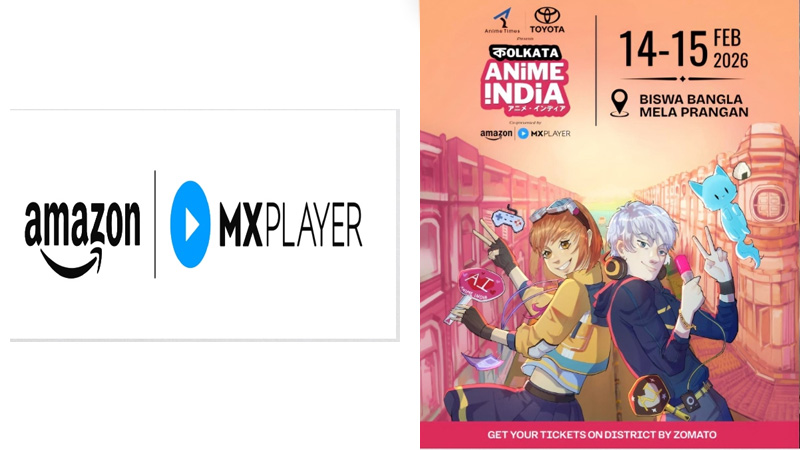
MUMBAI: Riding high on the success of its blockbuster Mumbai debut, Anime India is accelerating its nationwide expansion with the announcement of Amazon MX Player as the co-presenting partner for Anime India Kolkata. The partnership marks a significant step forward in the festival’s mission to deliver large-scale, accessible, and fan-first anime experiences across the country.
Scheduled for 14 and 15 February 2026 at the iconic Biswa Bangla Mela Prangan, Anime India Kolkata will launch the first regional chapter of what is set to be a year-long, multi-city tour. As the curtain-raiser for the 2026 circuit, the Kolkata edition aims to fuse the energy of global Japanese pop culture with India’s fast-growing community of anime, manga, and pop-culture fans.
A household name in digital entertainment, Amazon MX Player brings unmatched reach and cultural relevance to the Anime India platform. With its expanding focus on anime and youth-driven content, Amazon MX Player’s involvement as co-presenting partner reinforces Anime India’s vision of making anime culture more inclusive breaking barriers of language, geography, and accessibility to connect with fans nationwide.
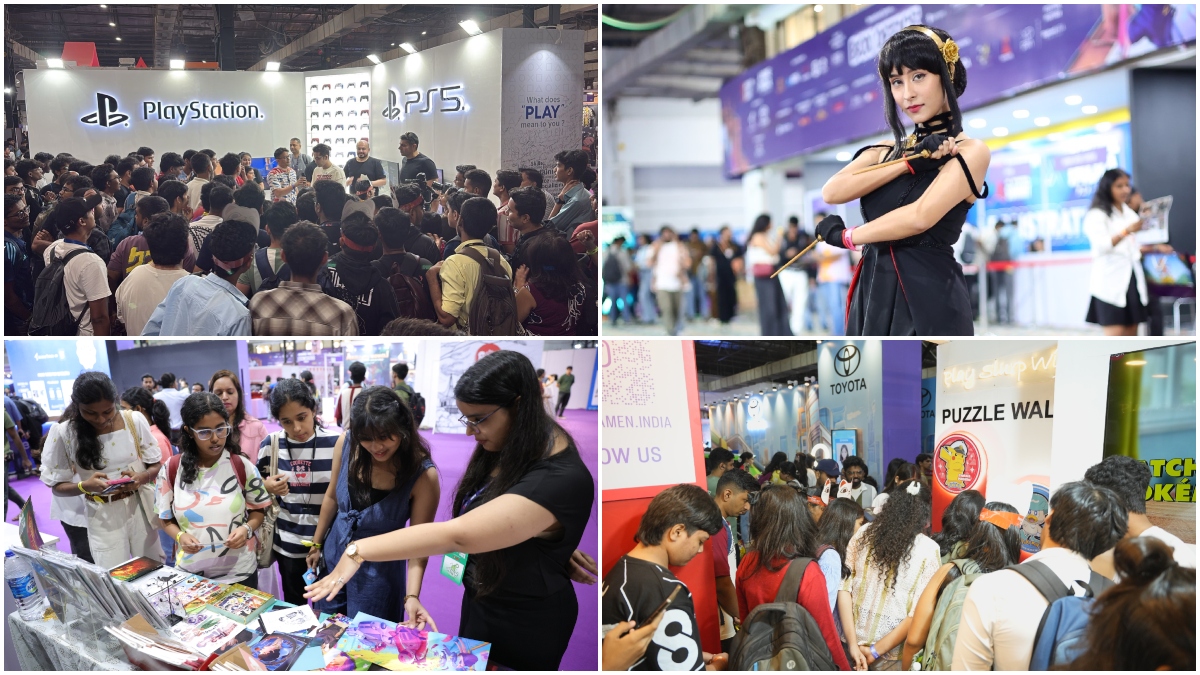
Anime India Kolkata 2026 will showcase cosplay competitions, interactive zones led by the Indian Gunpla Community, India-39 Vocaloid Community, The Japan Curry, and Adda-o-Otaku by The Otaku Guild. Fans can join tournaments across fighting games, Pokémon VGC, and more. Acclaimed Japanese director Susumu Mitsunaka (Haikyu!!) will attend as guest of honour, appearing in panels and live sessions. Positioned as an immersive celebration of fan culture and industry collaboration, the Kolkata edition marks the beginning of Anime India’s nationwide expansion.
Sharing their perspective on the partnership, Amazon MX Player director Aruna Daryanani expressed, “Anime in India has evolved from a niche interest into a mainstream cultural movement, driven by an increasingly engaged and passionate fanbase. At Amazon MX Player, our focus is on expanding access by bringing anime to audiences across the country for free and in multiple local languages. Our association with Anime India reflects our commitment to supporting the growth of anime in India and deepening connections with fans, while continuing to build Amazon MX Player as a trusted destination for free, high-quality entertainment.”
“Anime India Kolkata is a celebration of how anime has grown beyond entertainment into a powerful cultural and creative force. By bringing fans, creators, and industry leaders onto one shared platform, the festival is helping define the future of pop culture in India,” said Anime India co-founder and director Neha Mehta.
The debut edition of Anime India 2025 in Mumbai attracted over 29,000 fans, quickly cementing its status as a landmark celebration of anime and Japanese pop culture. Riding on this overwhelming response, the Kolkata chapter is projected to draw more than 40,000 visitors across two days, positioning it as one of the biggest anime conventions ever held in eastern India.
Anime India is focused on bringing together fans from across the country to create a truly pan-India celebration of anime, manga, cosplay, gaming, and Japanese culture. With plans to expand into four key metropolitan hubs in 2026—east (Kolkata), north (Delhi), west (Mumbai), and south (Hyderabad)—the festival seeks to deliver globally benchmarked experiences while supporting and uplifting creators, artists, and fan communities throughout India.






