News Broadcasting
ICSP to spearhead the capital’s cable ops

NEW DELHI: A fragmented cable industry is once again attempting to come together to put up a united front against the pay broadcasters in India.
Yet another cable industry body, the Independent Cable TV Service Providers (ICSP), of the National Capital Region of Delhi (NCR) has been formed. Comprising independent cable operators, as the name suggests, the organisation claims it is not a joint venture of partners or licensees of any multi- system operator (MSO).
The idea behind the new organization is to negotiate, on behalf of the members, a uniform price for pay channels, which are again set to revise upward the annual subscription rates, and act as a single-window negotiation counter.

As usual, the signatories’ list looks impressive and has been spearheaded by Vikki Choudhry, who is also the president of the Delhi based National Cable and Telecom Association.
According to Choudhry, “It is generally seen that MSOs give the pay channels to their licensees or joint venture partners at differential rates, sometimes much lower than the announced rates. This preferential treatment allows some cable operators to keep the monthly rates low. Our aim would be to negotiate a uniform price for all pay channels to all the independent cable operators not aligned with any MSO.”
However, it is still not clear how the broadcasters and MSOs would react to this new initiative of the independent cable ops. A senior executive of a broadcaster operating pay channels, in a cautious reaction, says, “We’d have to wait and watch to see what this is all about and how this newly-formed body, as you are saying, takes up issues as we have not heard anything formally.”
Choudhry, however, points out that Monday onwards, a formal communication would go out to broadcasters on the ICSP’s demands.
The following are the resolutions adopted at the first meeting of the ICSP:
* Give collective payments of the amounts payable by each of the undersigned/ members to be paid to pay TV broadcasters by the “consortium” or CSPO before the due dates.
* The consortium shall act as ” one window” through which its members shall make the payments to the pay channels.
* All the members will stand together and act in a manner that shall be beneficial for the interest of its members and in the interest of the consumers at large.
* All negotiations / dealings /execution of service contracts and other work with the pay channels will be done jointly by the select committee on behalf of all the ICSP consortium members.
The committee members include Choudhry, Raaj Mutereja, Inderjeet Singh, Brijesh K Sharma, Sanjeev Sachdeva, Singh Raj, Suresh Yadav, Anil Dargan, Rajeshwar Choudhary and Satish Saini.
The signatories to the resolution include independent cable ops like Cablevision Network’s Inderjeet S, Trinetravision’s Anil Khera, Brijesh Sharma of Home Cable TV Network in Ghaziabad on the outskirts of Delhi, WAC Star’s Satish Sharma , Arcy Cable TV Network’s Sushil Kumar Katon and Pradeep Arora, Mohan Electronics’ Inder Mohan, Citiview Cable [P] Ltd, Gurgaon’s Sanjeev Sachdeva, Sanjay Dosajh of Channel “n” Channel Cable Network in Gurgaon, Bobby Skylines’ Vikas Tyagi, Videospectrum’s Dinesh Bidichandani, Satellite Vision’s Rajeshwar, Multivision’s Ashok Sharma, Skychannel’s Sunil Sasan, Multivision Network’s Aditya Sharma, Avdhesh Sharma of Priyadarshni Cable TV Network in Ghaziabad and Cable Quest magazine owner Roop Sharma.





News Broadcasting
DNPA names Puneet Gupt chairperson; Anant Goenka steps in as vice chairperson
Leadership reset comes as digital news grapples with AI-led disruption and policy battles
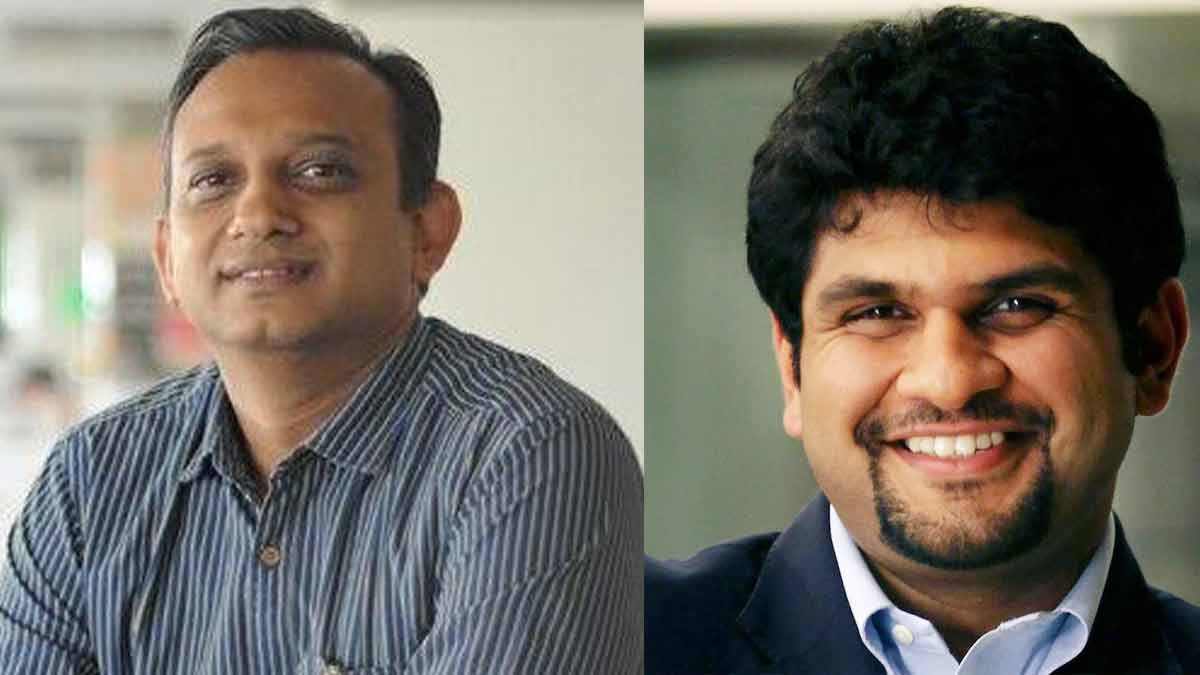
NEW DELHI: India’s digital news lobby has a new pilot at the helm just as the industry stares down its next big disruption. The Digital News Publishers Association (DNPA) has named Puneet Gupt, chief operating officer at Times Internet, as chairperson, succeeding Mariam Mammen Mathew at the end of her two-year term.
Gupt, who previously served as vice chairperson, steps into the top role with deep familiarity of the body’s agenda, ensuring a smooth transition at a time when publishers are recalibrating for an AI-shaped future. Anant Goenka, executive director at The Indian Express Group, has been appointed vice chairperson, while Dhruba Mukherjee continues as treasurer.
“Digital news publishers are navigating one of the most consequential shifts the industry has ever seen, from how content is discovered to how it is valued in an AI-driven world. DNPA’s role as a unified industry voice has never mattered more. My focus will be on ensuring that our members are not just responding to these changes, but actively contributing to the policy and industry frameworks around them,” said Puneet Gupt.
Goenka underscored the need for collective action as the sector evolves. “This is an important moment for DNPA and for the digital news publishing industry in India. There is real value in publishers coming together, sharing perspectives, and building a common understanding of the opportunities and challenges ahead. I look forward to contributing to that effort with DNPA members,” he said.
Outgoing chairperson Mariam Mammen Mathew called it a timely transition. “It has been a privilege to lead DNPA at such a pivotal time for the industry. I am confident that under Puneet’s leadership, DNPA will continue to grow in influence and impact. I wish the new team every success,” she said.
Sujata Gupta, secretary general and chief executive officer at DNPA, framed the shift as a springboard for the next phase. “This transition marks an exciting new chapter for DNPA. We have spent the last few years building the credibility, relationships, and frameworks that allow us to engage meaningfully on the issues that matter most to our members. With Puneet and Anant at the helm, we are well-positioned to translate that foundation into tangible outcomes, on policy, on fair commercial frameworks, and on ensuring that digital news publishing remains a sustainable and vital part of India’s information ecosystem,” she said.
The leadership rejig lands at a moment when digital publishers are battling shifting discovery patterns, platform power and the economics of AI. For DNPA, the message is clear: the next phase will be less about reacting and more about shaping the rules of the game.








