News Broadcasting
IBN deal part of CNN’s strategy in English language segment: Cramer

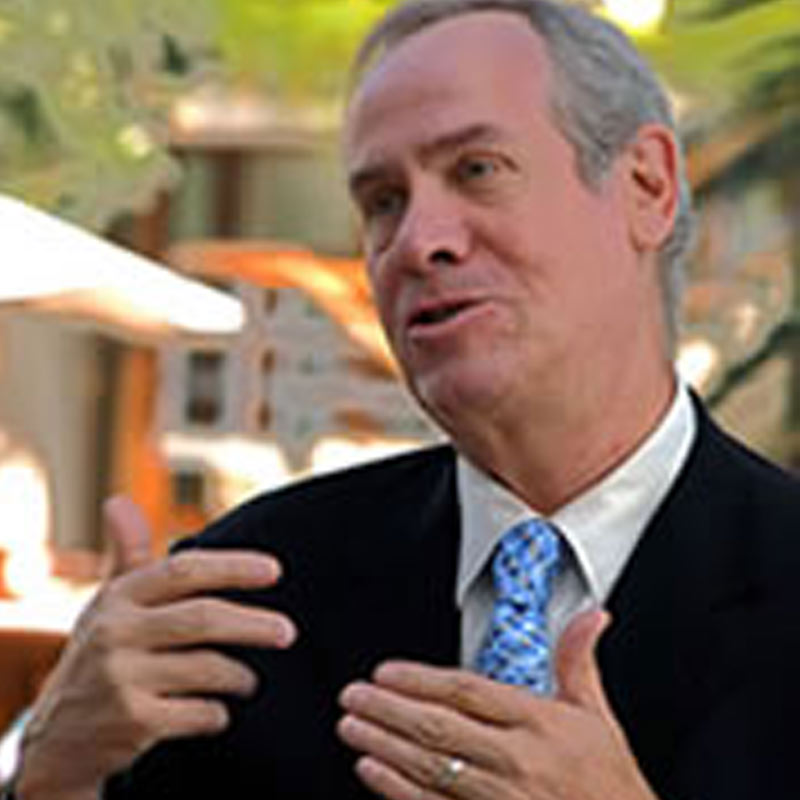
NEW DELHI: The Indian news market with its diverse products is a bonanza for viewers in terms of choice, according to CNN International MD Chris Cramer.
“It’s an extraordinary news market , which was starting to explode in 2004 when I last came, and is still doing so. It’s also a very good thing for consumers in terms of choice,” Cramer told Indiantelevision.com.
On a visit to India, Cramer is touching base with various constituents of the broadcast and cable industry, including CNN’s partner, Global Broadcast Network (GBN), which runs the CNN IBN news channel.

Pointing out that CNN IBN has shaped up extremely well, Cramer said, “After seeing the news channels here, one can say that they are world class products offering consumers a variety of choice.”
Along with some new local level and India-wide news channel launching over the last six months to add to the over 25 existing such products, India, probably, is the only country in the world where so many news channel have mushroomed and have managed to survive in a market that is estimated to be wroth slightly over Rs. 5 billion.
Though a hint of uncertainty did creep in with Jagran TV-promoted Channel7 selling management control to Television Eighteen-led GBN and talks of India TV in early stages of negotiations with another media company in the air, Cramer refused to hazard a prediction on the consolidation phase . “I have no predictions on consolidation as I am not very well acquainted with the ground situation and other details. But this is a very energetic market,” he said.
Cramer is responsible for the CNN International directorate, which is comprised of the five flagship CNN International services in English, CNN en Espa’Pol and CNNj (Japan), together with joint ventures such as CNN IBN, CNN+ and CNN Turk, in addition to the international newsgathering operation outside of the US.
Though Cramer has ruled out any immediate introduction of a Hindi language version of CNN, he did admit that as a policy the company is always on the look out for opportunities to extend the CNN brand in as many market segments as possible.
“The CNN IBN deal is part of CNN’s strategy to look for opportunities in the English language segment and vernacular languages with or without local partners. But if you are asking me whether we have any definite plans for Hindi, there’s nothing in the horizon,” Cramer said.
According to him, for a CNN IBN type of deal to be replicated in other Indian languages, it is a matter of exploring the market to find the “right deal.”
CNN International’s English language service, which completed 20 last year, continues to be the No. 1 product in most market places without getting complacent about its leadership position.
“We continue to reinvent ourselves as we have done recently with a new look and feel in a crowded (global) news market place. We found that increasingly the business of consuming news was becoming difficult. So we have de-cluttered the screen (for the viewer),” Cramer said, giving a glimpse of the thinking that goes on in CNN International, a Time Warner company.
India is one of the rare instances where CNN lags behind BBC because of “legacy issues” involving the Mark Tully effect. Tully had been the head of BBC radio operations in India for many decades and helped in spread awareness about brand BBC.
“CNN reaches out to about 10 million (C&S) homes in India, compared to BBC’s 14 million, “Cramer said, adding, “But I am comfortable with the loyalty of the audience here.”
Even though CNN’s new service CNN Pipeline broadband service has received “overwhelming and enthusiastic response in the US,” Cramer feels such a service will take some time to take off in India.
Pointing out that the company has been profitable every year since 1989 in the expensive business of news dissemination, Cramer said global advertising revenue has been “pretty good” last year too.
Globally CNN International has three broad revenue steams: advertising, subscription and content sale.. While advertising and subscription contribute 45 per cent each, the remaining 10 per cent comes from selling content.
Cramer is based in CNN’s world headquarters in Atlanta and is a member of the CNN executive committee. He also sits on the board of directors for the German news channel n-tv and the Spanish network CNN +.
Before taking on the role of overseeing international newsgathering and becoming managing director of CNN International, he was previously president of CNN International Networks. He was CNN International’s executive vice president from August 1997 to January 1998, and senior vice president and managing editor from February 1996 to July 1997.
Since joining CNN International, Cramer has led the introduction of 80 hours of new programming each week and, in September 1997, launched “regionalisation,” an initiative that led to the creation of five separately scheduled English language international CNN channels that serve Europe/Middle East/Africa, Asia Pacific, South Asia, Latin America and North America.







News Broadcasting
Induction cooktop demand spikes 30× amid LPG supply concerns
Supply worries linked to West Asia tensions push households and restaurants to turn to electric cooking alternatives
MUMBAI: As geopolitical tensions in West Asia ripple through global energy supply chains, the familiar blue flame in Indian kitchens is facing an unexpected challenger: electricity.
What began as concerns over the availability of liquefied petroleum gas (LPG) has quickly evolved into a technology-driven shift in cooking habits. Households across India are increasingly turning to induction cooktops and other electric appliances, initially as a backup but now, for many, a necessity.
A sudden surge in demand
Recent data from quick-commerce and grocery platform BigBasket highlights the scale of the shift. According to Seshu Kumar Tirumala, the company’s chief buying and merchandising officer, demand for induction cooktops has risen dramatically.
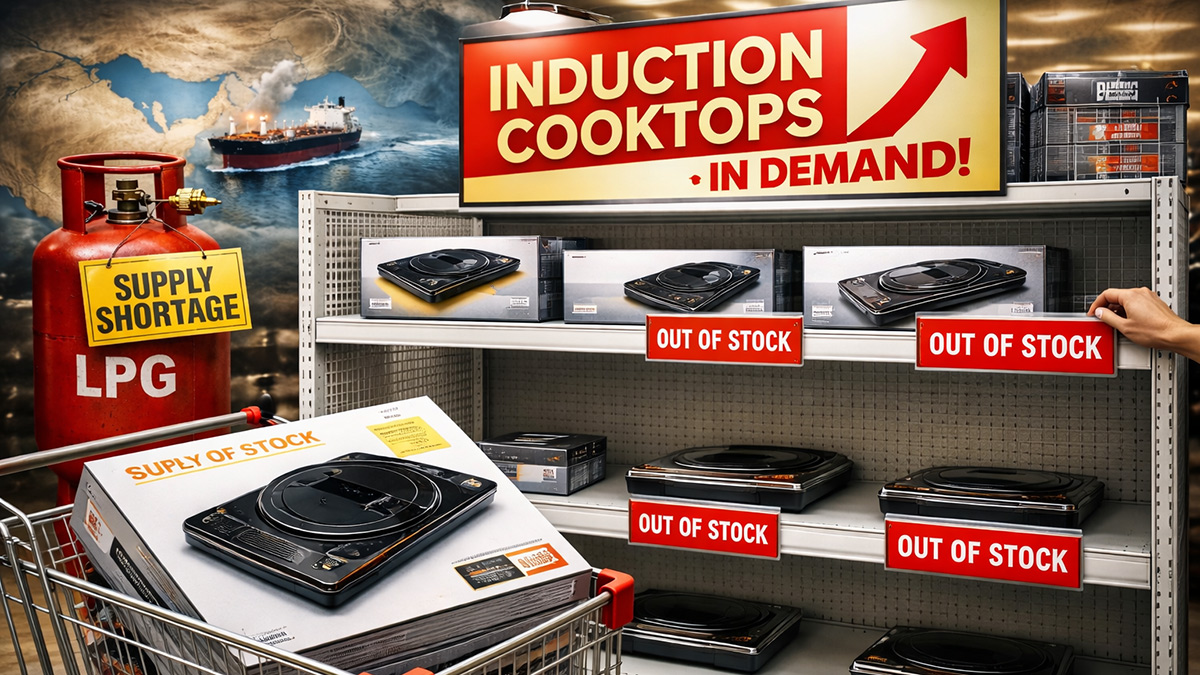
“Induction cooktops have seen a significant surge in demand, recording a fivefold jump on 10 March and a thirtyfold spike on 11 March,” Tirumala said.
The increase stands out sharply when compared with broader kitchen appliance trends. Most appliance categories are growing within 10 per cent of their typical demand levels, while induction cooktops have witnessed explosive growth as households rush to secure an alternative cooking option.
Major e-commerce platforms including Amazon and Flipkart have reported rising searches and orders for induction stoves. Quick-commerce apps such as Blinkit and Zepto have also witnessed stock shortages in major metropolitan areas including Delhi, Mumbai and Bengaluru.
What was once considered a convenient appliance for hostels, small kitchens or occasional use has suddenly become an essential addition in many homes.
A crisis thousands of miles away
The trigger for this shift lies far beyond India’s kitchens.
Escalating conflict in the Middle East has disrupted shipping routes through the Strait of Hormuz, one of the world’s most critical energy corridors. Nearly 85 to 90 per cent of India’s LPG imports pass through this narrow waterway, making the country particularly vulnerable to supply disruptions.
The ripple effects have been swift.
India currently meets roughly 60 per cent of its LPG demand through imports, and tightening global supply has already begun to affect domestic availability and prices.
Earlier this month, the price of domestic LPG cylinders increased by Rs 60, while commercial cylinders rose by more than Rs 114.
To discourage panic buying and hoarding, the government has also extended the mandatory waiting period between domestic refill bookings from 21 days to 25 days.
Restaurants feel the pressure
The strain is not limited to households. Restaurants, hotels and roadside eateries are also grappling with supply constraints as commercial LPG availability tightens under restrictions imposed through the Essential Commodities Act.
In cities such as Bengaluru and Chennai, restaurant associations report that commercial LPG availability has dropped by as much as 75 per cent, forcing many establishments to rethink their kitchen operations.
Some restaurants have reduced menu offerings, while others are rapidly installing high-efficiency induction systems, creating hybrid kitchens where electricity now shares the workload with gas.
For smaller eateries and roadside dhabas, the shift is less about sustainability and more about survival.
A potential structural shift
The government has maintained that there is no nationwide LPG crisis and has directed refineries to increase production to stabilise supply.
Nevertheless, the developments of March 2026 may already be triggering a longer-term behavioural shift.
For decades, LPG has been the backbone of cooking in Indian households. However, recent disruptions have highlighted the risks of relying on a single fuel source.
Increasingly, households appear to be hedging against uncertainty by adopting electric cooking options to guard against price volatility and delivery delays.
If the current trend continues, the induction cooktop, once viewed as a niche appliance, could emerge as a quiet symbol of India’s evolving kitchen economy.