Distribution
IBC2024 grows across the board as AI Takes centre stage

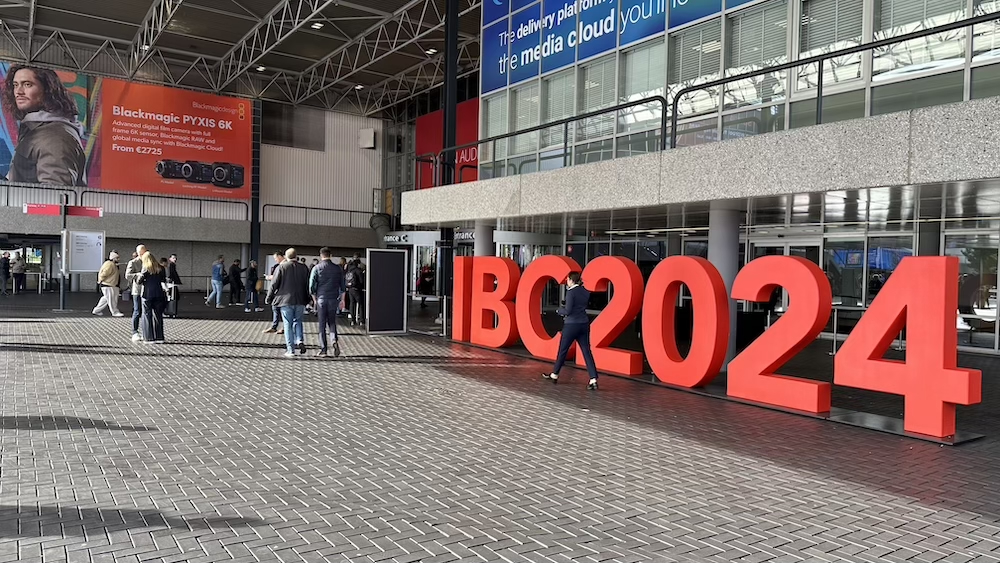
AMSTERDAM: It has been a record breaking year at IBC2024 with the Amsterdam confab attracting 45,085 visitors from 170 countries – a jump of more than 2,000 as compared to the previous year. On top of that 100 additional exhibitors put up their stands in the 14 halls covering 46,000 square metres of space (as against 44,500 square metres in 2023) in Amsterdam’s RAI with their count adding up to 1,350 Many participants opined that IBC2024 was the busiest four days they have had this year as execuitves from the global media, entertainment and technology community came together to connect, showcase and discover innovations, tackle pressing industry challenges, and explore new opportunities.
Across a bustling show floor and packed theatres, IBC2024 addressed critical trends and issues driving change across the media landscape, such as combatting false information and fake news, while offering new show features, such as the AI Tech Zone, and IBC Talent Programme.
“IBC continued on an upward trajectory in 2024, with tremendous turnout across the entire IBC community as people gathered in Amsterdam to explore the technological advances and market dynamics redefining our industry,” said IBC CEO Michael Crimp.. “In a year marked by major events such as the Olympics and national elections, there was an extremely positive buzz at IBC2024. This year’s show addressed soaring interest in trends such as AI’s leap from theory to real-world applications, how the industry is fighting disinformation in news, and the need to foster talent and diversity across media, entertainment and technology.”

Other themes that took centre stage at IBC2024 included sustainability, 5G, cloud, esports, immersive experiences, over-the-top (OTT) and streaming, adtech, metaverse, edge computing, and connected technologies. Many of these were addressed in the three-day IBC Conference, relocated to the Auditorium Complex at the RAI, as well as in the various show floor theatres and by many of the exhibitors themselves on their stands.
A number of IBC2024’s defining themes were also focuses of the IBC Accelerator Media Innovation Programme, which this year included another IBC first: the AI Media Production Lab, exploring a series of projects in which some of the industry’s most inventive innovators collaborated on specific AI concepts. One of the hottest Accelerator projects – also addressed in the IBC Conference – was ‘Design Your Weapons in the Fight Against Disinformation’, which aimed to develop an industry-wide?understanding?of the challenges and abuses being faced today by all media outlets in helping audiences identify trustworthy news and information.
The new AI Tech Zone, powered by EBU, was packed with visitors engaging with leading innovators on practical applications ranging from automated video editing and music-audio separation to content provenance tracking and fast and secure cloud storage. Then Zone stage featured AI pioneers sharing insights into how the technology will impact the future and how it is already transforming media in areas such as discoverability, news verification, and creating immersive experiences.
Another exciting new feature at IBC2024 was the Audio Visual (AV) buyers’ event on the eve of the show. Working with the AV User Group, media technology companies at the show were able to actively engage with major AV purchasers such as Arup, AstraZeneca, Bank of America, Barclays, Deliveroo, Direct Line Group, KPMG, Schroders, Sopra Steria, UBS, and WPP.
The inaugural, free-to-attend IBC Talent Programme featured lively and engaged discussions on mentoring the industry’s next generation, recruitment challenges, and the importance of diverse perspectives for driving innovation. The programme was preceded by the World Skills Café, run by Global Media and Entertainment Manifesto, which took place at the RAI the day before the show.
Leading global media technology brands exhibiting at IBC2024 included Arabsat, Arri, Avid, AWS, Blackmagic, BT Media, Canon, Comcast, Eutelsat, Evertz, EVS, Google, Grass Valley, Harmonic, Huawei, Imagine Communications, LG, Lawo, LTN, Mediakind, Microsoft, Nagra, Panasonic, Riedel, Ross Video, Samsung, SES, Sony, Tata Comms Media, Telestream, Zero Density, Zixi, and ZTE. There were also 150+ new exhibitors at the show, including 5G Broadcast Collective, CDN Alliance, Datacamp, Eosos, Frequency Networks, Medianet Berlin, Strada, SwXch IO, and Vubiquity, while Benro, Insta360, Robe, The Weather Company, Vecima – plus Yamaha returned to the show for the first time since 2019.
“In the last few years, IBC has gone from strength to strength, with exhibitors continuing to find more ways to make the most of the show as we add new features and grow its scope and reach,” said IBC Director Steve Connolly. “The feedback we get is incredibly positive, with many seeing IBC evolving as an increasingly important incubator of media tech innovation, as well as maintaining our status as an essential networking destination and source of intelligence on new industry trends and developments.”



New Delhi: Prasar Bharati has thrown open applications for fresh capacity on DD Free Dish, signalling a timely opportunity for broadcasters looking to expand reach without long-term lock-ins. The public service broadcaster has issued a dual notice for its 95th and 96th online e-auctions, aimed at filling vacant MPEG-2 and MPEG-4 slots on a pro-rata basis for February and March 2026.
The two auctions are tentatively scheduled to begin on January 27, with allotments valid from February 1, 2026. Applications for both auctions close on January 21 at 3 pm, giving channels a narrow window to get their bids in.
The 95th e-auction will cover vacant MPEG-2 slots, while the 96th will focus on MPEG-4 capacity. Participation is limited to satellite television channels holding valid downlinking and uplinking permissions from the ministry of information and broadcasting. International public broadcasters cleared by the ministry are also eligible.
As with previous rounds, channels have been grouped into buckets based on genre and language, with sharply differentiated reserve prices reflecting reach and demand.
For the MPEG-2 auction, Hindi and Urdu general entertainment channels sit at the top of the pile. The starting reserve price for bucket A+ in the first round is Rs 2,63,48,000. Movie, music and sports channels in Hindi and Urdu follow in bucket A at Rs 2,10,14,000. Bhojpuri channels and other Hindi and Urdu genres, excluding devotional content, fall under bucket B with a reserve of Rs 1,78,62,000. Hindi and Urdu news channels in bucket C start at Rs 1,33,27,000, while bucket D, which includes regional language channels, English news and devotional or spiritual channels, begins at Rs 1,13,96,000.
The MPEG-4 auction comes in at a far leaner price point. News and current affairs channels in Hindi, English or pan-India languages, grouped under bucket G1, start at Rs 13,41,000. Non-news genres under bucket G2 have a reserve of Rs 8,80,000. Regional languages such as Marathi, Punjabi and Gujarati in bucket R2 begin at Rs 4,84,000. Southern language channels in Tamil, Telugu, Kannada and Malayalam, grouped under bucket R1, start at Rs 81,000, the same reserve price set for other scheduled 8 regional languages in bucket R3.
Prasar Bharati has underlined that compliance will be closely watched. Broadcasters must ensure that at least 75 per cent of their monthly programming, excluding advertisements, aligns with the declared genre and language. Any deviation could trigger show-cause notices or even removal from the DD Free Dish platform.
For channels chasing reach in a crowded market, the message is clear. The window is brief, the prices are set and the audience is waiting. On DD Free Dish, visibility still comes cheap, but only for those ready to move fast.






