I&B Ministry
I&B ministry opposes Trai recommendations for FM b’casters

NEW DELHI: The Information and Broadcasting (I&B) ministry secretary has opposed an interim recommendation by the broadcast and cable regulator to give some respite to the private FM radio players on the issue of license fee that becomes payable month-end.
According to government sources, the I&B ministry secretary has made noting on a file relating to FM radio that since the Telecom Regulatory Authority of India (Trai) recommendations have to be cleared by the cabinet, it would not be feasible to do at this juncture when general elections are round the
corner.
If this line of thinking is allowed to go through, it would mean that after April, all the FM radio companies in the private sector would have to cough up hefty amounts of license fees to continue to be on air, even though the issue of migration from a license to revenue sharing regime is being considered by Trai.

The opposition to the Trai suggestion has been done after receiving advise of the cabinet secretary, top most bureaucrat in the Indian government, who has said calling a cabinet meeting at this juncture is not conducive and would send wrong signals.
Earlier this month, Trai, in an interim recommendation, had said that the FM radio licensees may be given the option of deferring the (license) payments, which may fall due till a final decision is taken on the issue.
This, Trai had further added, would be subject to the condition that the dues as finally decided by the government would be collected from the licensees with interest from the due date.
Though this development may not be music to the ears of the private FM radio players, they can take heart from the fact that I&B minister Ravi Shankar Prasad can still over-rule the secretary’s stand.
Government sources did admit that Prasad, who was out of Delhi on Saturday on election-related work, does have few options, but did not reveal their exact nature.
The government had decided during the 9th Plan period to permit private FM radio stations on a license fee basis. In May 2000, 108 frequencies in the FM spectrum were auctioned through an open auction bidding.
A total of 37 licenses were issued out of which 24 are operational (of which two have been granted deemed operational status, pending commencement of actual broadcast). However, the private FM radio players have been alleging that a high license fee has made the business unviable, apart from other factors like not being allowed to attract foreign investment.
A government-backed committee, headed by Ficci’s secretary-general Amit Mitra, set up to look into the FM radio policy has suggested that the government study the desirability and legal implications of making modifications in licensing regime of phase-I licensees, including migration
to a revenue sharing model.
After Trai was made the broadcast and cable regulator, the issue has been referred to it.







I&B Ministry
India tightens anti-piracy law, blocks sites and Telegram channels
New rules bring jail terms, fines and faster takedowns of illegal content
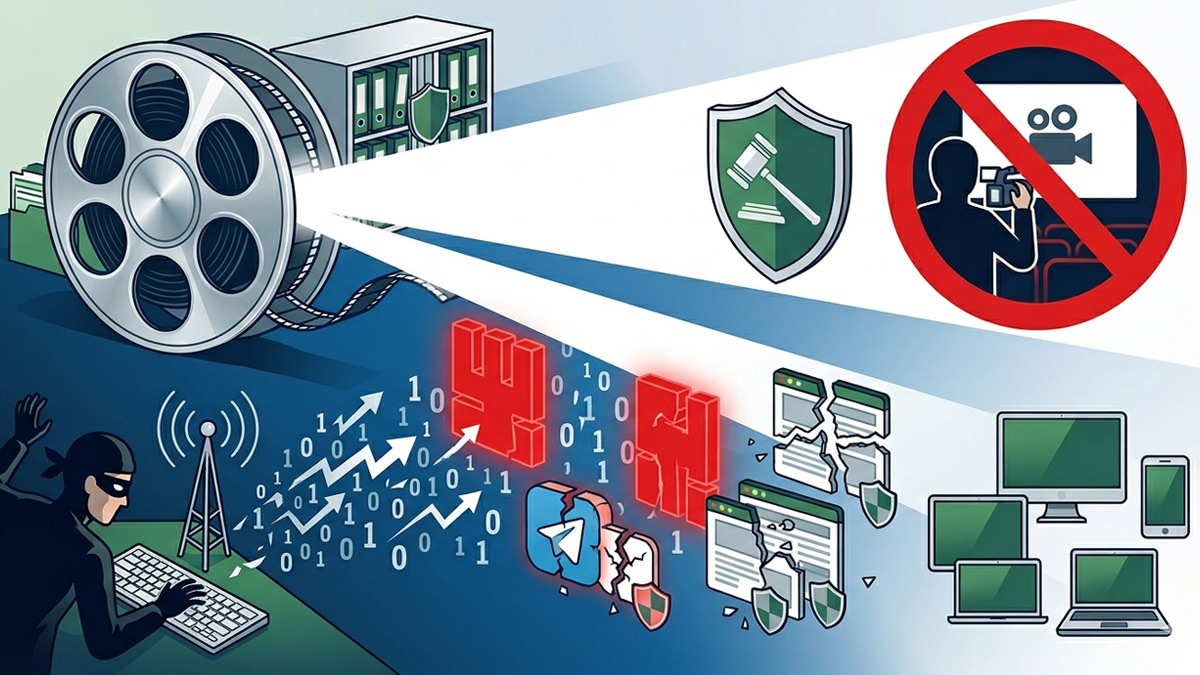
NEW DELHI: The Government of India has stepped up its fight against film piracy, invoking stricter provisions under the Cinematograph Amendment Act 2023 to crack down on unauthorised recording and distribution.
The law now imposes tougher penalties, including jail terms ranging from three months to three years and fines starting at Rs. 3 lakh, which can go up to 5 per cent of a film’s production cost. The provisions target both illegal recording in cinemas and unauthorised online transmission.
In a fresh enforcement push, authorities have notified the Telegram platform to act against piracy, leading to the identification of 3,142 channels allegedly distributing copyrighted content without permission. In parallel, access to around 800 piracy websites has been blocked through internet service providers.
The action has been taken under the Information Technology Act 2000, which empowers the government to direct intermediaries to remove unlawful content. The framework is further reinforced by the Information Technology Rules 2021, requiring platforms to act swiftly when notified of violations.
An institutional mechanism is also in place, allowing copyright holders and authorised representatives to file complaints through designated nodal officers. Once verified, these complaints trigger takedown notices to intermediaries for disabling access to infringing content.
The update was shared in Parliament by Government of India minister of state information and broadcasting l murugan in response to a query from Parimal Nathwani.
The government’s latest move signals a sharper, more coordinated approach to tackling piracy across both physical and digital channels. For the film industry, it is a step towards protecting revenues, while for viewers, it reinforces the shift towards legitimate content consumption.








