International
“I am Iron Man” reveals Downey Jr, donning the iron suit again


MUMBAI: “Take that suit out, then who are you?”…. “Billionaire, genius, playboy, philanthropist” remarks Marvel‘s Mr. Stark played by Robert Downey Jr. in Hollywood‘s one of highest grossing movie of the decade, The Avengers. (2012).
After a spread of disappointing rumours questioning Downey donning the Iron Man suit ever again, especially when Downey had hinted in numerous interviews, including a recent segment on “The Daily Show with Jon Stewart,” saying his days of playing Tony Stark are over, ‘Marvellites‘ have now a reason to rejoice as Marvel studios confirms of signing Robert Downey, Jr. to reprise the role of Marvel‘s iconic genius and witty playboy Tony Stark. Tony Stark a.k.a. Robert Downey Jr.‘s famous closing line “I am Iron Man” in the very first Iron Man series sparked life into the studios which raked in over $585 million worldwide and has only doubled over the two sequels grossing over $ 2.2 billion (Iron Man2; Iron Man3) over the last few years.

Marvel asserts that under the two-picture agreement, Downey will star as Tony Stark/Iron Man in Marvel‘s The Avengers 2 and Marvel‘s The Avengers 3. As per reports, The Avengers sequel will be helmed and written by Joss Whedon who has also directed the original grossing over $1.51 billion worldwide. While the script is still being worked upon, The Avengers 2 is set to go into production by March 2014 and open in theatres by 1 May 2015.

Piling the fan‘s curiosity, Marvel on its website also revealed that the sequel would feature new Marvel characters never before seen on the big screen and in the coming days and weeks and months, the studio will reveal additional casting updates, new characters coming to Marvel movies and much more thrilling news quenching the curiosity of its fans. As a promotion gig, Marvel claims to reveal such information from the most secret meetings at Marvel.

Downey is represented at CAA by Bryan Lourd, Jim Toth and Matt Leaf and by his attorneys Tom Hansen and Stewart Brookman of the firm Hansen Jacobson. However after tough negotiations with the penny-pincher studio as previously reported by Deadline, Marvel felt it comfortable to shell out and grab Downey Jr. especially when Downey Jr‘s past two Marvel films, 2012‘s Marvel‘s The Avengers and this year‘s Iron Man 3, rank as two of the top five grossing films of all time, collectively raking in over $2.7 billion worldwide to date.
The agreement figure however remains undisclosed but is speculated to gross in millions as the original had earned him (Downey Jr.) no less than $50 million (speculated).




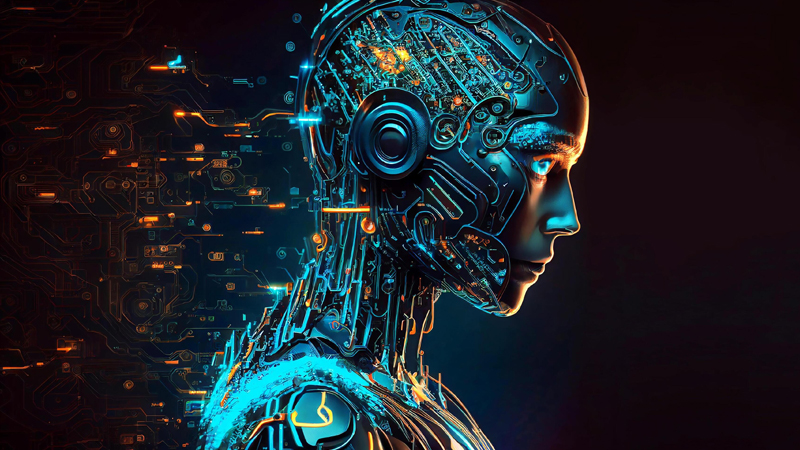
LOS ANGELES: Acting has never been an easy profession, but in recent years, it has acquired a new existential anxiety. Artificial intelligence can now mimic faces, clone voices and, in theory at least, speak any language it is fed. The fear that actors may soon be replaced by algorithms no longer belongs exclusively to science fiction. And yet, despite the rise of digital inauthenticity, some performers remain stubbornly resistant to replacement. The reason is not celebrity, nor even talent. It is language.
On paper, this should not be a problem. AI can translate. It can imitate accents. It can string together grammatically correct sentences in dozens of languages. But acting, inconveniently, is not about grammatical correctness. It is about meaning, and meaning is where AI still falters.
Machine translation offers a cautionary tale. Google Translate, now powered by neural AI, has improved markedly since its debut in 2006. It can manage menus, emails and airport signage with impressive efficiency. What it struggles with, however, are the moments that matter most: idioms, metaphors, irony, and cultural shorthand. Ask it to translate a joke, a threat disguised as politeness, or a line heavy with emotional subtext, and it begins to unravel. Acting lives precisely in those gaps.
This matters because film language is rarely literal. Scripts, particularly in independent cinema, rely on figurative speech and symbolism to convey what characters cannot say outright. Pedro Almodóvar’s Volver is a useful example. The film’s recurring use of red operates on multiple levels: grief, desire, repression, liberation, and memory. These meanings are inseparable from the Spanish cultural context and emotional cadence. A translation may convey the words, but not the weight they carry. An AI-generated performance might replicate the sound, but not the sense.
This is where multilingual actors gain their edge. Performers such as Penélope Cruz and Sofía Vergara do not simply switch between languages; they move between cultural logics. Their fluency allows them to inhabit characters without flattening them for international consumption. Language, for them, is not an accessory but a structuring force.
Beyond European cinema, this becomes even more pronounced. Languages such as Hindi, Arabic and Mandarin are spoken by hundreds of millions of people and underpin vast cinematic traditions. As global audiences grow more interconnected, the demand for authenticity increases rather than diminishes. Viewers can tell when a performance has been filtered through approximation. Subtle errors, misplaced emphasis, and an unnatural rhythm break the illusion.
There is also a practical dimension. Multilingualism expands opportunity. Sofía Vergara has spoken openly about how learning English enabled her to work beyond Colombia and access Hollywood roles. But this movement is not a one-way export of talent into English-speaking cinema. Multilingual actors carry stories, styles and sensibilities back with them, enriching multiple industries at once.
Cinema has always thrived on such hybridity. Denzel Washington’s performances, for instance, draw on the cultural realities of growing up African American in the United States, while also reflecting stylistic influences from classic Hollywood and Westerns. His work demonstrates how identity and influence intersect on screen. Multilingual actors extend this intersection further, embodying multiple cultural frameworks simultaneously.
At times, linguistic authenticity is not merely artistic but ethical. Films that confront historical trauma, such as Schindler’s List, rely on language to anchor their moral seriousness. When Jewish actors perform in German, the choice is not incidental. Language becomes a site of memory and confrontation. It is difficult to imagine an automated voice carrying that responsibility without hollowing it out.

This is why claims that AI heralds the death of language miss the point. Language is not just a delivery system for information. It is a repository of history, humour, power and pain. Fluency is not only about knowing what to say, but when to hesitate, when to understate, and when to let silence do the work. These are not technical problems waiting to be solved; they are human instincts shaped by lived experience.
AI may one day improve its grasp of metaphor and nuance. It may even learn to sound convincing. But acting is not about sounding convincing; it is about being convincing. Until algorithms can acquire memory, cultural inheritance and emotional intuition, multilingual actors will remain irreplaceable. AI may learn to speak. But it cannot yet learn to mean.
In an industry increasingly tempted by shortcuts, language remains stubbornly resistant to automation. And for actors who can move between worlds, linguistic, cultural, and emotional, that resistance is not a weakness, but a quiet, enduring advantage.