International
‘Hugo’, ‘The Artist’ top Oscar nominations

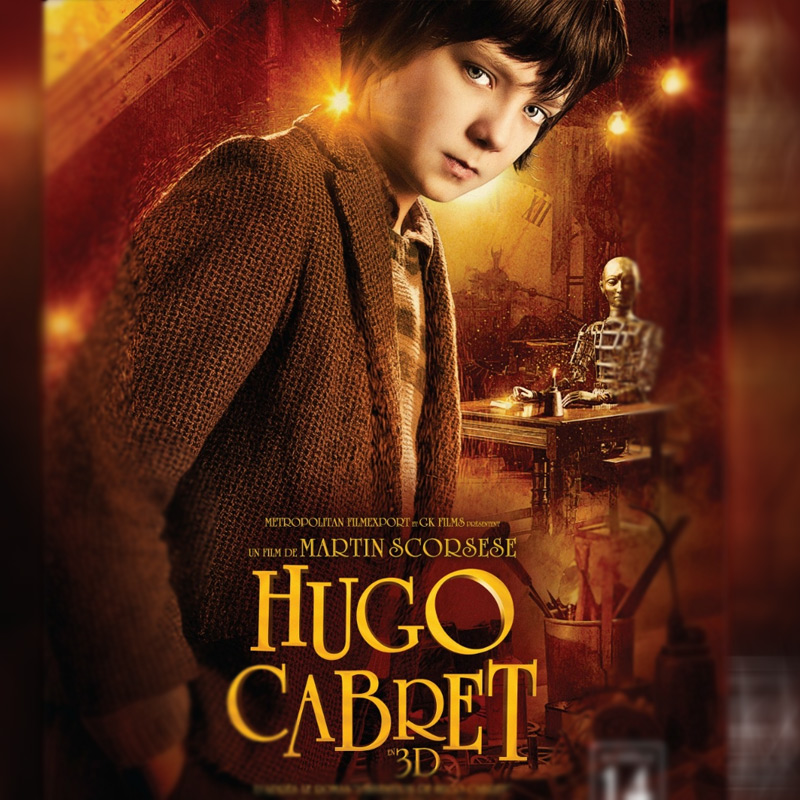
MUMBAI: Martin Scorcese‘ 3D family film ‘Hugo‘ has got 11 Oscar nominations while the silent black and white film ‘The Artist‘ got 10 nominations for the 84th annual Oscar Awards, making it a clear two- horse race.
The show will air on Star Movies on 27 February.
‘The Artist‘ is the first black and white film to get a best picture nomination since ‘Good Night and Good Luck‘ in 2005. ‘Hugo is the fourth film released in 3D to score a best picture nomination, after ‘Avatar‘, ‘Up‘ and ‘Toy Story 3‘. If it is able to stop ‘The Artist‘s momentum, then it would be the first 3D film to win best picture.

This year nine films have been nominated for best picture the most surprising being ‘Extremely Loud and Incredibly Close‘. Another surprise was ‘The Tree Of Life‘ which among other things got nominated for picture and director Terrance Mallick despite having been previously ignored during the Oscar season.
‘War Horse‘ from Dreamworks and Reliance Entertainment got six nominations including best picture.Spielberg has been left off the director‘s list. However Kathleen Kennedy and Steven Spielberg now have the record for most best picture nominations for a producer with seven, passing Stanley Kramer.
‘The Descendants‘, which was earlier considered one of the front runners, only got five nominations making it virtually impossible for it to win Best Picture. However George Clooney is the favourite to win best actor for his role as a father trying to cope with grief over the fact that his wife is in a coma.
Clooney‘s competition includes Gary Oldman who finally scored his first Oscar nomination for ‘Tinker Tailor Soldier Spy‘, Surprisingly Leonardo DiCaprio has been left in the cold for his turn as former FBI director J Edgar Hoover in Clint Eastwood‘s ‘J. Edgar‘.
In best actress, it is a two-way fight between Meryl Streep playing Margaret Thatcher in ‘The Iron Lady‘ and Viola Davis for ‘The Help‘. ‘The Help‘ is another best picture nominee and means that Dreamworks is the only studio to have two films competing for best film.
Like ‘War Horse‘, ‘Moneyball‘ has also got six nominations including for best picture and for its stars Brad Pitt and Jonah hill. It is a serious threat for adapted screenplay.
Woody Allen‘s ‘Midnight In Paris‘ scored four nominations including two for Allen for directing and writing. It has been over two decades since Allen last won an Oscar. He could win for original screenplay unless ‘The Artist‘ does a sweep.
John Williams got two nominations for his scores for the two Spielberg films ‘War Horse‘ and ‘The Adventures of Tintin‘. He has now been nominated 47 times. Allen has now been nominated 23 times. Interestingly while ‘Hugo‘, ‘Midnight in Paris‘, ‘The Tree of Life‘ and ‘War Horse‘ got best picture nominations they did not get any acting nominations. Apart from Dicaprio other surprising omissions include ‘The Girl With The Dragon Tattoo‘, ‘Drive‘, which are not on the best picture list.







International
Russia-India cinematic spectacle Persimmon of My Love set for grand Moscow debut
Hindi cinema style musical revives Indo-Soviet cinema ties for today

MUMBAI: A new chapter in cross-border storytelling is set to unfold as Persimmon of My Love gears up for its premiere in Moscow on 1 April 2026, marking the first large-scale cinematic collaboration between Russia and India in decades.
Positioned as a modern nod to the cultural exchange that once brought Indian classics to Soviet audiences, the film blends Hindi cinema flair with Russian storytelling, aiming to rekindle a long-standing cinematic friendship.
Directed by Marius Weisberg, the musical comedy follows two brothers navigating a lively world of music, family and romance. The lead roles are played by Demis Karibidis and Mikhail Galustyan, with Karibidis also contributing as a screenwriter.
Shot entirely in India, the production leans heavily into Hindi cinema style spectacle. Filming took place across Mumbai studios and the cities of Udaipur and Jodhpur, whose architecture was used to create the fictional setting of Khurmada. A crew of over 350 worked on the project, with large-scale sequences featuring up to 1,000 extras.
The film also brings Indian creative talent into the mix. Dance sequences are choreographed by Jay Kumar, while music by Zurab Matua features songs in both Hindi and Russian, adding to its cross-cultural appeal.
Backed by TNT channel, MyWayStudio and the Russian Cinema Fund, the project reflects a broader push to strengthen cultural ties between the two countries.
With its mix of colour, comedy and cross-border collaboration, Persimmon of My Love is not just a film release but a reminder that cinema, much like music, travels well across borders.






