e-commerce
How AI and automation are transforming e-commerce logistics


E-commerce is altering the future of businesses by offering consumers ease of access, be it goods, services or information. While e-commerce means the simple buying and selling of products and services over the Internet, its success relies on the complexities of accuracy and timely delivery. And, e-commerce logistics handle just that!
Logistics in e-commerce consists of the steps of sourcing products from sellers to buyers when consumers shop online. It involves tasks such as keeping a check of inventory, storing products, packaging them for shipment, placing labels on them, generating bills, arranging delivery, securing payments, and managing returns when required. For this reason, effective logistics powered by AI guarantee that the products promised to customers reach them securely.
Market overview

As of 2023, the global e-commerce logistics market size reached $431.6 billion. Looking ahead, it is expected to reach $1,437.9 billion by 2032, showcasing a growth rate (CAGR) of 13.9 per cent during 2024-2032, according to a report by the IMARC Group. These statistics indicate the growing demand for rapid and reliable shipping services.
In such a fast-shifting domain, AI and automation are steadily replacing conventional processes. Its algorithms are designed to boost last-mile delivery efficiency by mitigating costs. AI is particularly apt for logistics thanks to its ability to forecast future production and conveyance volumes, leading to more efficient resource utilisation. By enabling this, industries can bring forth a synergy and improve customer experience.
A step towards AI
AI is forging a change in e-commerce logistics too by spearheading the adoption of advanced technologies. It modernises operations and improves the customer experience via an array of tasks such as the fulfillment of orders, shipment tracking, route optimisation, data analysis, etc. Notably, the global AI market size was estimated at USD 196.63 billion in 2023 and is projected to grow at a CAGR of 36.6 per cent from 2024 to 2030, as per Grand View Research.
From the initial ordering to the final delivery, AI’s speed, capability and processes cater to the convenience of consumers. AI assists in predicting the demand for new products, raising inventory levels, and streamlining processes. An AI-led warehouse management system powers order processing tasks such as picking, packaging, and shipping, reducing manual labour and the possibility of errors. When put in place, it allows workers to focus on tasks involving higher mental ability and intelligence.
Additionally, route optimisation for delivery efficiency becomes simplified with AI. It tracks products in real-time, monitors parcels, and enhances shipping routes. Such optimisation reduces delivery time and saves fuel costs. Alongside, AI-powered voice assistants aid users in interacting with e-commerce platforms, solving product queries and expediting purchases. When it comes to feedback, AI comes into the picture by reading through messages, complaints and queries. Besides, AI-driven systems simplify returns management by automating processes, marking returned items, and defining their further treatment. It ensures these items are sent back to the warehouse via appropriate routes in a secure manner. With the help of AI, industries have a chance to take the sustainability route and recommend sustainable practices by analysing data and identifying areas where resource consumption can be lessened.
AI can also make significant strides in providing tailored recommendations for customers. It can be put in place to create refined recommendation systems that analyse customers’ buying history, browsing habits, and consumption patterns. Such will empower e-commerce players to enable a quick shopping experience for their users.
The way forward
As AI and automation continue to evolve, it will support e-shops, courier companies, and third-party logistics firms alike. Moreover, AI will enhance the speed at which goods are delivered across borders. Powered by AI, systems will be able to ensure that products are available and set to dispatch as soon as an order is placed.
However, trials for the successful integration of AI in businesses will persist such as the cost of implementation and skilling of labour. Therefore, e-commerce businesses must have a comprehensive logistics process to meet customer expectations and enjoy a competitive edge. It is advised to them to be up-to-date with the recent AI advancements and automation to enhance capabilities locally and globally.
This article has been authored by Fship Logistics CBO Raju Sinha.







e-commerce
Instamart gold dig event at Hussain Sagar goes viral
Hyderabad activation ties to gold price lock offer ahead of Akshaya Tritiya
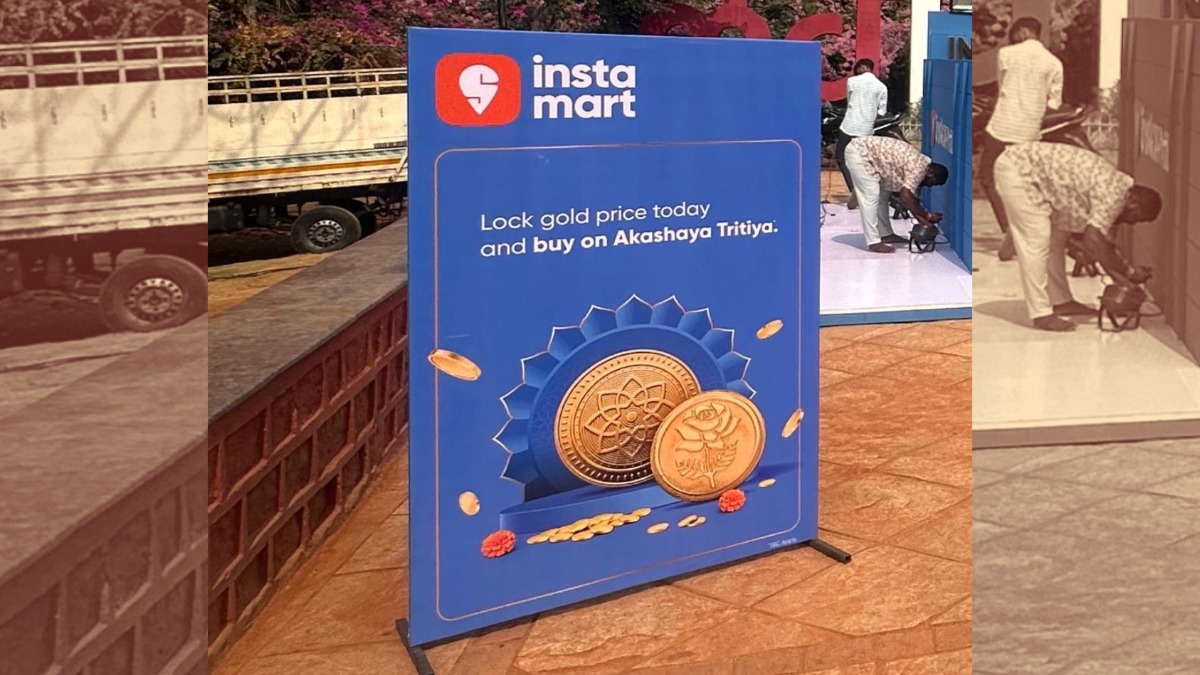
MUMBAI: All that glitters isn’t just gold, it’s also great marketing. A quirky on-ground activation by Instamart at Hussain Sagar Lake has turned into a viral spectacle, with videos of people digging for gold coins flooding social media feeds this week. The campaign, executed in collaboration with Moms, transformed a patch of the city’s iconic lakefront into what online users quickly dubbed a “mini gold rush”. Armed with spades, participants dug through a mud-filled pit in search of hidden gold coins, an activity that drew crowds, cameras and plenty of commentary online, ranging from amused disbelief to outright fascination.
At the heart of the frenzy was a promotional push for Instamart’s ‘Gold Price Lock’ feature, which allows users to secure prevailing gold rates between April 10 and April 16 and complete their purchase later during Akshaya Tritiya, a period traditionally associated with high gold buying. The mechanic cleverly blended physical participation with digital conversion, turning curiosity into a potential transaction.
Branded as ‘Gold Diggers’, the activation leaned into gamified engagement. Those who struck lucky walked away with coins, those who didn’t were nudged with a simple message: lock the price now, buy later. The result was a steady stream of footfall and a surge in user-generated content, as onlookers and participants alike documented the spectacle.
The timing is significant. India remains one of the world’s largest consumers of gold, with demand peaking around Akshaya Tritiya. Data from the World Gold Council suggests the festival alone accounts for roughly 25–30 tonnes of gold purchases annually, making it a high-stakes window for brands looking to tap into consumer sentiment.
As the ‘Gold Price Lock’ feature remains live until April 16, the campaign has already done its job turning a simple product feature into a citywide moment. Because sometimes, the quickest way to get people talking about gold isn’t to sell it, it’s to make them dig for it.







