International
Hollywood studios laud China’s willingness to treat US films more fairly

MUMBAI: The recent move of the Chinese government to comply with a World Trade Organisation order to treat US films more fairly has been lauded by studio executives in Hollywood.
But privately, they wonder how it will shake out and when because the Chinese government has yet to sign a WTO Memorandum of Understanding.
Hollywood had agreed to live with the resulting agreement because it could be revisited in five years. A fine ticking point was revenue-sharing: The studios wanted 30 per cent but had to settle for 25 (previously, it was 13 to 17 per cent).

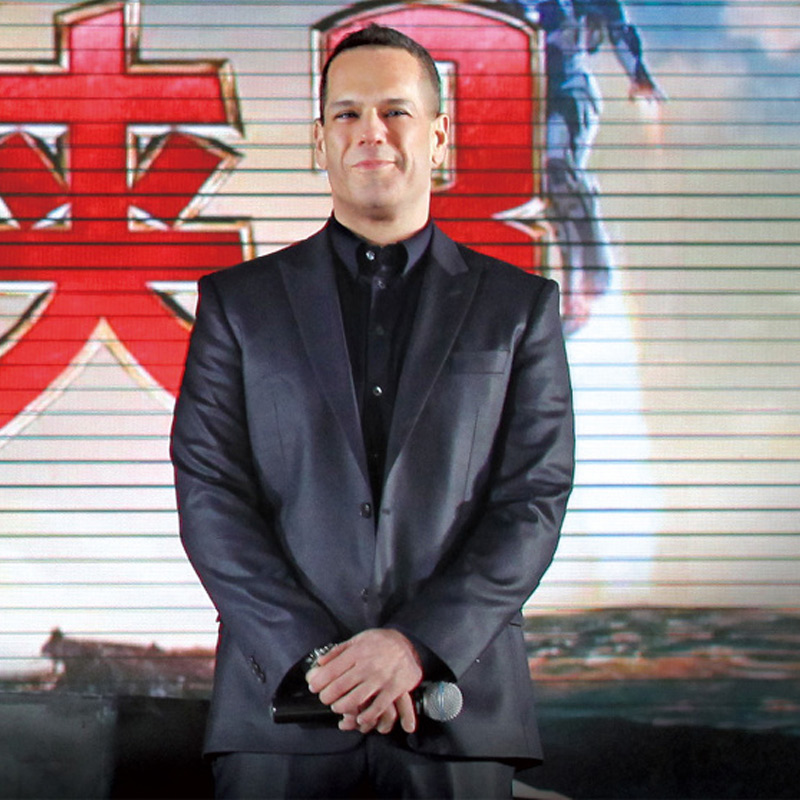
Beijing-based DMG Entertainment’s CEO Dan Mintz said, “Obviously, from the top-line level, all of this is good. But it‘s important to remember that the quota is just one layer that is used by the powers that be to control things. They have censorship, they control all the screens and hold control over when a film comes on against which competition and how long it stays in theatres.”
The Chinese market is too hot for Hollywood studios not to keep trying. In 2008, the local box-office intake was $630 million; in 2011, it reached a massive $2.1 billion. Theatre construction is also growing by bounds spurring a proliferation of state-of-the-art 3D screens. And this is where Hollywood has the upper hand as its proliferation of 3D films deliver much-needed content.
It may be noted that five of China‘s 10 top-grossing films in 2011 were 3D studio releases, all of them from Hollywood. In 2011, Transformers: Dark of the Moon (3D) was China‘s top-grossing title, earning $172 million.
Interestingly, had the new revenue-sharing deal been in effect then, Paramount would have seen a return of $43 million compared to $26 million.
The first 3D release set to open in China this year is Titanic 3D, in early April. No one — not even the film‘s overseas distributor, Fox — knows whether the new rules will be in place by then, but most studios believe they will by summer.
It is also uncertain as to which 3D titles China will accept this year from films like The Amazing Spider-Man, The Dark Knight Rises, Brave, The Avengers, Men in Black III and Madagascar 3.







International
Russia-India cinematic spectacle Persimmon of My Love set for grand Moscow debut
Hindi cinema style musical revives Indo-Soviet cinema ties for today

MUMBAI: A new chapter in cross-border storytelling is set to unfold as Persimmon of My Love gears up for its premiere in Moscow on 1 April 2026, marking the first large-scale cinematic collaboration between Russia and India in decades.
Positioned as a modern nod to the cultural exchange that once brought Indian classics to Soviet audiences, the film blends Hindi cinema flair with Russian storytelling, aiming to rekindle a long-standing cinematic friendship.
Directed by Marius Weisberg, the musical comedy follows two brothers navigating a lively world of music, family and romance. The lead roles are played by Demis Karibidis and Mikhail Galustyan, with Karibidis also contributing as a screenwriter.
Shot entirely in India, the production leans heavily into Hindi cinema style spectacle. Filming took place across Mumbai studios and the cities of Udaipur and Jodhpur, whose architecture was used to create the fictional setting of Khurmada. A crew of over 350 worked on the project, with large-scale sequences featuring up to 1,000 extras.
The film also brings Indian creative talent into the mix. Dance sequences are choreographed by Jay Kumar, while music by Zurab Matua features songs in both Hindi and Russian, adding to its cross-cultural appeal.
Backed by TNT channel, MyWayStudio and the Russian Cinema Fund, the project reflects a broader push to strengthen cultural ties between the two countries.
With its mix of colour, comedy and cross-border collaboration, Persimmon of My Love is not just a film release but a reminder that cinema, much like music, travels well across borders.







