e-commerce
Hoarded cash is flowing back into financial system, asserts Modi

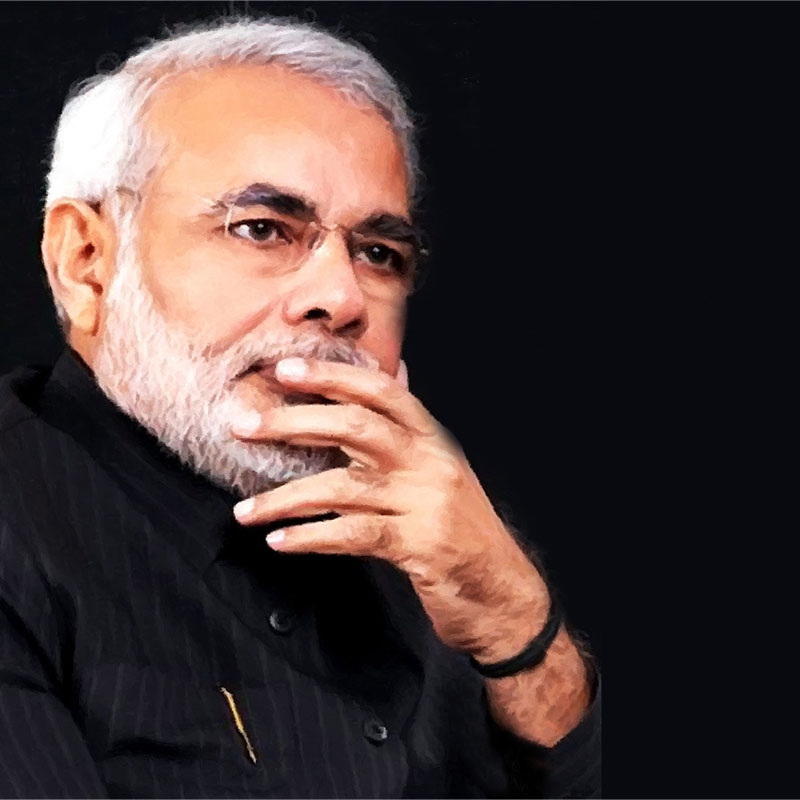
MUMBAI: Economists, and not the government, had floated estimates that Rs 3 lakh crore black money was in circulation and would be extinguished as a result of demonetisation, the prime minister Narendra Modi said commenting on the dichotomy between the fact that almost 90 per cent of the demonetised currency returned to the banks and the perception that the above-stated figure of black money was in circulation.
In his first interview after the 8 November demonetisation move, Modi has said that the exercise has achieved the goals it had set out, in an interview to India Today.
In fact the government wanted the black money, which was “hoarded and kept out of the regular transactional economy, by people storing them in suitcases and cupboards or under the mattress” to flow back to the banking system. “This has left behind a permanent financial trail. This changes the game as the black money that did not have an address till now, has been tagged with one.”

Modi has said that the exercise has achieved the goals it had set out—to attack corruption, black money, counterfeit notes, financing of terrorism and other activities threatening national security. “Decisive outcomes are clearly visible on all these fronts,” said the prime minister in an exclusive interaction with Raj Chengappa.
“I was well aware of the magnitude and complexity of the challenge we faced in implementation. And I believe we have lived up to the same. It is no small thing that no significant incident of unrest has taken place in the country.”
The prime minister defended frequent and multiple changes in the notifications regarding the implementation of demonetisation saying that there was a distinction between the government’s Niti (policy) and Ran-niti (execution strategy and tactics) and the two must not be put in the same basket. “The decision of demonetisation which reflects our Niti,is unequivocally clear, unwavering and categorical. Our Ran-niti however, needed to be different, aptly summarized by the age old saying of Tu Daal-Daal, Main Paat-Paat.”
Modi also came candid about the rationale and timing of this historic yet controversial decision to render nearly 86 per cent of the country’s currency invalid. “We took the decision not for some short-term windfall gain, but for a long-term structural transformation. Our objective was to clean our economy and society of the menace of black money, purging the distrust, artificial pressures and other ills that came with it,” he said.
Quoting global economists such as James Henry, Kenneth Rogoff and Larry Summers and recommendations of the 1971 Wanchoo Committee, the prime minister averred that the decision to demonetise high value currencies was taken 40 years late. “This step was in fact a critical crisis avoidance measure, as, if we had delayed it any further, the problem and its corresponding correction would have magnified exponentially in size and complexity,” he said.
Countering the criticism that such a move was unwarranted when the economy was in good shape Modi said that the timing of it was a matter of common sense. “If India’s economy was weak, this decision could not have been made. It was consciously taken when the economy is in good shape, as such a sharp correction could have only been made then to fortify its foundations and give it a further boost.”
The prime minister also sought to allay fears that country was staring at a cash crisis, which was unlikely to end, even after 30 December deadline. “Regarding printing of notes, the planning and strategy was based on India’s usage and requirements of currency. Very few people know that as per RBI’s evaluation, a substantial part of the Rs 1,000 and Rs 500 notes printed never make it into everyday circulation, and are instead hoarded and stocked away. Furthermore, the common man now has access to a wide variety of alternate digital payment mechanisms ranging from Rupay cards to online wallets and USSD payments,” he said.
Modi also dismissed the Opposition’s allegation that the decision was a political move keeping an eye on the Assembly election in Uttar Pradesh. “On one hand they say I took this decision for political dividend, and on the other they say the people have been troubled and are deeply unhappy. How can the two go together?”
The prime minister indicated that the government would carry forward tax reforms reducing the scope of discretion for income tax department officials. “The Revenue Department is already building a system where the entire process of assessment is done on-line without any need for the assesse to appear before the officer… selection of cases for scrutiny will be based on objective evidence rather than the whims and fancies of officers. The aim is to ensure that the honest tax-payer is not harassed or inconvenienced, while the tax-evader is efficiently caught and punished.”
As the BJP-led NDA government has completed half of its five-year tenure, Modi envisaged his vision for India: “An India where the farmer is happy, the trader is prosperous, every woman is empowered and the youth gainfully employed. An India where every family has a house, and every household has access to the basic amenities of electricity, water and a toilet. An India which is Swachh from all forms of filth.”






e-commerce
Flipkart rolls out 105 per cent bonus for 20,000 employees
Strong FY25 performance drives payouts even as layoffs and shifts unfold.

MUMBAI: In a year where belts were tightened and rewards loosened, Flipkart seems to be playing both offence and defence trimming roles on one hand while handing out a generous 105 per cent bonus on the other. The Walmart owned e commerce major has rolled out a 105 per cent bonus payout for 2025, covering nearly 20,000 employees, signalling a year of steady operational momentum even as the company navigates restructuring pressures. The payout, communicated internally by chief human resources officer Seema Nair, is tied to performance across key metrics including growth, operational efficiency, financial outcomes and people indicators, a combination that suggests the company is inching closer to its long stated goal of sustainable profitability.
Employees at SD level and below are set to receive their bonuses in March, while payouts for senior leadership, including vice presidents and senior vice presidents, will follow after the close of the performance cycle. The elevated 105 per cent multiplier stands out in a sector where cautious payouts have increasingly become the norm, pointing to what appears to be a relatively strong internal scorecard for FY25.
Yet, the announcement arrives with a noticeable contrast. Earlier this year, Flipkart reduced its workforce by around 300 roles as part of its annual performance review process. While officially framed as performance driven, the juxtaposition of layoffs alongside above target bonuses reflects a more nuanced balancing act, one that prioritises cost discipline while continuing to reward and retain high performing talent.
This dual approach is becoming increasingly common across the technology and e commerce landscape, where companies are navigating an uneven hiring environment while under pressure to deliver profitability. Rewarding top contributors, even amid selective workforce reductions, allows firms to maintain morale and retain critical talent without losing sight of financial prudence.
At the same time, Flipkart is also undergoing leadership shifts that hint at a broader strategic recalibration. Nishant Verman has been appointed senior vice president for corporate development and partnerships, while group chief financial officer Sriram Venkataraman is set to step down. Ravi Iyer will take on expanded responsibilities within the finance function, marking a reshuffle at the top as the company gears up for its next phase.
These changes come amid reports that Flipkart is planning to shift its holding structure back to India, a move widely interpreted as groundwork for a potential public listing. While timelines remain fluid, the combination of stronger financial discipline, leadership restructuring and employee incentivisation suggests a company preparing itself for greater scrutiny and scale.
For employees, the 105 per cent payout offers a welcome boost in what has otherwise been a period of adjustment. For Flipkart, it is a signal that even as it cuts where necessary, it is willing to spend where it counts. In the high stakes game of growth versus profitability, the company appears to be hedging its bets carefully, rewarding performance while reshaping itself for what could be its most defining chapter yet.






