News Broadcasting
HLL says it is focusing its adspend even as it reports tough quarter


India’s leading fast moving consumer goods company Hindustan Lever Ltd (HLL) has said that it is increasingly focusing its marketing spends on a core group of brands that it calls the power brands.
Speaking at a press conference in Lever House in Mumbai to announce its Q3 results for 2001-2002 HLL Chairman MS Banga said the company had set aside an ad & promotion budget of Rs 8,240 million for the year. This is an increase of 18 per cent over the previous year’s figures, he said. Of this 90 per cent has been allocated to the so-called 30 power brands.
He added that while the revenues for the firm had grown by 3.5 per cent, the power brands had shown six per cent growth in the same quarter. “Overall, the market has been in a bad way,” he pointed out. “But our power brands are fundamentally stronger than they were 12 months ago.”

“Our objective is to deliver directionally with the focus on certain key products,” Banga said. On the big question what sort of resources the company was setting aside for advertising, he said: “Our commitment remains to drive our power brands and for that we will spend.”
A point that Banga made as to which area was seeing increased ad spends should have television executives sitting up and taking notice. “We are investing in a major way on outdoor media. The growth of ad spend on outdoor media is significantly higher than other media,” Banga said.
Banga said the company’s ice-cream business was losing money as the market was not growing but said the next fiscal would see a major initiative to turn around the business.
The company was test-marketing brands among which figure Knorr rice-at-ease, and other spreads in Punjab. He added that both rural and urban India had grown to account for an equal share of revenues for the company. He was a little bearish about the return of the rural consumer, saying that things will become clearer only after the Rabi crop was harvested in March 2002. “Rural income will depend on the price-realisation that the farmer gets for his crop and that will be known in the second quarter of this year,” he pointed out.
On the whole Hindustan Lever, reported a tough quarter with its October-December net profit growing a fractional 1.39 per cent at RS 4360 million from RS 4300 million in the corresponding previous quarter. Net sales were up 4.34 per cent to RS 27,630 million compared to RS 26,480 million last year. Its profit after tax (before exceptional items) rose 16.39 per cent to RS 4,999.80 million (RS 4,295.8 million).
On a year on year basis, however, HLL’s FY01 results showed a 25.26 per cent increase in net profits to RS 16,410 million (RS 13,100 million), while sales were up 3.47 per cent, to RS 100,972 million as against RS 106,040 million.



News Broadcasting
CNN-News18 to host Fury in the Gulf conclave on West Asia crisis
Three-hour summit to unpack geopolitical fallout and impact on India
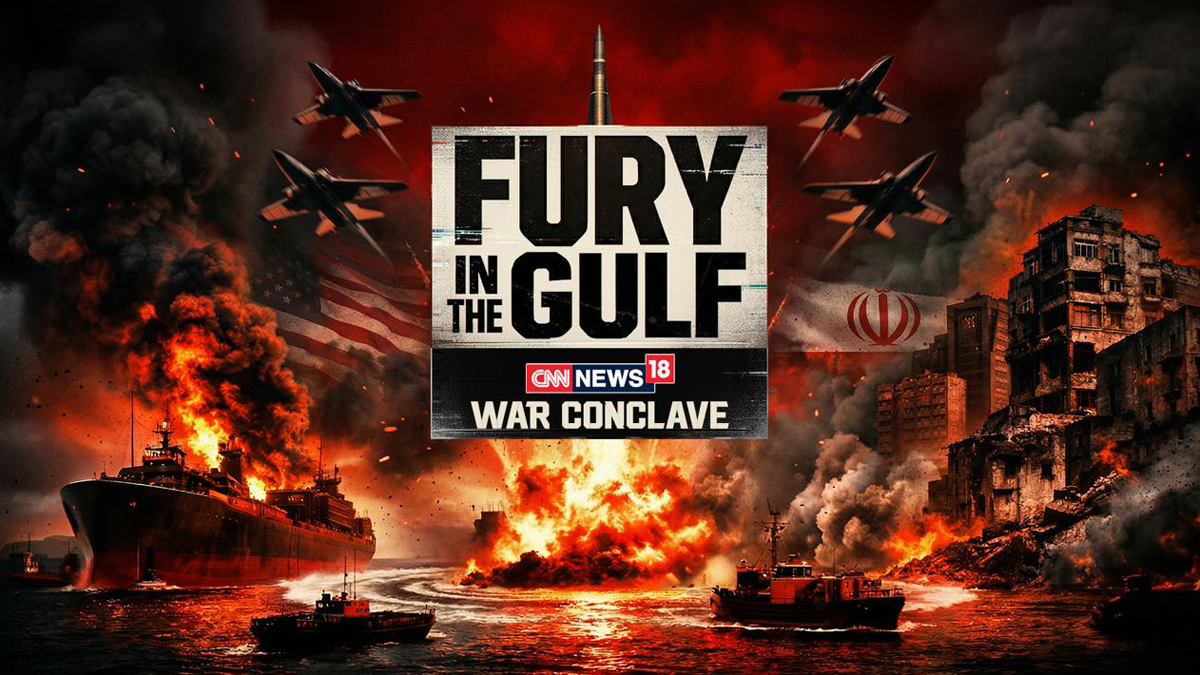
MUMBAI: CNN-News18 is set to host a special three-hour broadcast, Fury in the Gulf – War Conclave, on April 7, aiming to decode the escalating West Asia crisis and its far-reaching implications for India.
Scheduled from 4:00 PM to 7:00 PM, the conclave comes at a time when tensions between Iran and the United States are reshaping global geopolitics and triggering economic uncertainty. With India’s deep energy ties, trade links and large diaspora in the Gulf, the developments carry significant domestic relevance.
Built around the theme ‘Conflict, Consequences, and The Future,’ the programme will feature six curated sessions combining one-on-one interviews and panel discussions. The focus is to cut through the clutter and offer viewers a clearer understanding of the fast-evolving situation.
Key sessions include ‘Diplomacy in Times of War’ featuring Shashi Tharoor, and ‘World After the Iran Conflict’ with voices such as Ram Madhav, Reuven Azar, representatives from the European Union and the Iranian Deputy Envoy. Another session titled ‘Another Dunkirk?’ will bring together K. J. S. Dhillon and Jitin Prasada among others.
CNN-News18 editorial affairs director Rahul Shivshankar said, “In times of war, clarity becomes the most powerful tool. Fury in the Gulf – War Conclave brings together credible voices to address the questions and confusion that arise amid an overwhelming influx of information.”
He added that the initiative is aimed at delivering “facts, perspective, and insight” at a time when misinformation can easily cloud public understanding.
Echoing the sentiment, CNN-News18 CEO– English and business news Smriti Mehra said the conflict marks a defining global moment, with consequences that extend well beyond the region. She noted that the conclave seeks to present the crisis with “depth, nuance and responsibility” so audiences can better grasp its real-world impact.
As geopolitical tensions continue to dominate headlines, the conclave positions itself as an attempt to bring order to the noise, offering viewers a structured, insight-led look at a complex and rapidly shifting global situation.






