News Broadcasting
Hindustan Times’, Peace Dividend conference kick starts in Delhi


MUMBAI: Peace gets a chance in conflict-ridden South Asia as key political and business leaders, strategists and leading minds from India and overseas convene to discuss and map the economic, strategic and geopolitical future of the region at “The Peace Dividend: Progress for India and South Asia.”
This conference organised by the Hindustan Times Leadership Initiative is being held in New Delhi at the ITC Maurya Sheraton Hotel on 12 and 13 December.
South Asia’s peace dividend could be a single currency for the region, Prime Minister Atal Bihari Vajpayee said today, noting that political disputes in other parts of the world had been “quietly deferred for tackling at a more opportune time”, and cautioning against letting outside powers exploit differences in the region.
“All these are aspects which your conference could discuss as it exchanges ideas on the economic, strategic and geopolitical future of India and South Asia, ahead of the forthcoming SAARC summit,” the Prime Minister said while inaugurating the conference.

Among the other Speakers during the two-day discussions are former Pakistan Prime Minister Benazir Bhutto, former US Secretary of State Madeleine Albright, Congress President Sonia Gandhi and President of the New York-based Council on Foreign Relations Richard Haass.
Welcoming the delegates, HT vice-chairperson and editorial director Shobhana Bhartia emphasised that global prosperity would be difficult to achieve unless there was peace in South Asia. “Peace is more than the absence of conflict,” she said. “It is the necessary precondition to prosperity.”
Vajpayee elaborated on the theme by saying, “As we develop greater economic stakes in each other, we can put aside mistrust and dispel unwarranted suspicions.” He pointed out that in the post-Cold War context, other parts of the world were increasingly focusing on regional economics. “Political disputes have been resolved diplomatically or quietly deferred for tackling at a more opportune time,” he said. “There is a clear recognition that hostility only stunts economies, inhibits trade and retards progress.”
The Prime Minister called upon Pakistan to jointly respond to the desire for peace and “the imperative of forging a unity based on our commonalities.” The payoffs, he felt, could be mutual security cooperation, open borders and even a single currency. “If this seems unrealistic and utopian, perhaps we are being unnecessarily cynical,” Vajpayee said, recalling dramatic (and equally unforeseen) events such as the end of the Cold War and the collapse of the Berlin wall.
Vajpayee cautioned against allowing powers from outside to take advantage of the political differences in the region. “Whenever we have dissipated our energies in internal squabbling, external forces have come in to sort out our differences and stayed on to exploit our resources. We should never create the possibility of reliving these historical experiences in new forms and on different fronts,” he said.
The “Peace Dividend” conference is a forum for key political and business leaders, strategists and leading minds from India and overseas to discuss and map the economic, strategic and geopolitical future of India and South Asia.
In addition to its aim of initiating discussions on progress in South Asia, the Peace Dividend conference also seeks to provide meaningful ideas and interaction ahead of the South Asia Association for Regional Conference Heads of State Summit scheduled for 4 – 6 January 2004.
The Hindustan Times Leadership Initiative has been established by the Hindustan Times as part of its mission to enhance the level of discussion on pressing issues, encourage interaction among leaders in various areas and present thought-platforms aimed at solutions.




News Broadcasting
CNN-News18 to host Fury in the Gulf conclave on West Asia crisis
Three-hour summit to unpack geopolitical fallout and impact on India
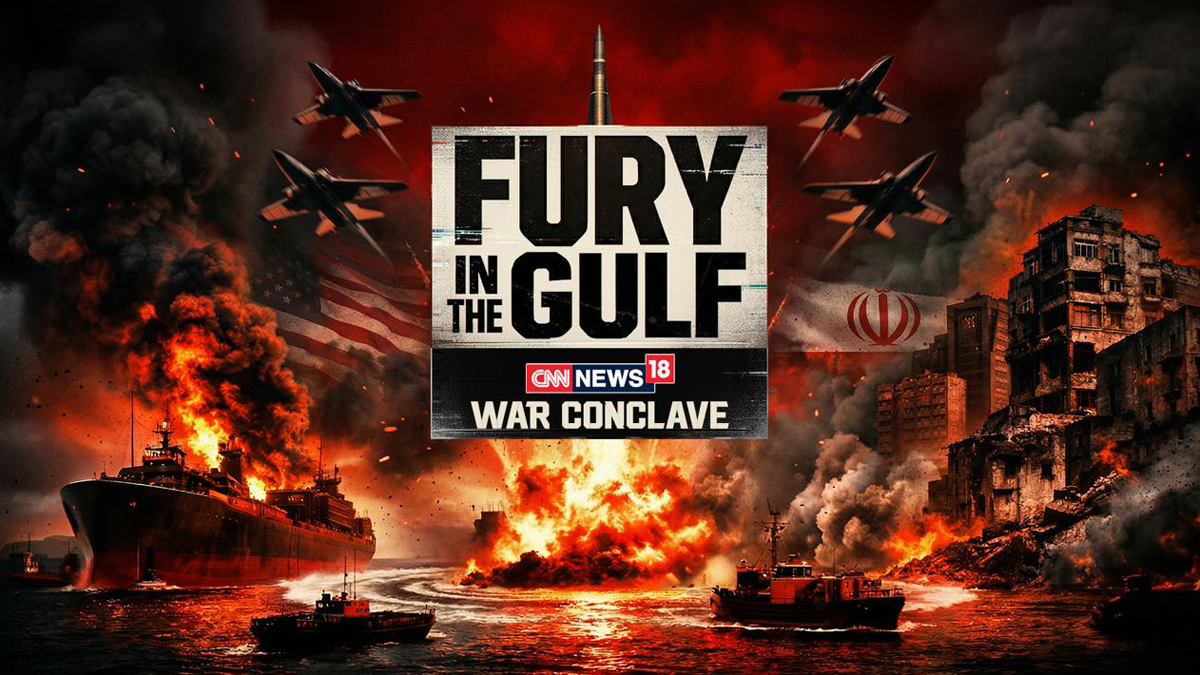
MUMBAI: CNN-News18 is set to host a special three-hour broadcast, Fury in the Gulf – War Conclave, on April 7, aiming to decode the escalating West Asia crisis and its far-reaching implications for India.
Scheduled from 4:00 PM to 7:00 PM, the conclave comes at a time when tensions between Iran and the United States are reshaping global geopolitics and triggering economic uncertainty. With India’s deep energy ties, trade links and large diaspora in the Gulf, the developments carry significant domestic relevance.
Built around the theme ‘Conflict, Consequences, and The Future,’ the programme will feature six curated sessions combining one-on-one interviews and panel discussions. The focus is to cut through the clutter and offer viewers a clearer understanding of the fast-evolving situation.
Key sessions include ‘Diplomacy in Times of War’ featuring Shashi Tharoor, and ‘World After the Iran Conflict’ with voices such as Ram Madhav, Reuven Azar, representatives from the European Union and the Iranian Deputy Envoy. Another session titled ‘Another Dunkirk?’ will bring together K. J. S. Dhillon and Jitin Prasada among others.
CNN-News18 editorial affairs director Rahul Shivshankar said, “In times of war, clarity becomes the most powerful tool. Fury in the Gulf – War Conclave brings together credible voices to address the questions and confusion that arise amid an overwhelming influx of information.”
He added that the initiative is aimed at delivering “facts, perspective, and insight” at a time when misinformation can easily cloud public understanding.
Echoing the sentiment, CNN-News18 CEO– English and business news Smriti Mehra said the conflict marks a defining global moment, with consequences that extend well beyond the region. She noted that the conclave seeks to present the crisis with “depth, nuance and responsibility” so audiences can better grasp its real-world impact.
As geopolitical tensions continue to dominate headlines, the conclave positions itself as an attempt to bring order to the noise, offering viewers a structured, insight-led look at a complex and rapidly shifting global situation.






