Cable TV
Hinduja’s HITS platform NXT Digital to launch in August

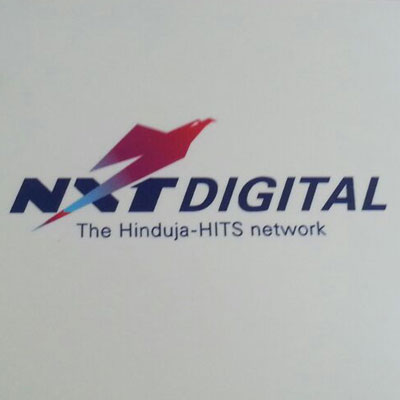
MUMBAI: The Hinduja Group has christened its headend in the sky (HITS) service platform as NXT Digital. The service is slated to launch in August 2015.
Speaking to Indiantelevision.com, Hinduja Ventures’ investment arm Grant Investrade managing director Tony D’silva said, “We had applied for the HITS licence in November 2012 and finally after a wait of three years, we have got the Grant of Permission Agreement (GOPA) license on 14 July, 2015.”

At the time of its launch, NXT Digital will concentrate on the phase III and IV digitisation markets, which currently have more than 110 million analogue TV households.
The platform has already started rolling out set top boxes (STBs). “We have already got order for 2.5 million STBs,” informed D’silva adding that deals with two broadcast networks has also been signed.
NXT Digital will launch with 150-200 channels in August and aims to take it up to 500 plus MPEG-4 encrypted services including HD channels with the ability to insert local channels as per requirement by October-November 2015. Not just this, the platform will also introduce value added service (VAS) like Darshan, TV Everywhere, Games and Learning by December, this year.
“We believe the platform will strongly support the laudable national mission to roll out Digital Addressable Systems (DAS) of broadcasting all over India,” said D’silva.
NXT Digital, according to D’silva, will not just help last mile operators (LMOs) and multi system operators (MSOs) in going digital as per government mandated standards and within set deadlines, but will also help them remain independent and retain the ownership of their network.
NXT Digital brand name and logo
According to D’silva, NXT Digital is a futuristic product, which caters to the next generation. Designed by Chlorophyll, the eagle in the logo symbolizes the empowered LMO/MSO who, with the new HITS platform, can soar into the skies with complete freedom and ownership, to achieve greater growth. The soaring eagle is also indicative of the reach of NXT Digital.
D’Silva said, “While HITS is the pipeline of content delivery, our offering will not be limited to encrypted television channels through digitally addressable systems. Instead, we will offer a rich bouquet of every kind of additional digital service such as VAS, OTT and others that will keep getting added. Hence, we decided to go with the name NXT Digital, and both, the name and the logo represent the next level in the digital technology we will offer.”
Research and outcome
In order to understand the market and the needs of the LMOs, the company undertook an in-depth research to find out the requirements of the distribution fraternity in December 2014. A research was conducted with 2000 LMOs, MSOs and their representatives across 120 cities in phase III and IV markets.
The research threw up six major requirements of the LMOs and MSOs. These were as follows:
1) Retain ownership of their network
2) Drive broadcaster deals
3) Package and price their offerings according to the needs of their market
4) To be able to acquire STBs according to their convenience
5) The ability to insert local channels for their end-subscribers
6) Have a sophisticated digital service that could help them compete with other digital platforms like DTH to ensure their digital offerings were future-ready so that their subscriber-bases would only grow.
“In other words, they wanted to remain independent, own their network, and go digital as per government norms and within the deadlines,” D’Silva said.
The HITS platform will offer the choice of two different service models: a white label service model and a full service model.
“By signing up for a NXT Digital service, a network owner in a Phase III market can be saved the burden of having to make huge investments in the technology and highly skilled manpower required to convert his analog households to digital,” he informed.
The entire infrastructure and backend, including a call centre for customer service, will be taken care by NXT Digital. “The network owner can concentrate on growing his business through managing his network, local channels deployment, broadcaster deals and more,” D’silva said.
Technology partners
The technology programme manager for NXT Digital is Castle Media and its team, led by Vynsley Fernandes, who has set up several world class operations in broadcasting and digital networks in India and overseas.
GIL has partnered with Thaicom-7 for satellite, C-Band transponders, Nagravision DLK for CAS-embedded platform; OpenTV1 for middleware; Hansen Technologies for subscription management system and billing solutions and Changhong, Telesystems and others for STBs.
Manpower and offices
NXT Digital currently has close to 200 people working in different parts of the country. These people have been picked from the broadcast, cable and telecom sectors.
The company has four regional offices in Mumbai, Delhi, Kolkata and Bengaluru and 16 state offices.
Pricing and revenue share
The STBs have been made available to LMOs on cash and carry model. While the SD STB is priced at Rs 1400, the HD box will cost Rs 1800.
NXT Digital will charge the LMO a flat fee of Rs 20 per subscriber.
In case the consumer pays directly to the platform for any la carte channels, using the online mode of payment, NXT Digital will have a revenue share with the LMOs.
The HITS platform will work on a prepaid model. “While there will be an option for postpaid, but we will concentrate on the prepaid model. Not just this, unless the consumer application form (CAF) is in place, the customer will not be activated,” informed D’silva.
Awareness drive
GIL has readied a pan-Indian awareness drive across markets, showcasing its services portfolio, technology capabilities and quality of services. The company will conduct roadshows in 39 cities in order to train the LMOs.
The campaign will be spread across all media consumed including but not limited to radio, local-media and OOH.


Cable TV
Hathway Cable appoints Gurjeev Singh Kapoor as CEO
Leadership change comes as cable TV faces shrinking subscriber base and modest earnings pressure
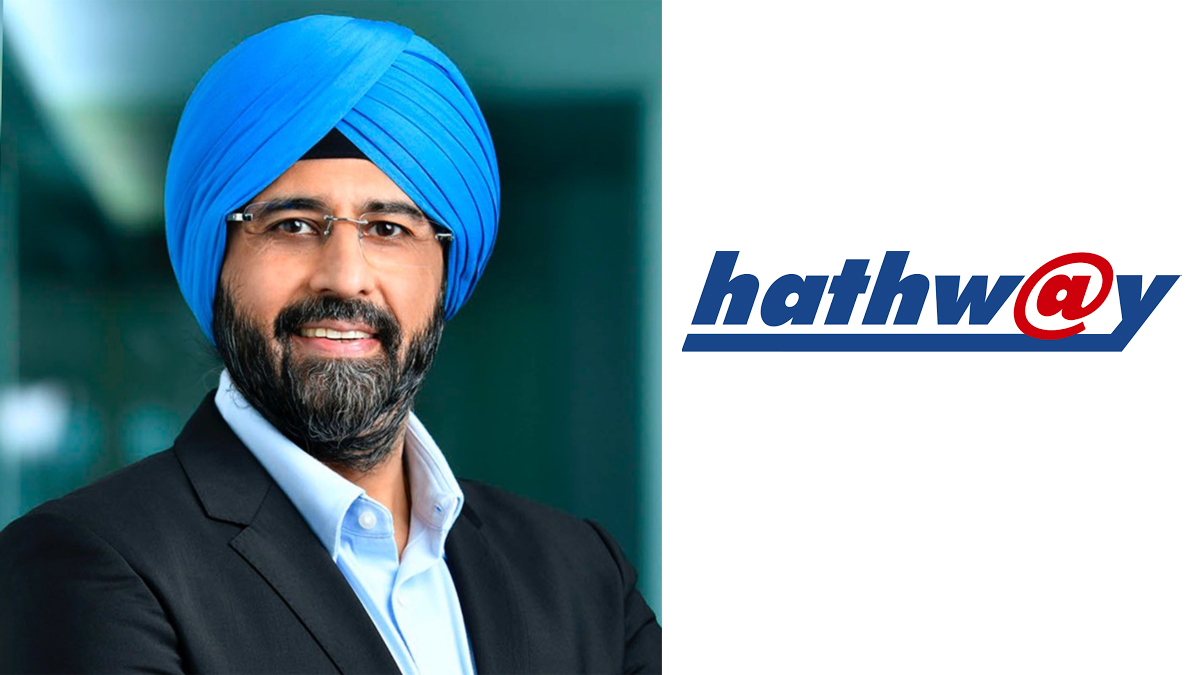
MUMBAI: Hathway Cable and Datacom has tapped industry veteran Gurjeev Singh Kapoor as chief executive officer, marking a leadership pivot at a time when India’s cable television business is under mounting strain.
Kapoor will take over from Tavinderjit Singh Panesar, who is set to retire in August after a long innings with the company. Panesar, chief executive since 2023, has held multiple leadership roles at Hathway, including his latest stint beginning in 2022.
Kapoor brings more than three decades of experience in media and entertainment. He most recently led distribution at The Walt Disney Company’s Star India business, now part of JioStar. His career spans television distribution and affiliate partnerships, with stints at Sony Pictures Networks India, Discovery Communications and Zee Entertainment.
Panesar, with over three decades in the industry, has worked across strategic planning, distribution and business development in media, broadcasting and manufacturing. His past associations include ESPN Star Sports, Star India, Apollo Tyres and JK Industries.
The transition lands as the cable sector grapples with structural disruption. Traditional operators are losing ground to streaming platforms, while telecom and broadband players tighten the squeeze with bundled offerings.
An EY report estimates India’s pay-TV base could shrink by a further 30 to 40 million households by 2030, taking the total down to 71 to 81 million. The slide follows a loss of nearly 40 million homes between 2018 and 2024, a contraction that has already wiped out more than 37,000 jobs in the local cable operator ecosystem.
Hathway’s numbers reflect the strain. The company reported a consolidated net profit of Rs 93 crore for FY25, down from Rs 99 crore a year earlier. Revenue inched up to Rs 2,040 crore from Rs 1,981 crore. As of December 2025, it had about 4.7 million cable TV subscribers and roughly 1.02 million broadband users.
Kapoor steps in with a familiar brief but a shrinking playbook. In a market where viewers are cutting cords faster than companies can reinvent them, the new chief executive inherits a business fighting to stay plugged in.