News Headline
Hindi GECs navigate a changing TV market in 2025

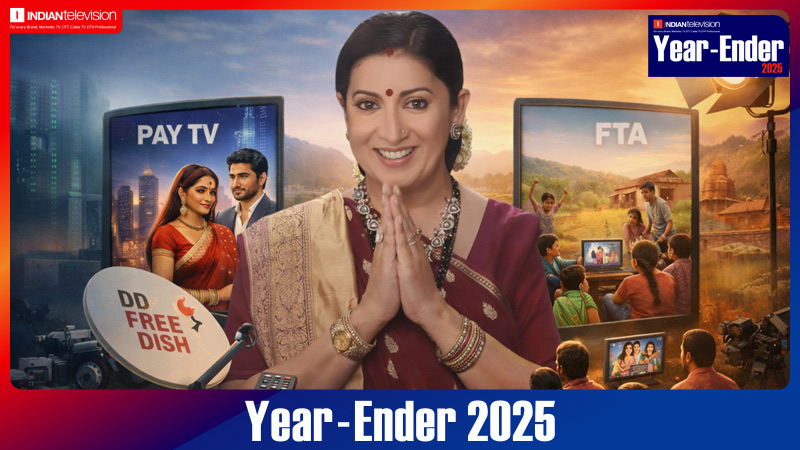
MUMBAI: As 2025 draws to a close, India’s Hindi General Entertainment Channels (GECs) are a study in contrasts. The industry is effectively bifurcated into two distinct universes: the resilient, if creatively stagnant, pay TV ecosystem, and the booming, mass-market free-to-air (FTA) segment.
The defining narrative of 2025 was the relentless growth of the FTA platform DD Free Dish, which reached an estimated 50 million million households. In 2025, the Hindi General Entertainment Channel (GEC) genre retained its position as the largest segment of Indian television, holding ground despite intensifying competition from digital platforms and a packed calendar of marquee sporting events.
Sony SAB continued to draw loyal audiences through comfort-viewing comedies, notably Taarak Mehta Ka Ooltah Chashmah and Wagle Ki Duniya. In the free-to-air space, Dangal TV emerged as a mass-market powerhouse with shows such as Bindiya Sarkar, Sindoor Ki Keemat and Shubh Shagun. Fiction and horror-led programming formed the backbone of Star Bharat’s performance through the year. Shows such as 10:29 Ki Akhri Dastak, Shaitaani Rasmein and select original fiction titles delivered consistent traction across Hindi-speaking markets, particularly in smaller towns and semi-urban pockets.

Advertising revenues: growth without comfort
While total GEC ad revenue grew modestly to Rs 11,500 crore, this growth was almost entirely absorbed by FTA channels. Star Bharat, Zee Anmol and Colors Rishtey became FMCG powerhouses, offering massive reach at low CPMs. Meanwhile, mainline pay TV channels such as Star Plus and Zee TV saw ad growth stagnate as premium advertisers pivoted towards the surgical targeting offered by OTT platforms.
The masters of the purse: advertising trends in 2025
The GEC ad pie in 2025 was dominated by a familiar “Big Four” in FMCG, but with a strategic shift towards convergence-led buying.
● Hindustan Unilever and P&G: These giants remained the lifeblood of Hindi GECs, but 2025 saw them move nearly 25 per cent of their linear budgets into hybrid buys. Advertisers no longer just bought 30-second spots on Anupamaa; they bought integrated packages spanning Disney+ Hotstar and JioCinema and later JioHotstar.

● The quick-commerce surge: Blinkit, Zepto and Swiggy Instamart emerged as top-10 advertisers on pay TV, targeting the household decision-maker during the 8.00 pm–11.00 pm primetime window.
● The gaming and fintech dip: Following regulatory tightening, real-money gaming and high-risk fintech apps pulled back sharply from their heavy 2024 spends. The gap was filled by a resurgent automobile sector, particularly EV brands targeting rural audiences via FTA platforms.
Leadership churn and the changing of the guard
As business models shifted towards digital-linear integration, leadership across major broadcasters underwent a seismic reshuffle.
● The Jio–Disney consolidation: Post-merger, Kevin Vaz consolidated power as head of the merged entertainment business. This triggered a cascade of exits by legacy Disney Star executives, many of whom moved into independent production and boutique agencies.
● The Zee–Sony aftermath: Following the collapse of the Zee–Sony merger, 2025 became a year of reconstruction. Punit Goenka focused Zee’s leadership on a “lean-and-mean” strategy, hiving off niche lifestyle channels.

● Sony Pictures Networks India saw a leadership refresh under Gaurav Banerjee, with a mandate to pivot Sony from “urban premium” to “mass hybrid”.
● The Monika Shergill effect: While not a television executive (though a large part of her early career was at Star India), Shergill’s content strategy at Netflix India had ripple effects across GECs. Broadcasters hired crossover creative heads capable of developing shows designed to live across both TV and OTT ecosystems.

Programming in 2025: scale beats experimentation
Mainline pay TV channels struggled, with ad growth hovering near zero. Innovation was scarce. Broadcasters doubled down on formats that worked, resulting in a year dominated by long-running family dramas, mythology and recycled genres.
● The 9.00 pm slot remained the battleground, dominated by aspirational family dramas.
● The supernatural surge: Mythology and fantasy-led dramas like Naagin retained inexplicable popularity.

● Non-fiction: Established franchises remained the only reliable tent poles.
Top fiction shows of 2025
● Anupamaa (Star Plus): Continued its undisputed reign at the top of the TRP charts.
● Ghum Hai Kisikey Pyaar Meiin (Star Plus): Cemented its no 2 position.
● Kumkum Bhagya and Kundali Bhagya (Zee TV): Continued to anchor Zee’s primetime with minimal creative shifts.
Top non-fiction shows of 2025
● Bigg Boss (Colors): Became a social-media-first phenomenon, with its OTT run fuelling linear ratings.

● Kaun Banega Crorepati (Sony): Remained the gold standard of family-safe entertainment.

The convergence economy
The GEC ecosystem increasingly functioned as a content supplier to its own OTT platforms: Disney plus Hotstar, JioCinema, SonyLIV and Zee5.
● Revenue strategy: Growth shifted to convergence deals bundling TV and OTT inventory.
● The rural-first lens: Programming increasingly targeted tier-2 and tier-3 audiences accessing content via Free Dish or low-cost smartphones.
● Risk aversion: New launches were rare and largely derivative, with experimentation ceded to OTT platforms.
In 2025, Hindi GECs survived not by innovation, but by refining proven formulas for a bifurcated market.
The rise of the mega-producer
Power dynamics shifted from actor-led star power to the scale power of elite production houses. As broadcasters cut risk, they outsourced it to mega-studios capable of delivering daily fiction at industrial scale.
Director’s Kut Productions (Rajan Shahi): The undisputed titan of 2025
● Anupamaa remained India’s no 1 show.
● Yeh Rishta Kya Kehlata Hai, now in its 16th year, continued to defy gravity.

Balaji Telefilms (Ekta Kapoor): The volume machine
● Franchise extensions dominated strategy.
● Tumm Se Tumm Tak and Ganga Mai ki Betiyan remained top staples.
● Experiments included short-lease thrillers and a fast-forwarded reboot of Kyunkii Saas Bhi Kabhi Bahu Thi.

Cockcrow & Shaika Entertainment: The consistency specialists
● Ghum Hai Kisikey Pyaar Meiin remained a ratings mainstay.

● Expanded footprint across Star Plus and Colors with aspirational melodrama.
EndemolShine India (Banijay): The non-fiction factory
● Produced Bigg Boss and Khatron Ke Khiladi with integrated OTT live feeds.

● Revitalised MasterChef India by moving it to an 8.00 pm slot.

Rashmi Sharma Telefilms: The rural specialist
● Dominated DD Free Dish with mythology and mass social dramas.
● Pioneered hyper-local production hubs in tier-2 cities to cut costs and boost authenticity.
Big Synergy (Siddhartha Basu): The intellectual pillar
● KBC 2025 introduced play-along integrations, drawing over 40 million digital participants.
Where the genre stands
Fiction-led programming continued to anchor the genre’s viewership through the year. As of late 2025, a clutch of long-running franchises and newer successes consistently dominated weekly ratings charts. Anupamaa (Star Plus) remained the clear market leader, averaging TRPs in the 2.1–2.3 range.
The reboot Kyunki Saas Bhi Kabhi Bahu Thi 2 emerged as a strong performer, stabilising between 1.9 and 2.1 TRPs. Newer entrant Ganga Maai Ki Betiyaan broke through in the latter half of the year, tracking close to 1.8 TRP, while Udne Ki Aasha (Star Plus) maintained a steady presence in the top five with ratings of around 1.8–1.9. Veteran franchise Yeh Rishta Kya Kehlata Hai and Tum Se Tum Tak alternated in the fifth slot, with TRPs in the 1.7–1.8 band.
Overall, the Hindi GEC genre accounted for an estimated 43 per cent of India’s total television viewership, underscoring its continued relevance in an increasingly fragmented media landscape.





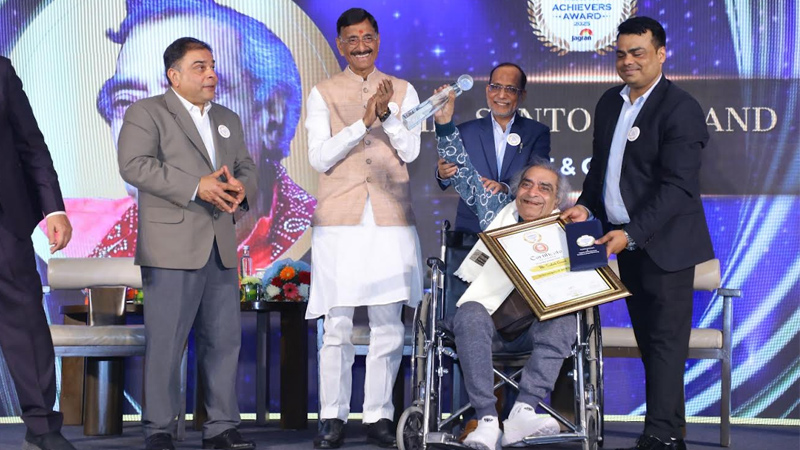
NEW DELHI: Hamdard Laboratories gathered a cross-section of India’s achievers in New Delhi on Friday, handing out the Hakeem Abdul Hameed Excellence Awards to figures who have left their mark across healthcare, education, sport, public service and the arts.
The ceremony, attended by minister of state for defence Sanjay Seth and senior officials from the ministry of Ayush, celebrated individuals whose work blends professional success with a sense of public purpose. It was as much a roll call of achievement as it was a reminder that influence is not measured only in profits or podiums, but in people reached and lives improved.
Among the headline awardees was Alakh Pandey, founder and chief executive of PhysicsWallah, recognised for turning affordable digital learning into a mass movement. On the sporting front, Arjuna Awardee and kabaddi player Sakshi Puniya was honoured for her contribution to the game and for pushing women’s participation onto bigger stages.
The cultural spotlight fell on veteran lyricist and poet Santosh Anand, whose songs have echoed across generations of Hindi cinema. At 97, Anand accepted the honour with characteristic humility, reflecting on a life shaped by perseverance and hope.
Healthcare honours spanned both modern and traditional systems. Manoj N. Nesari was recognised for strengthening Ayurveda’s place in national and global health frameworks. Padma shri Mohammed Abdul Waheed was honoured for his research-backed work in Unani medicine, while padma shri Mohsin Wali received recognition for his long-standing contribution to patient-centred care.
Education and social development also featured prominently. Padma shri Zahir Ishaq Kazi was honoured for decades of work in education, while former Meghalaya superintendent of Police T. C. Chacko was recognised for public service. Goonj founder Anshu Gupta received an award for his dignity-centred rural development initiatives, and the Hunar Shakti Foundation was honoured for empowering women and young girls through skill development.
The Lifetime Achievement Award went to former IAS officer Shailaja Chandra for her long career in public healthcare and governance, particularly in the traditional systems under Ayush.
Speaking at the event, Hamdard chairman Abdul Majeed said the awards were a tribute to those who combine excellence with empathy. “These awardees reflect Hakeem Sahib’s belief that healthcare, education and public service must ultimately serve humanity,” he said.
Minister Seth struck a forward-looking note, saying India’s young population gives the country a unique opportunity to become a global destination for learning, health and wellness by 2047.
The ceremony also featured the trailer launch of Unani Ki Kahaani, an upcoming documentary starring actor Jim Sarbh, set to premiere on Discovery on 11 February.
Instituted in memory of Unani scholar and educationist Hakeem Abdul Hameed, the awards have grown into a national platform that celebrates those building a more inclusive and resilient India. For one evening at least, the spotlight was not just on success, but on service with substance.






