GECs
Higher taxes fail to dampen demand for Indian soaps in Sri Lanka


MUMBAI: In spite of stringent levies on imported content, the popularity of Indian shows is seeing an upward trend in the Sri Lankan market. Indian soaps have resonated well with audiences in the island nation, courtesy the flashier nature of the content in contrast to the rural and simple lifestyle-based Sri Lankan shows.
Knowing the threat from Indian shores, the country’s creative community–film and TV producers and actors–have for long been lobbying with the government to levy a higher import tax on content. An industry expert talking to Indiantelevision.com said that it is not economically viable to import Indian shows for the Sri Lanka market. “There will be only blockbuster shows short-listed along with the reduction in the content. For example, earlier there were two or three dramas in the prime time, now there will be one drama and one blockbuster, as many of the dramas are becoming non-profitable because of the increase in levy.”
Earlier in November, Sri Lanka’s Finance and Mass Media minister, Mangala Samaraweera, issued a set of regulations which increases the levy that the government will be imposing on imported dubbed teledramas, films and commercial programmes to SL Rs 150,000 from SL Rs 90,000 earlier.

The expert revealed that Star Plus’ Yeh Hain Mohabbatein and Diya aur Baati Hum were among the most popular shows on one of the Sri Lankan channels. “Sinhalese culture is very close to north Indian culture,” he added. SL audiences have followed Bollywood and Hindi drama and Shanti was the first Sinhalese-dubbed content on one of the channels in Sri Lanka that garnered great traction from the viewers. Since then, there has been no turning back. Kyunki Saas Bhi Kabhi Bahu Thi was also telecast and the trend continued later on.
Shows such as Meri Aashiqui Tumse Hi (Sadahatama Oba Mage) garnered traction when it started off on Derana TV. Other Indian shows like Bandhan (Ali Maliy Mamai) and Meri Durga (Duwana Lamaya) and among others on Derana TV were some of the Indian shows dubbed in Sinhalese.
Naagin (Prema Dadayama) on Sirasa TV also bagged good viewership from all age groups but the second season was a dud. Likewise, Kumkum Bhagya (Adarei Man Adarei) did well when it started but later the viewership dwindled. The expert revealed that the makers of Kumkum Bhagya first had negotiations with Sirasa TV but the show eventually went to Hiru TV.
The decision to syndicate a particular show is always a 50-50 proposition because viewers’ tastes are fickle and change from time to time. Shows are picked on gut feelings that a particular kind of content would work. Over time, its acceptance is likely to see a more scientific approach.







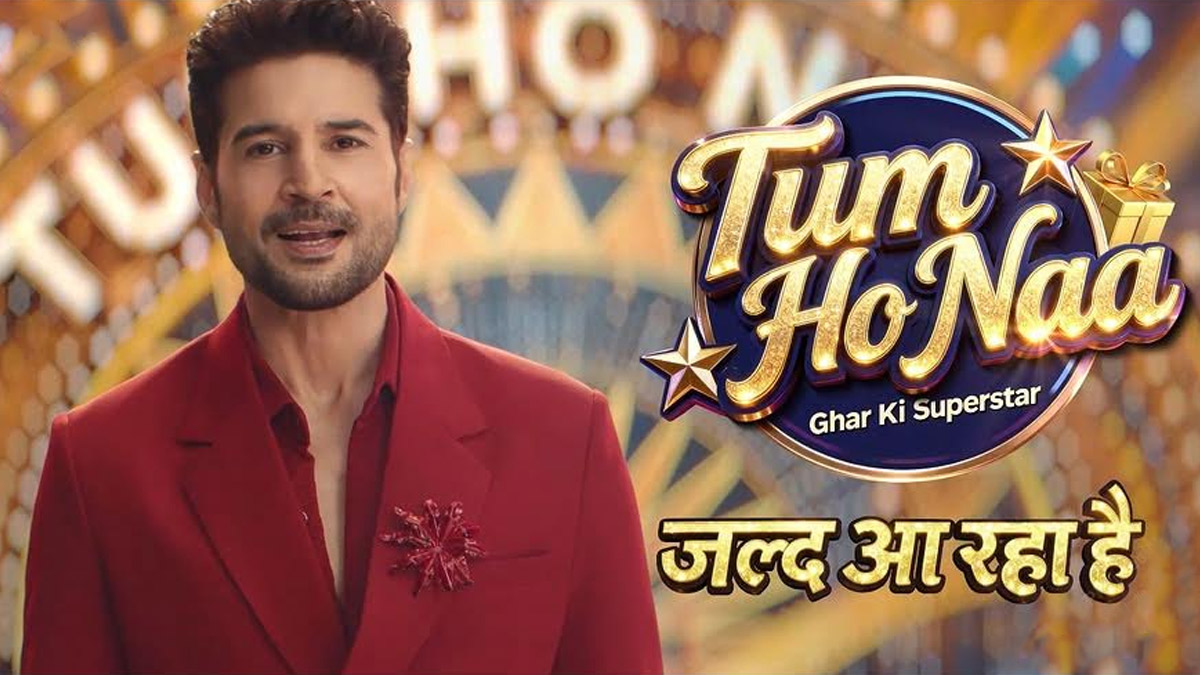
MUMBAI: Lights, camera… connection because this time, the game isn’t just about winning, it’s about who’s with you. Sony Pictures Networks India is gearing up to launch a new reality game show, Tum Ho Naa, expanding its unscripted slate with a format that promises both emotion and engagement.
The show will premiere soon on Sony Entertainment Television and stream on Sony LIV, with Rajeev Khandelwal stepping in as host. Known for his measured screen presence and selective choices, Khandelwal’s return to television adds a layer of familiarity and credibility to the upcoming format.
While specific details of the gameplay remain under wraps, the positioning suggests a reality format that leans as much on emotional resonance as it does on competition, an increasingly popular blend in Indian television, where audiences are gravitating towards content that offers both stakes and storytelling.
Khandelwal, reflecting on his return, noted that his choices have often been guided by instinct rather than convention, describing Tum Ho Naa as a project that feels “close to the heart”. His association also signals Sony’s continued focus on anchoring new formats with recognisable faces who bring both relatability and depth.
The launch comes at a time when broadcasters are doubling down on original non-fiction formats to drive appointment viewing, even as digital platforms expand parallel reach. By placing the show across both linear television and OTT, Sony appears to be aiming for a dual-audience strategy capturing traditional viewers while engaging digital-first consumers.
As the countdown to premiere begins, Tum Ho Naa positions itself not just as another game show, but as a reminder that sometimes, the biggest prize on screen isn’t the jackpot, it’s the journey shared along the way.







