DTH
Harit Nagpal’s second literary act: why binary thinking is killing your career

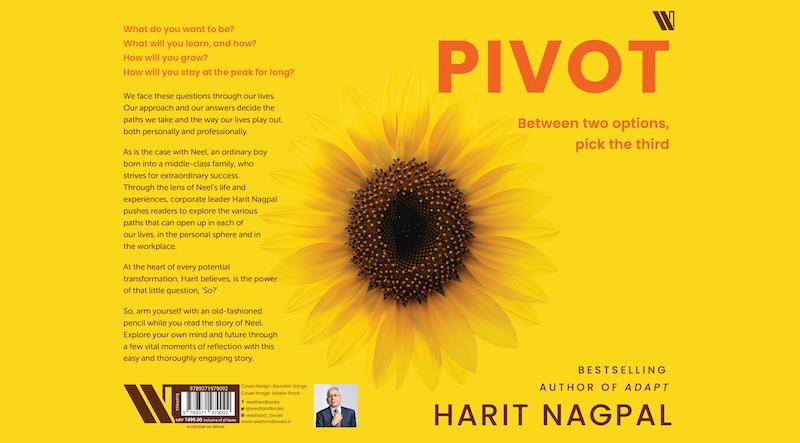
MUMBAI: Harit Nagpal isn’t interested in either/or. The chief executive of Tata Play—India’s largest content distribution platform—has spent four decades navigating cosmetics, cooking oils, colas, clothing, communication and content, and he’s learnt something valuable: the best decisions rarely come from choosing between the options you’re given. They come from inventing the one you weren’t.
His new book, Pivot: Between Two Options, Pick the Third, published by Westland Business, launched on Amazon on 24 November 2025 at Rs 499 (currently discounted 23 per cent to Rs 383). It’s a 164-page distillation of that philosophy, wrapped around the story of Neel, an ordinary middle-class boy whose life becomes a case study in counterintuitive decision-making.
The premise is deceptively simple. When you’re stuck between two choices—whether it’s picking an academic stream, staying in a comfortable job or leaping into uncertainty, handling workplace stress or navigating personal crises—conventional wisdom says weigh the pros and cons and choose. Nagpal says that’s precisely when you should stop, step back, and ask: “So?” That tiny, disruptive question, he argues, can crack open possibilities that binary thinking obscures.

This is Nagpal’s second book. His debut writing effort, Adapt: To thrive, not just survive, established him as a corporate leader willing to put management philosophy into readable prose. And it got him the credentials of a best selling author. Both books are now available as a bundle on Amazon for Rs 739, which positions them as a one-two punch for anyone trying to navigate career and life without succumbing to false choices.
The book doesn’t promise easy answers. What it offers instead is something rarer: the questions for deeper reflection and the space to think through responses that aren’t pre-packaged. In an age of algorithmic recommendations and decision-making outsourced to apps, that might be the most counterintuitive choice of all.
Nagpal’s four-decade career suggests he’s practised what he’s preaching. Moving from consumer goods to media and technology requires exactly the kind of lateral thinking his book champions. Whether Pivot helps readers replicate that trajectory remains to be seen. But in a world increasingly hostile to nuance, a 164-page argument for third options feels quietly radical.





DTH
DD Free Dish e-auction revenue dips to Rs 642 crore as slot sales fall
Revenue dips as revised norms reshape bidding in 94th round
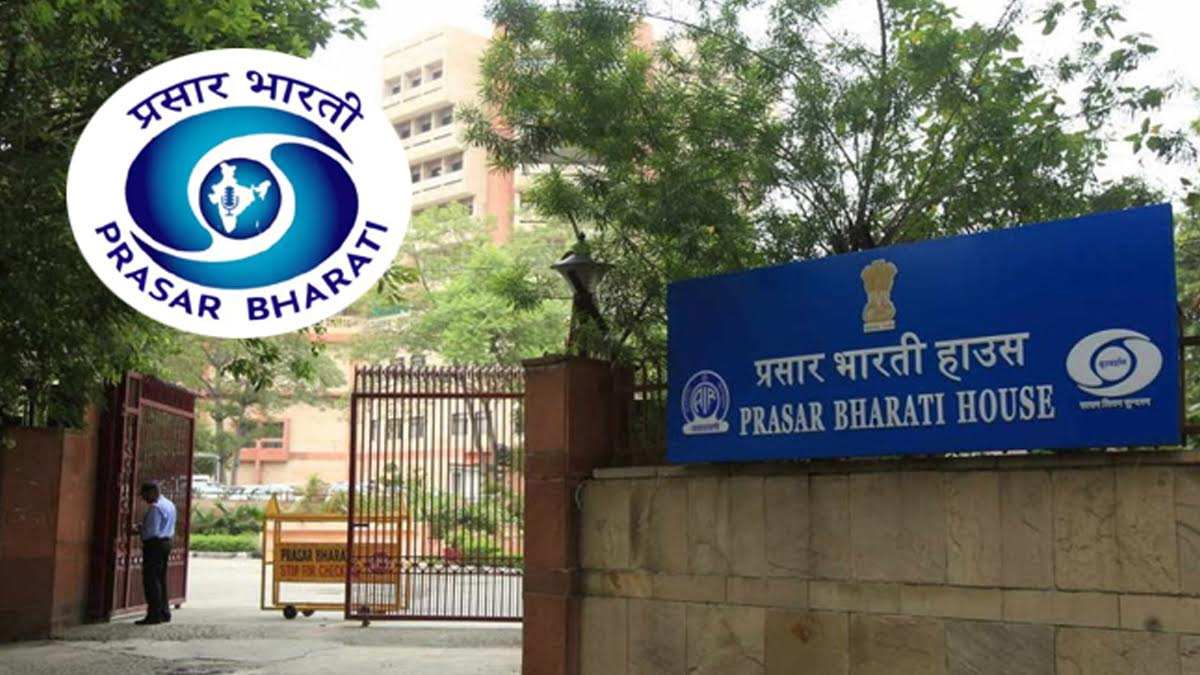
NEW DELHI: Prasar Bharati’s DD Free Dish has closed its 8th annual, and 94th overall, e-auction for MPEG-2 slots with total collections of Rs 642 crore for the period April 1, 2026 to March 31, 2027.
That is lower than last year’s Rs 780 crore haul, with 55 slots sold compared with 61 in FY25–26. The softer topline reflects both a slimmer inventory and a recalibrated auction framework.
This was the first auction conducted after amendments to the e-auction methodology, including tighter eligibility norms and a revised reserve price structure for MPEG-2 slots. The stated aim was greater transparency and more serious participation. The immediate outcome appears to be more measured bidding in certain categories.
Day one set the tone. Eight slots were sold, six in the premium Bucket A+ and two in Bucket A. The strong early action in A+, which typically houses Hindi GECs and movie channels, reaffirmed the enduring appeal of mass Hindi programming on the platform.
Among the broadcasters securing slots in the initial rounds were Zee Entertainment Enterprises, Sony Pictures Networks India, Viacom18’s Colors network, Sun Network and Shemaroo Entertainment. Their continued presence signals that, despite the pull of digital platforms, Free Dish remains a strategic must have for legacy networks chasing scale in price sensitive markets.
The final bouquet of 55 channels leans heavily towards Hindi news, movies, devotional fare, Bhojpuri and regional programming.
In Hindi news, familiar heavyweights such as Aaj Tak, ABP News, India TV, News18 India, Republic Bharat and Zee News made the cut. Entertainment and movie offerings include Colors Rishtey, Star Utsav, Dangal TV, Sony Pal, Shemaroo TV, Goldmines, B4U Movies and Zee Biskope. Devotional viewers will find Aastha, Sanskar and Sadhna Gold among the selected channels.
Regional representation includes Sun Marathi, Fakt Marathi, PTC Punjabi and GTC Punjabi.
Equally telling were the absences. Broadcasters such as Big Magic, Filamchi Bhojpuri, India News, Bharat Express, Movieplex Maithili, TV9 Marathi, Shemaroo Marathibana, Zee Chitra Mandir and Satsang did not participate. The pullback is particularly visible across Marathi, Bhojpuri, Maithili and spiritual programming. Industry observers point to the revised reserve prices, tighter eligibility norms and a reassessment of commercial viability as possible factors.
DD Free Dish continues to beam into over 40 million homes, largely in rural and semi urban India. For advertisers and broadcasters alike, it offers efficient access to Bharat markets where pay TV penetration remains uneven and OTT subscriptions are limited.
The moderation in revenue this year may be read as a pause rather than a retreat. Fewer slots, a reworked auction playbook and evolving broadcaster strategies have clearly shaped outcomes. Yet premium Hindi entertainment retains its pull, and the platform’s mass reach remains hard to ignore.
As the FY26–27 line-up settles in, the mix of winners and walkaways will define the private satellite channel landscape on DD Free Dish for the year ahead.








