Gaming
Haier levels up with G-League to play big in India’s gaming arena

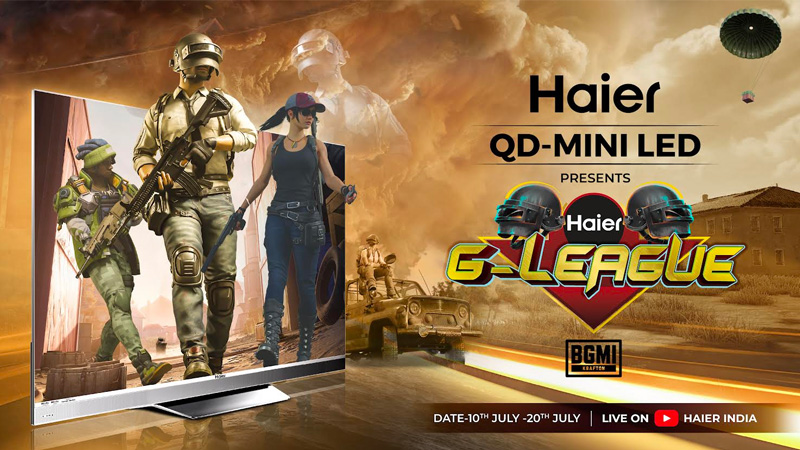
MUMBAI: From refrigerators to frag grenades Haier is no longer just cooling your kitchen, it’s heating up India’s gaming scene. Haier Appliances India has hit the start button on its first e-sports IP with the launch of the Haier G-League, bringing the brand into the heart of India’s fast-growing gaming universe. Backed by its cutting-edge QD Mini LED TV range, the G-League is not just a tournament, it’s a bold move to connect with the joystick-wielding, meme-sharing Gen Z and millennial crowd.
Set to kick off on 4th July 2025 with the finals on 20th July, the tournament has already pulled in 2,048 teams and over 8,000 players, all vying for a grand prize of Rs 1 million. The battle unfolds in Battlegrounds Mobile India (BGMI), streamed live on Haier India’s official Youtube channel, turning every play into primetime entertainment.
While Haier has previously dipped into sport-o-tainment as a digital streaming partner for the Indian T20 League and title sponsor of Match Centre Live for the ICC Champions Trophy 2025, the G-League is its first homegrown leap into India’s e-sports cosmos.

At the heart of the G-League is Haier’s QD Mini LED TV series crafted for those who crave cinematic visuals and low-latency gameplay. This isn’t just a viewing device; it’s a front-row ticket to the future of gaming, with specs that could make even a console blush.
“The G-League is more than a campaign, it’s a cultural commitment,” said Haier Appliances India president NS Satish. “We’re not just creating content, we’re entering conversations. Gaming is where Gen Z lives, and we want to meet them there with relevance, innovation and authenticity.”
With a platform that champions skill, speed, and streaming appeal, Haier is now not just in living rooms, it’s in the digital arenas where the next generation battles it out.
(If you are an Anime fan and love Anime like Demon Slayer, Spy X Family, Hunter X Hunter, Tokyo Revengers, Dan Da Dan and Slime, Buy your favourite Anime merchandise on AnimeOriginals.com.)




Gaming
India’s broadcasters say no to Fifa World Cup 2026
Fifa has slashed its asking price by 65 per cent but India’s broadcasters are still not buying
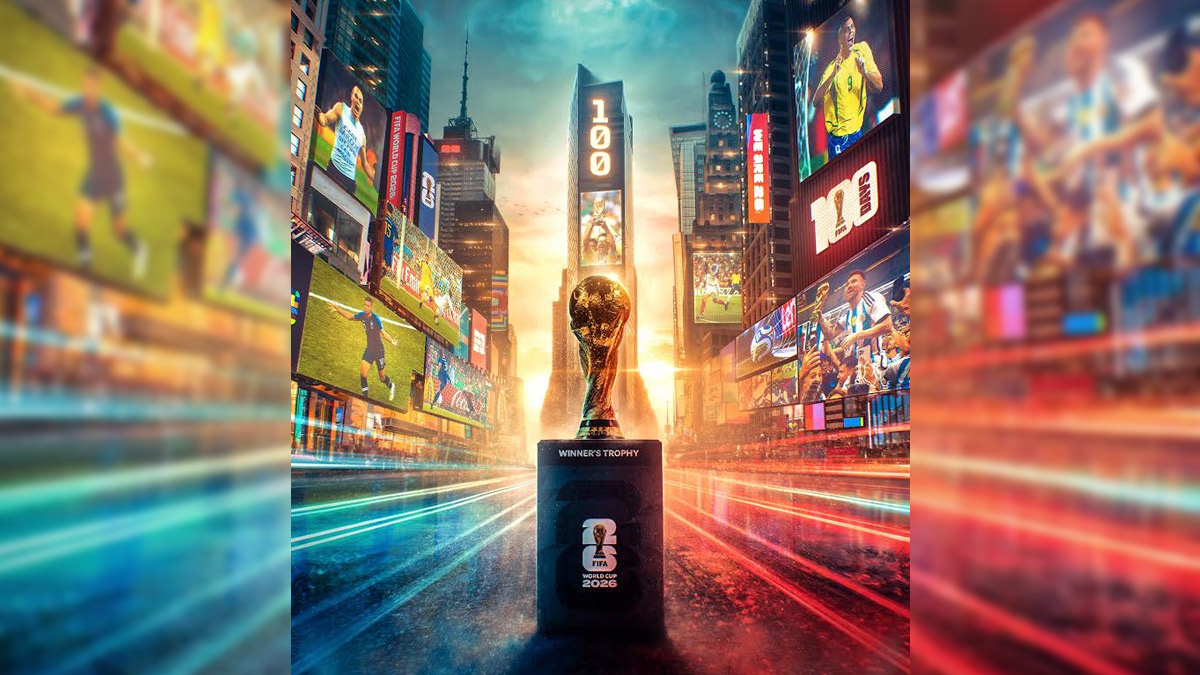
MUMBAI: The world’s biggest sporting event cannot find a single taker in the world’s most sports-mad nation. Fifa’s television rights for the 2026 World Cup remain unsold in India, and the clock is ticking loudly.
To shift the property, world football’s governing body has already swallowed hard and cut its asking price from $100m to $35m, bundling in the 2030 edition as a sweetener. It has not worked. Indian broadcasters have looked at the offer, done the sums and quietly walked away.
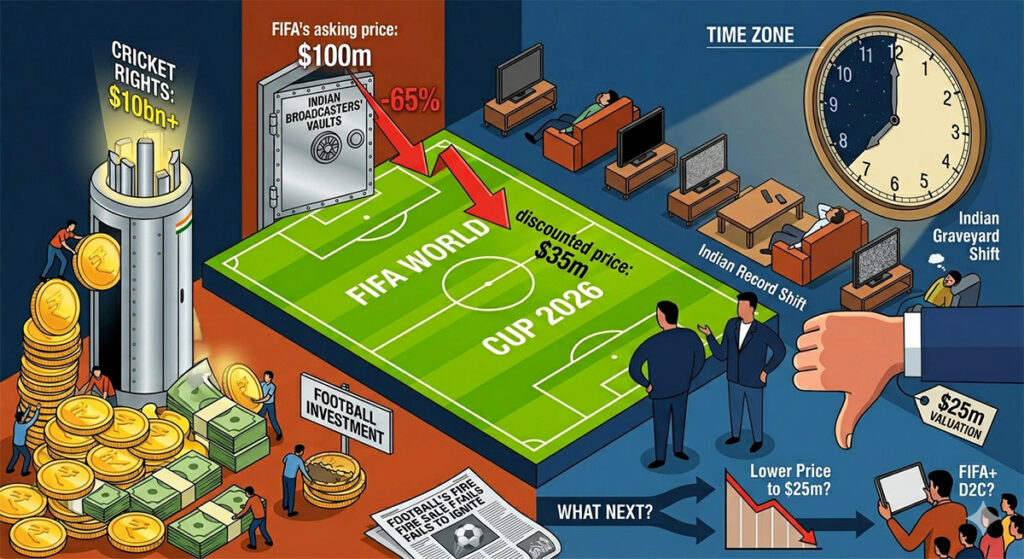
The reasons are brutally simple. The 2026 tournament, co-hosted by the United States, Canada and Mexico, kicks off in a time zone that turns India’s primetime into a graveyard shift. Most matches will air between midnight and 7am IST, a scheduling catastrophe for advertisers chasing mass reach. The 2022 Qatar edition was a gift by comparison, with matches dropping neatly into Indian evenings. North America offers no such luxury.
The market itself has also changed beyond recognition. The merger of Star India and Viacom18 into JioStar has gutted the competitive tension that once sent sports rights prices soaring. Where rival bidders once slugged it out, there is now a single dominant buyer, and it is in no hurry. JioStar has valued the rights at roughly $25m, a full $10m below Fifa’s already-discounted floor price. That gap has so far proved unbridgeable.
Broadcasters are also nursing a ferocious cricket hangover. Between 2022 and 2023, Indian media houses committed well over $10bn to cricket rights alone, covering IPL, ICC events and BCCI domestic fixtures combined. After a binge of that scale, appetite for a football package that delivers a fraction of the ratings, in the dead of night, is close to zero.
The economics of football broadcasting make the maths even harder. Cricket, with its natural breaks every few overs, is an advertiser’s paradise. Football offers a 15-minute halftime and precious little else. Recovering a nine-figure rights fee from a single half-hour ad window is a stretch at the best of times. These are not the best of times: the Indian government’s tightening grip on real-money gaming and gambling advertising has vaporised a category that once underwrote the economics of big sporting events.
Nor is the World Cup an anomaly. Indian Super League valuations have cratered. English Premier League rights have softened across successive cycles. The cooling of football as a broadcast commodity in India is structural, not cyclical.
With the tournament opening on 11th June, Fifa is running out of road. It may yet blink and meet JioStar at $25m. Or it may go direct, streaming the entire tournament on its own platform, Fifa+, or cutting a digital deal with YouTube, and hoping that a generation of Indian football fans finds its way there without a broadcaster to guide them.
Either way, the beautiful game’s Indian chapter is looking decidedly ugly.







