I&B Ministry
Hack the ad spend: AAAI challenges marketers to optimise budgets smarter

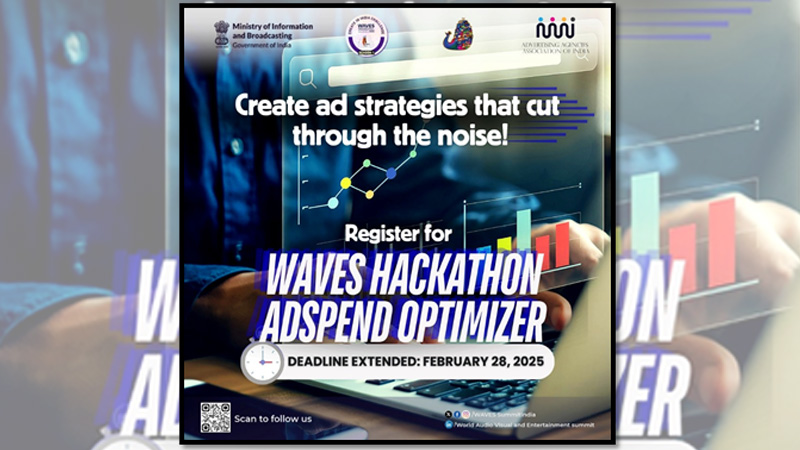
MUMBAI: The advertising world is no stranger to budgets vanishing into thin air. Enter the AAAI Ad Spend Optimizer Hackathon—an electrifying initiative under the Waves Create India Challenge, where number crunchers, data wizards, and marketing maestros are set to redefine ad spend efficiency. Hosted by the Ministry of Information and Broadcasting (MIB) in collaboration with the Advertising Agencies Association of India (AAAI), the hackathon promises to shake up the world of advertising analytics.
With 35 eager teams—one even joining from overseas—this hackathon is gaining serious traction. Slated to be a part of the much-anticipated World Audio Visual & Entertainment Summit (Waves), the event is set to unfold from 1–4 May 2025 at Mumbai’s Jio World Convention Centre & Jio World Gardens. With four core pillars—broadcasting & infotainment, AVGC-XR, digital media & innovation, and films—Waves aims to be the melting pot for India’s growing media and entertainment industry.
The hackathon falls under the broadcasting & infotainment segment, drawing participation from young professionals in advertising, marketing, and tech. Their mission? To use predictive analytics, machine learning, and statistical modelling to optimise ad spend and supercharge marketing ROI.

This is no cakewalk. The challenge is open to professionals with at least a year of experience in advertising, marketing, or data science. Solo players or teams of up to three can compete, bringing together expertise in data science, machine learning, statistics, and software.
Their task? To devise an ad spend strategy for TrimMaster, a leading male grooming brand with its flagship PrecisionTrim trimmer. Despite its popularity, the brand is struggling to push its awareness to the next level. Currently, TrimMaster’s unaided awareness score sits at 52. The goal? A solid 75. With a budget of Rs 2 crore, participants must craft a strategy that not only maximises visibility but also delivers measurable impact.

TrimMaster’s marketing team faces an uphill battle, including:
. Effective budget allocation: Deciphering the best mix of social, search, display, and video ads while accurately measuring impact.
. Measuring brand lift: Developing better metrics to gauge how digital ads truly influence brand perception.
. Maximising ROI: Ensuring every rupee spent results in substantial brand awareness and sales growth.
. Cross-channel synergy: Understanding how different platforms interact and influence each other.
Winners won’t just bask in glory. The top three teams will present their strategies at Waves, with travel expenses covered. On top of that, the champions will get a chance to attend major advertising festivals and conferences in India, fully sponsored by AAAI. Oh, and let’s not forget the bragging rights.

The AAAI Ad Spend Optimizer Hackathon is not just another competition. It’s a unique opportunity for professionals to challenge the norms, innovate ad spend strategies, and help brands like TrimMaster break through the noise. With artificial intelligence and data analytics at their fingertips, participants have the tools to redefine advertising in India and beyond.
Think you’ve got what it takes? Get ready to crunch numbers, outsmart competitors, and craft the future of ad optimisation.




I&B Ministry
PIB Fact Check Unit flags 2,913 fake claims, blocks 1,400 URLs
Government steps up misinformation fight with FCU and IT Rules framework.
MUMBAI: In the age of viral forwards and deepfake déjà vu, the government’s fact-checkers are working overtime to separate fact from fiction. India’s Press Information Bureau Fact Check Unit (FCU), operating under the Ministry of Information and Broadcasting, has flagged a total of 2,913 instances of fake news and misinformation linked to the Central Government, highlighting the growing scale of the information battle in the digital era.
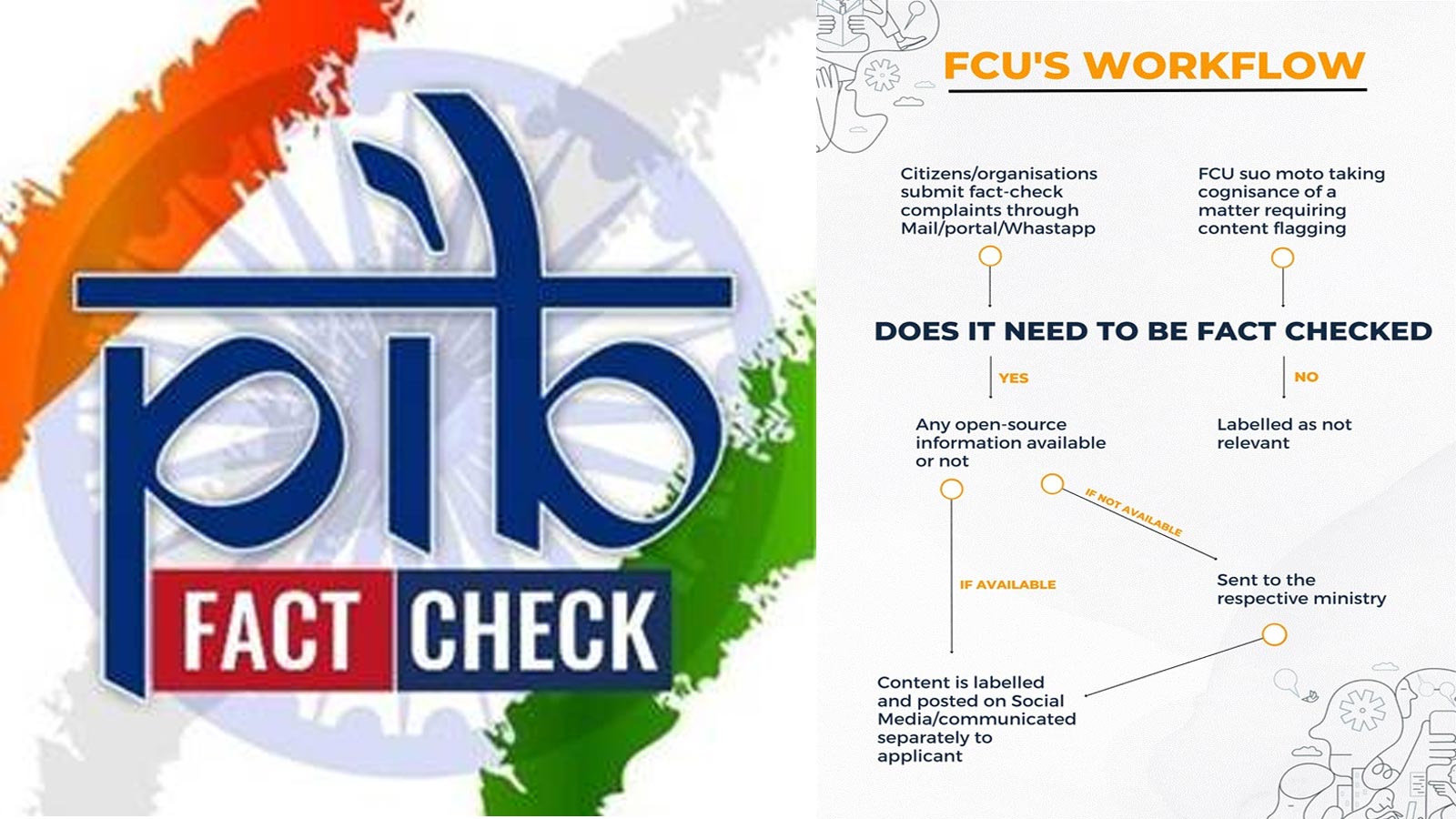
Tasked with identifying misleading content from AI-generated videos and deepfakes to forged notifications, letters and spoofed websites, the FCU verifies claims using authorised sources before publishing corrections across its social media channels. These include platforms such as X, Facebook, Instagram, Telegram, Threads and WhatsApp, turning the government’s digital presence into a real-time myth-busting network.
But the effort is not just top-down. The FCU has also been nudging citizens to play detective, encouraging users to report suspicious content for verification. The idea is simple: in a landscape where misinformation travels faster than facts, crowd-sourced vigilance can act as an early warning system.
The scale of intervention became particularly visible during Operation Sindoor, when the unit identified and countered a surge of misleading and hostile narratives circulating online. Alongside publishing verified information, the Ministry directed the blocking of more than 1,400 URLs on digital platforms, an aggressive move aimed at containing the spread of false and potentially harmful content.
The broader regulatory backbone for this effort lies in the Information Technology Rules 2021, which set out a Code of Ethics for digital publishers and establish a three-tier grievance redressal mechanism. The framework is designed to hold publishers of news and online curated content accountable, even as the ecosystem grows increasingly complex.
The update was shared in the Lok Sabha by L. Murugan, minister of state for information and broadcasting, in response to a question raised by V. K. Sreekandan.
Together, the numbers tell a clear story: misinformation is no longer a fringe problem but a mainstream challenge. And as the lines between real and manipulated content continue to blur, the battle for credibility is being fought not just in newsrooms but across every screen in the country.






