iWorld
GUEST COLUMN: Relevance of conversational AI in adtech sector


Mumbai: Conversational AI, which allows contextual dialogue through advanced algorithms that enable superior, result-oriented, human-like conversations, emerged due to the shortcomings of traditional chatbots. Individuals were often fraught with the challenge of searching for a specific product or customised financial services online and being disappointed since all the results displayed were irrelevant due to certain mismatched algorithms. Likewise, a bot interaction cannot yield the desired outcome if the keywords do not match with the pre-programmed list. This can trigger the user to the extent that they may altogether discontinue the existing services or shift their business to another organization. Needless to say, bot responses can be predictive, repetitive, disengaged, impersonalised, and more often than not, far placed from the real solution.
Owing to its advantages, adtech industry has been one of the fastest to leverage the benefits of Conversation AI since it has the potential to catapult the ecosystem to the next realm. These advertisements are the most effective ways of instilling a sense of personalisation that drives a long-lasting, meaningful connection between the brand and its target audience. Conversational advertising allows customers to exchange information with brands, providing the latter with unprecedented levels of insight into customer impressions.
Conversational AI becoming critical

Conversational AI experiences have been found to drive multiple minutes of engagement, increase conversion rates, and provide a transparent and opt-in way for consumers to share insight about their preferences by brands in categories as diverse as retail, automotive, financial services, and lifestyle, among others. Conversational advertising uses AI bots, to create natural, automated interactions that assist in accelerating purchase intent, brand recognition, and conversions when compared to static ads.
The emerging AI tech enables virtual assistants to comprehend questions, deduce consumer intent, and answer appropriately. Customers are kept engaged throughout the conversation with customer-focused and relevant information. As conversational AI assistants can now respond to both text and speech commands, they are providing users with more convenient interaction possibilities.
Conversational Advertising uses existing display and OLV advertising channels to build two-way connections between businesses and customers. When compared to modern digital advertising or one-way mass media, it’s no surprise that customers like the ability to respond. New age consumers are increasingly shifting from visiting stores and websites, reading reviews, and getting recommendations from social media influencers, to technology-guided mechanisms that provide the best fit within the least turnaround time.
Evolution of adtech through conversational AI
1) Sophisticated audience targeting
Personalisation is one of the reasons why digital advertising is superior to traditional advertising. Finding the correct target demographic for an advertisement used to be like shooting in the dark. But now, owing to consumer data, Conversational AI sifts through terabytes of data in a matter of seconds and analyses it to pinpoint the target audience for a marketing campaign. These advertisements have the power to listen, understand and offer customised solutions.
2) User engagement through personalised interactions
By utilising data to drive customised interactions, conversational AI increases user engagement. When a consumer is indecisive about making a purchase, they are likely to go online and search for the products, leading to conversions only if they find the relevant information. In its absence, they will switch to another brand without batting an eyelid. This is where a Conversational AI can assist in converting the lead. By leveraging the customers’ data, it can create responses that improve user experience through deep engagement, thereby prompting an increase in conversion rates.
3) Conversational AI-based intent analysis
Understanding the target audience’s intent is crucial for marketing and advertisement. A conversational AI chatbot provides a broader perspective to the customer’s intent analysis by building a detailed consumer persona through its multichannel presence. It provides the quickest way to sift through large amounts of data and take action.
4) Predictive analysis adaptation model
Predictive advertising is built on predictive analytics that creates ads based on what consumers are likely to do in the future. What if businesses already knew what consumers were going to look for? This would save companies millions of dollars in advertising if they understood what to advertise for? That is why AI and predictive analytics are at the forefront of advertising technology.
Bottom line
Conversational AI can help with various issues that arise during a customer’s interaction with the company. By leveraging ASR to translate, NLP to interpret, and NLG for dialogue generation, ML lies at the core of creating personaliaed conversations at scale. Not only does this method generate leads and accelerate the conversion rate, but it also enables seamless integration into pre-existing CRM tools for an engaging experience. With its self-learning capabilities, conversational AI is expected to reimagine adtech and customer engagement in the future.
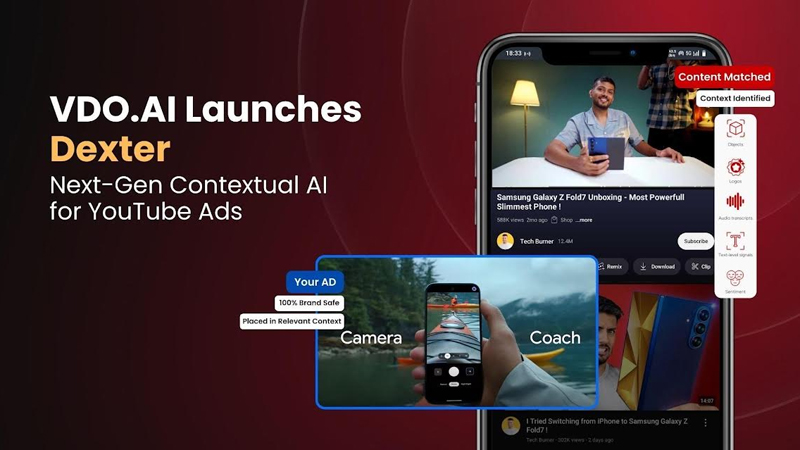
(About Author: Amitt Sharma is the founder and CEO of VDO.AI)



iWorld
JioHotstar enters micro-drama space with 100 shows under Tadka banner
Short-form push targets 300M users as content meets commerce in new format
MUMBAI: JioStar has made a bold play in India’s fast-growing micro-drama space, rolling out over 100 short-form shows under its new Tadka banner on JioHotstar, timed with the massive viewership surge of the Indian Premier League 2026.
The scale of the launch signals clear intent. Rather than testing the waters, the company has dived in headfirst, releasing a wide slate of content on day one. Each show is designed for quick consumption, with episodes running 60 to 90 seconds in a vertical format tailored for mobile-first audiences.
The move comes as India’s micro-drama market, currently valued at around $300 million, is projected to grow tenfold to over $3 billion by 2030. Globally, the format has already proven its mettle, with China’s micro-drama sector recording explosive growth in recent years.
What sets this rollout apart is its built-in monetisation strategy. The shows are free to watch and ad-supported, with brand integrations woven directly into storylines from the outset. It reflects a broader shift where content and commerce are increasingly intertwined, rather than operating in silos.
The timing is equally strategic. With more than 300 million users already tuning in for IPL action, JioHotstar is effectively turning cricket’s biggest stage into a discovery engine for its new format.
The company is not entering an empty arena. Early movers like Kuku TV, MX Player and platforms backed by Zee Entertainment Enterprises have already laid the groundwork, building audiences and validating demand for snackable storytelling.
Now, with scale, distribution and advertiser interest aligning, the big players are stepping in. For JioStar, Tadka may well serve as a proving ground for the next evolution of digital entertainment, where every minute counts and every second sells.
If the bet pays off, India’s next big content wave might just arrive in under 90 seconds.






