Fiction
GUEST COLUMN: How content leaders decide what gets greenlit

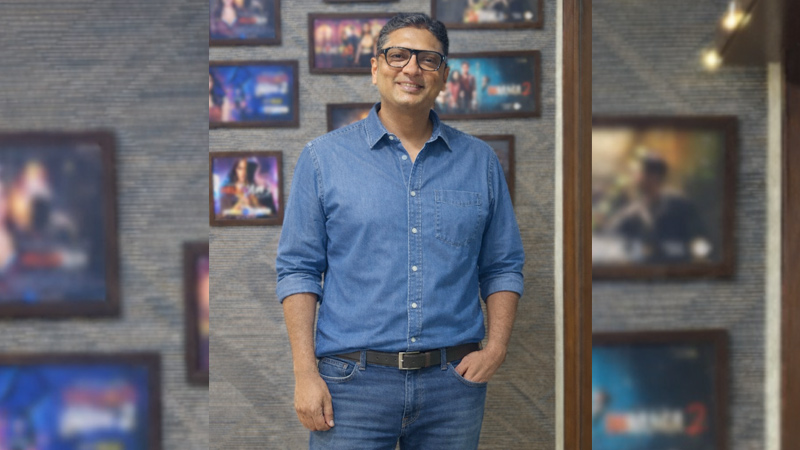
MUMBAI: As audiences spread across TV, OTT, and short-form platforms, deciding what gets greenlit has become more strategic than ever. Content leaders now weigh clarity of concept, platform fit, pacing, and distinctiveness to ensure a story connects with the right audience in the right format.
In this piece, Dhruv R Jain content head TV at Rose Audio Visuals, explains how greenlighting decisions are shaped by concept strength, platform behaviour, and the need for unique storytelling. Drawing from his experience at Rose Audio Visuals, he outlines how these factors influence which ideas move from pitch to production.
In recent times the Indian entertainment landscape has changed in many ways leading us to also modify our process in deciding what should be greenlit in terms of content. As the options for audiences to view content change from the traditional TV space to OTT and even social media the stories that are told on different platforms also differ. Multiple factors play a part in deciding not just the story told but also the way they will be told.

Firstly the primary filter in the process is the clarity of concept. Whenever content leaders approach a story they tend to simplify it in terms of it being written and told through the screen. The crew involved in making the story should have an inside out idea of all the factors of the story for it to resonate and be understood by the audiences. We dissect the story into the smallest components to spread it through the writing and format the story in a way that would build intrigue giving it hooks, drops points and defined execution. A concept that is executed properly with details will be understood and appreciated by the audience irrespective of its genre.
The content that is being chosen to be greenlit also highly depends on the platform it is being made for. Different mediums like TV channels, Ott platforms and short format apps etc have different sections of audiences that look for a specific kind of story to watch depending on multiple factors again. So while choosing a story for them one needs to study their audience, the structure that works for the platform, the pacing in which the story will be understood and the kinds of story that would fit the platform. While TV is a medium which is highly expository in its telling with slower pacing, on the other hand Ott platforms give us a space to tell a story with the approach of less is more with faster pacing of the story itself. This becomes an important factor in choosing stories and their way of telling.
Another factor that plays an important role is the distinctiveness of a concept. A concept with a unique approach, set up and characters bring freshness. At Rose we have always attempted to tell stories that stand out with our most recent Itti Si Khushi by setting up the show in a unique location like Kotachiwadi, a historic unique set up in the south of Mumbai that has not been shown on TV before we gave the already iconic Shameless an interesting Indian twist. At the same time the show in itself follows an unique storyline that brought something different to the medium of TV. So telling a different and unique story that stands out always brings in curious audiences which we sustain then with strong characters, hooks and plot points.
In addition to these factors many others become prominent in deciding what gets greenlit. It is on the content leaders to find the right time and space for the concept that they believe will be received well by the audiences. One needs to be a multitasker to understand, organise and execute a project properly.
Note: The views expressed in this article are solely the author’s and do not necessarily reflect our own.



Fiction
Banijay merges with All3Media in $6.65 billion deal
Marco Bassetti will lead the combined company as CEO
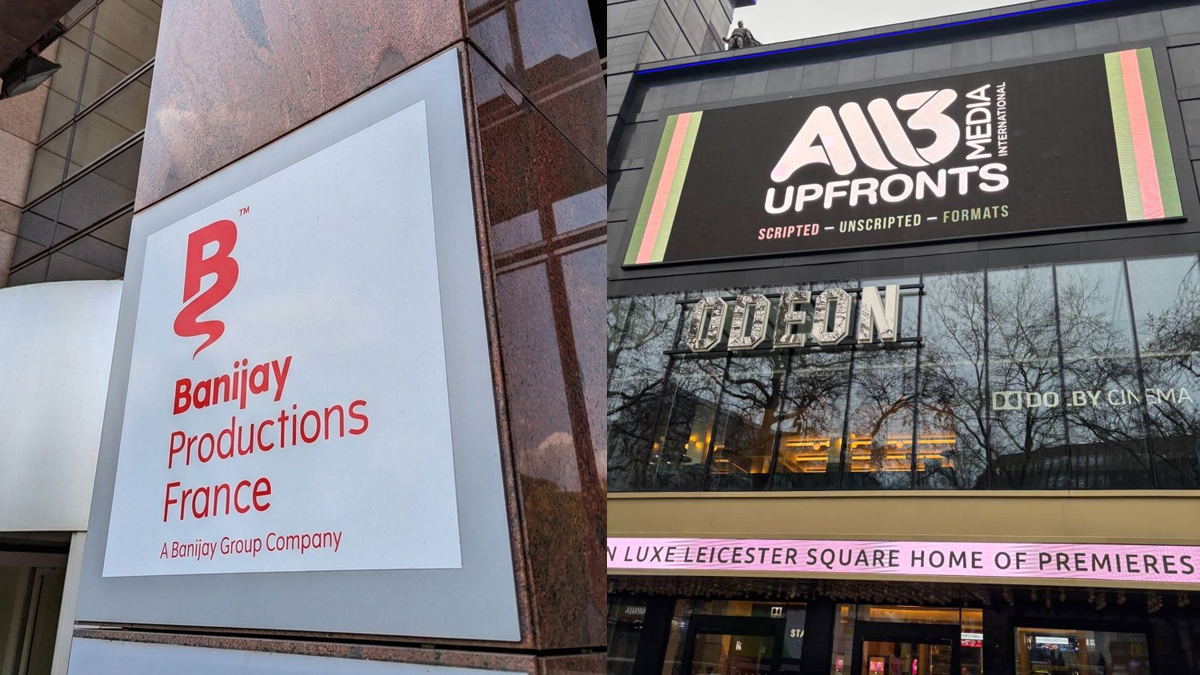
PARIS: Six years after acquiring Endemol Shine at the height of the pandemic, Banijay has struck again. The European production heavyweight is merging with All3Media in a deal that will create a television titan with $6.65 billion in revenue and redraw the contours of a fast-consolidating market.
The combined company will trade under the Banijay name and be owned 50 per cent each by Banijay Group and RedBird IMI, which acquired All3Media in 2024. The transaction is expected to close by autumn, subject to regulatory approvals.
Banijay Entertainment CEO Marco Bassetti, will take the top job at the enlarged group. All3Media CEO Jane Turton becomes deputy CEO. RedBird IMI CEO Jeff Zucker will serve as chairman.
The logic is scale. Broadcasters are commissioning less, streamers are tightening budgets and global buyers are fewer but bigger. Against that backdrop, heft matters. The merged entity will generate roughly $6.65 billion in revenues based on 2024 figures, giving it sharper elbows in rights negotiations and deeper pockets for franchise-building.
“Entrepreneurialism, ambition and creativity” remain core to Banijay’s DNA, Bassetti said, flagging plans to invest more heavily in new intellectual property, live events and emerging platforms. Turton struck a similarly bullish note, pointing to All3Media’s journey from a 2003 start-up to a global supplier of hit formats and high-end drama.
Between them, the two groups control a formidable slate. Banijay’s catalogue spans MasterChef, Big Brother, Survivor, Black Mirror, Peaky Blinders and Deal or No Deal. All3Media’s labels include Studio Lambert, producer of The Traitors and Squid Game: The Challenge; Two Brothers, behind The Tourist; and Neal Street, currently producing the forthcoming Beatles biopics directed by Sam Mendes for Sony.
The back catalogue is equally muscular. Banijay Rights holds some 220,000 hours, while All3Media International adds around 35,000 hours, forming one of the industry’s largest libraries.
Banijay, controlled by French entrepreneur Stéphane Courbit and listed in Amsterdam, counts more than 130 production companies across 25 territories. All3Media operates over 40 labels, with strong positions in the UK, US and Germany. The enlarged group will also lean into live entertainment, building on Banijay’s Balich Wonder Studio, which produced the opening ceremony of the Milan-Cortina Winter Olympics, and the Independents.
The deal marks a shift in tone. As recently as October, Bassetti suggested that mergers and acquisitions were not a priority. But the drumbeat of consolidation has grown louder. Mediawan has moved for Peter Chernin’s North Road. David Ellison’s Paramount has agreed to a $110 billion takeover of Warner Bros, with plans to combine HBO Max and Paramount plus. ITV has explored selling its media and entertainment arm to Comcast-owned Sky, though talks have reportedly slowed.








