iWorld
GUEST ARTICLE: Experiential marketing to thrive in the post-pandemic world


Mumbai: The immersive experience was popular earlier, but the Covid-19 pandemic accelerated its application by several companies, making it take centre stage rather than being offered as an add-on. Let’s see how the dynamics changed during the pandemic and the way forward.
The world is seeing the light on the other side of the tunnel. The Covid-19 pandemic’s effect has weakened now and after two years of struggle and adversity, the world is slowly paving its way back to normalcy. As the world starts connecting in person once again, experiential marketing is seeing an uptick in demand from consumers. Before the pandemic hit, experiential marketing was well perceived by consumers, with marketers seeing the potential of immersive brand experiences and events. With a locked-down lifestyle of over two years, the demand for real-life experiences has now grown exponentially.
Live events, which were seen in their element after a hiatus of over two years, got all the more creative and we could see they are now heavy on technology to bring out the personalised impact. Intimate experiences are what consumers in the modern day are striving for, and after the upheaval of the pandemic, wherein the uncertainty surged suddenly, people now want to live it to the fullest with their dear ones.

Weddings have evolved to be upbeat and intimate. For that matter, destination weddings are slowly gaining standard status in India across all economic classes. From event companies to branded hotel chains, everyone has tailored their offerings to thrive in this space by providing exhilarating experiences at bespoke destinations with breathtaking natural views in the background. Customers are now looking beyond just what is basic. They want all that with their close ones, and ideally, only close ones will witness it all. The one big event inviting multiple people is not what patrons are looking at for multiple reasons, with the Covid-safe environment taking centre stage.
People have been striving to immerse themselves in human interactions and in-person events for the longest time. Covid-19 kept them away from each other. Yet, the world somehow found ways to connect, though virtually. Events were being hosted online. Live events and destinations have started hosting virtual tours through the internet. Be it concerts, corporate events, car and bike expos, or destination conventions and trade shows, the brand value was kept alive online, but people longed to witness them again in person. Hence, marketers redefined how customers experience these events with an added value. For example, a tour and travel firm, during the Covid times, introduced a subscription-based VR experience to showcase to customers how they can sense various destinations. If they liked the appeal of a close-to-real experience, the customer could engage in a valuable package to travel to the destination once the lockdown was lifted.
Real-life experiences create happy memories for the customers, and that has been shown to contribute a lot to increased conversions or sales. In the foodservice industry, many upbeat events saw drastic closures during the pandemic. Hotels turned into quarantine centres, and their restaurants remained confined to receiving delivery orders only. However, they conceived things differently. Instead of sending just the end products, hotels reimagined the live-kitchen experience of their award-winning restaurants at the patron’s home. Hence, the concept of DIY signature dishes was born. The hotel sent individual ingredients for the signature dishes, and patrons were guided on how to make the dish via a note or virtual live guidance from the executive chef. The results were lip-smacking. The hotels that practised this approach expressed an increase in customers visiting them currently who wanted to experience the signature dishes at the hotel in the ambience provided by the hotel.
Experiential marketing has come a long way, and digitization has certainly helped people remain connected all the time. People are finding newer ways to stay connected, and experiential marketers are trying their best to make a point of how the patron is as immersed in the product or service as possible. While 4D in cinema dates back several years, the application of virtual reality and augmented reality has come a long way in the events sector too. From headphones-based beach parties to VR gaming zones, experiential marketing has revolutionised how people looked at events previously.
The crux of the success of experiential marketing remains the feeling of ownership that it creates. People love taking control of things and using them for the best according to themselves, so experiential marketing creates just the environment. For example, the new-age apparel stores online are coming up with features wherein one can see how they will look in a particular outfit even before deciding to buy it. They sense how they would look in it and how it’d feel to own it. This can lead the customers to buy or choose another outfit. So, the feeling of ownership even before making the sale has led to the success of experiential marketing. In the case of events, people love to witness how their prospective event will look through a virtual environment. A virtual walkthrough of the event’s flow helps the customer visualise how their event will look before the day.
Experiential marketing has come a long way in these years where it originally came as an ancillary service but has become a crucial element of the marketing mix for many corporates. It is in line with the evolving needs of customers, who are now savvy and demand more from brands and are well over the age-old advertising tactics.
The author of the article is Hubble Entertainment co-founder and managing partner Hafiz Khan.





Gaming
India’s broadcasters say no to Fifa World Cup 2026
Fifa has slashed its asking price by 65 per cent but India’s broadcasters are still not buying
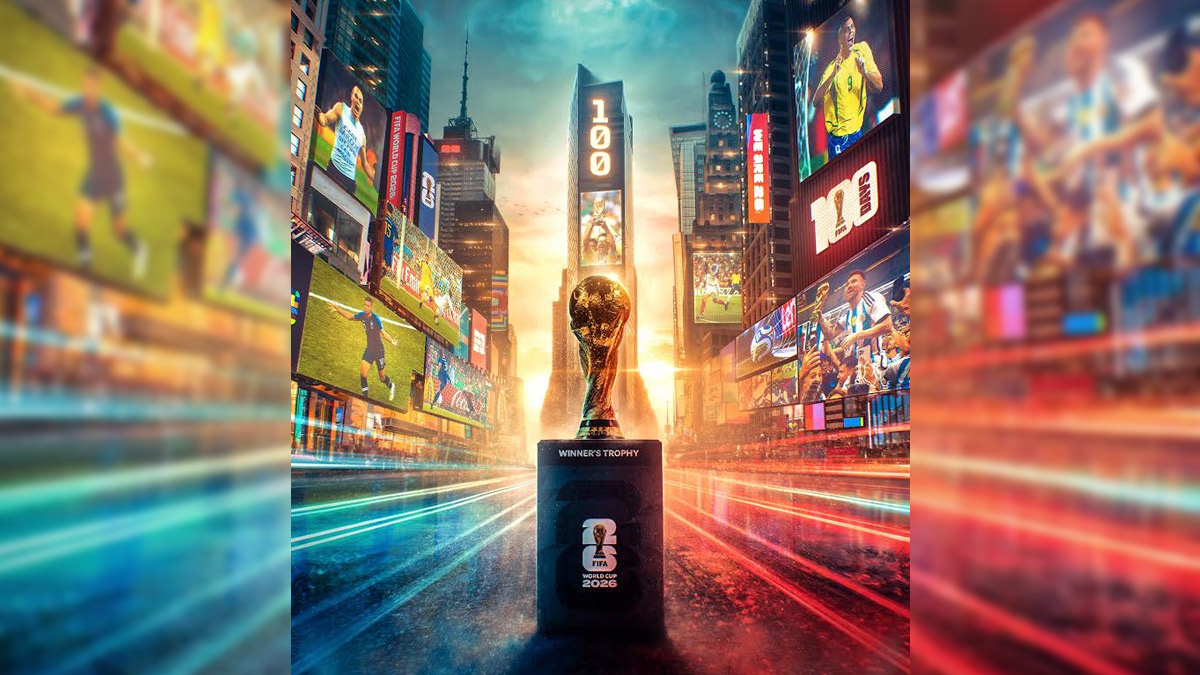
MUMBAI: The world’s biggest sporting event cannot find a single taker in the world’s most sports-mad nation. Fifa’s television rights for the 2026 World Cup remain unsold in India, and the clock is ticking loudly.
To shift the property, world football’s governing body has already swallowed hard and cut its asking price from $100m to $35m, bundling in the 2030 edition as a sweetener. It has not worked. Indian broadcasters have looked at the offer, done the sums and quietly walked away.
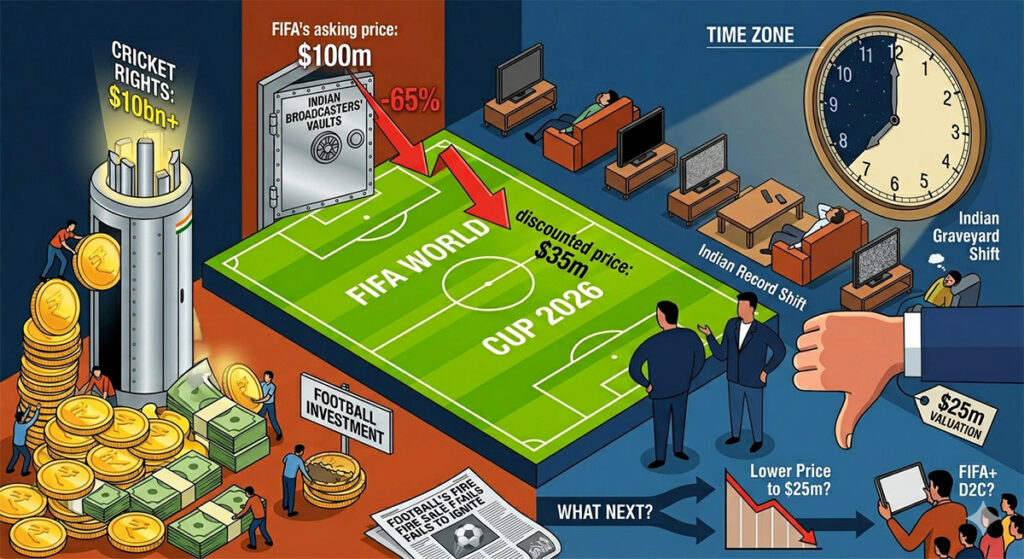
The reasons are brutally simple. The 2026 tournament, co-hosted by the United States, Canada and Mexico, kicks off in a time zone that turns India’s primetime into a graveyard shift. Most matches will air between midnight and 7am IST, a scheduling catastrophe for advertisers chasing mass reach. The 2022 Qatar edition was a gift by comparison, with matches dropping neatly into Indian evenings. North America offers no such luxury.
The market itself has also changed beyond recognition. The merger of Star India and Viacom18 into JioStar has gutted the competitive tension that once sent sports rights prices soaring. Where rival bidders once slugged it out, there is now a single dominant buyer, and it is in no hurry. JioStar has valued the rights at roughly $25m, a full $10m below Fifa’s already-discounted floor price. That gap has so far proved unbridgeable.
Broadcasters are also nursing a ferocious cricket hangover. Between 2022 and 2023, Indian media houses committed well over $10bn to cricket rights alone, covering IPL, ICC events and BCCI domestic fixtures combined. After a binge of that scale, appetite for a football package that delivers a fraction of the ratings, in the dead of night, is close to zero.
The economics of football broadcasting make the maths even harder. Cricket, with its natural breaks every few overs, is an advertiser’s paradise. Football offers a 15-minute halftime and precious little else. Recovering a nine-figure rights fee from a single half-hour ad window is a stretch at the best of times. These are not the best of times: the Indian government’s tightening grip on real-money gaming and gambling advertising has vaporised a category that once underwrote the economics of big sporting events.
Nor is the World Cup an anomaly. Indian Super League valuations have cratered. English Premier League rights have softened across successive cycles. The cooling of football as a broadcast commodity in India is structural, not cyclical.
With the tournament opening on 11th June, Fifa is running out of road. It may yet blink and meet JioStar at $25m. Or it may go direct, streaming the entire tournament on its own platform, Fifa+, or cutting a digital deal with YouTube, and hoping that a generation of Indian football fans finds its way there without a broadcaster to guide them.
Either way, the beautiful game’s Indian chapter is looking decidedly ugly.






