News Broadcasting
GSM Association announces shortlist for first Asia Mobile Innovation Awards


MUMBAI: The GSM Association (GSMA) has announced the six finalists for the first Asia Mobile Innovation Awards, a competition for young, small and start up companies across Asia that are developing technologies, applications and compelling content for the fast moving mobile space.
The six short-listed companies have been selected from more than 70 entries by a panel of judges comprising innovation leaders from mobile operators, vendors and venture capital firms.
The competition will culminate at the 3GSM World Congress Asia in Singapore on 16 October 2006, when a representative from each of the companies nominated will present an ‘elevator pitch’ style presentation to the judging panel for final selection of the winners. There are two Awards categories – Most Innovative Mobile Application or Content; and Most Innovative Technology Development.

The Innovation forum session will also include presentations and panel discussions on the mobile innovation theme by Smart Communications, Bharti, Ericsson and SpinVox – this year’s winner of the GSMA’s global innovation award.
Each category has three nominations:
Category 1 – Innovative Mobile Application or Content
· GSTL (India) for Geneva NDIS
Geneva NDIS is a disaster information dissemination system that rapidly processes data from emergency information sources and sends it to mobile users as a text message alert or a voice call.
· N2N Consulting for M-Bit Network
M-Bit Network services supports mobile media applications such as mobile music and video, and TV tie-in competitions, making billing easier for operators and enabling end-users to share files, uncover additional content, or create their own for sharing with others.
· Microimage Ltd for localised messaging and content browsing
Microimage claims to have developed the world’s first patented local language messaging and content application, to provide customised local language support for entry-level mobile devices in emerging markets.
Category 2 – Innovative Technology Development
· Open-Plug for ELIPS
Open-Plug for ELIPS claims to be the first open software framework designed for mobile phones, which enables ELIPS-based handsets to be tailored and configured far more quickly according to the requirements of operators.
· Radius ED for Global 1 Number
The Global 1 Number (G1) solution is a simple universal short code that lets mobile users access information from anywhere in the world, via a single secure hub that also handles call-routing, billing and data rights management.
· Dialog-UOM Lab & Microimage for Disaster Early Warning Network (DEWN)
DEWN uses a centralised mobile messaging platform and also device-based technology to disseminate early-warning emergency messages, audio and visual alarms, to warn communities of impending disasters.
The six finalists will also be exhibiting at the 3GSM World Congress Asia, as part of a special feature ‘Innovation Zone’. The two winners will receive an automatic place on the shortlist for the innovation category of the GSMA’s Global Mobile Awards at the 3GSM World Congress in Barcelona next February.





News Broadcasting
BBC to cut up to 2,000 jobs in biggest overhaul in 15 years
Cost pressures and leadership change drive major workforce reduction plan
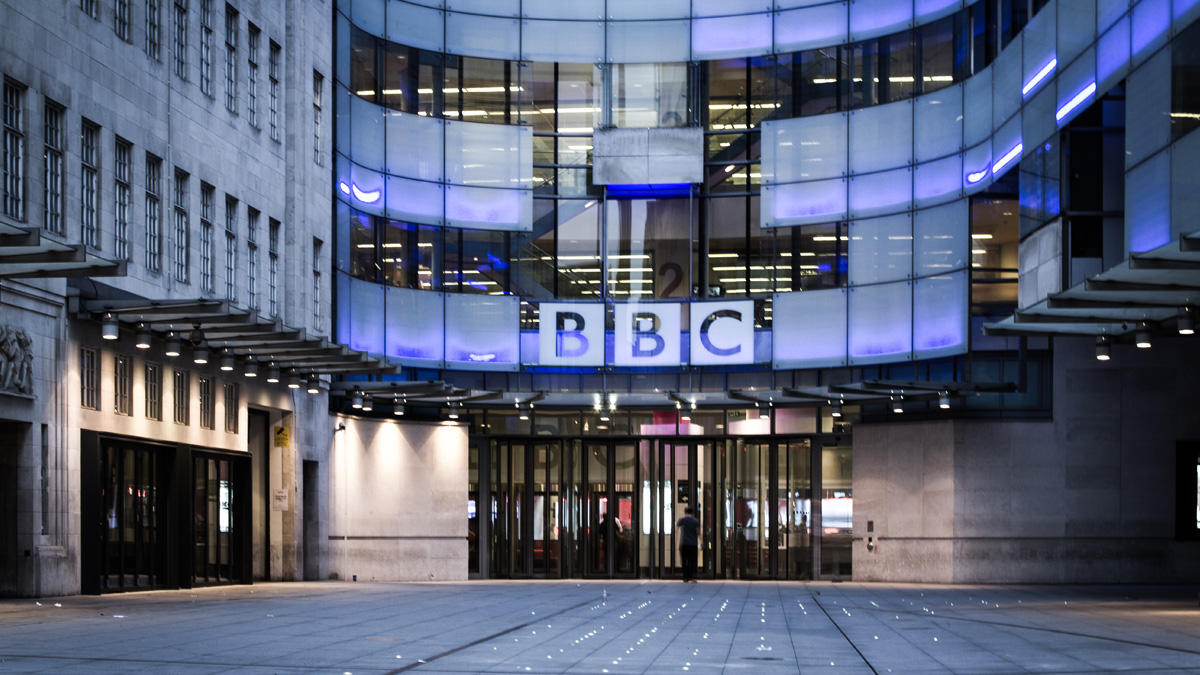
LONDON: BBC has unveiled plans to cut up to 2,000 jobs, roughly 10 per cent of its global workforce, in what marks its biggest downsizing in 15 years.
The announcement was made during an all-staff meeting led by interim director-general Rhodri Talfan Davies, as the broadcaster moves to tackle mounting financial pressures and reshape its operations.
Between 1,800 and 2,000 roles are expected to be eliminated from a workforce of around 21,500. The cuts form part of a broader plan to save £500 million over the next two years, aimed at offsetting rising costs, stagnating licence fee income and weaker commercial revenues.
In a communication to staff, BBC interim director-general Rhodri Talfan Davies said, “I know this creates real uncertainty, but we wanted to be open about the challenge,” acknowledging the impact the move would have across the organisation.
The restructuring comes at a time of leadership transition. Former director-general Tim Davie stepped down earlier this month, with Matt Brittin, a former Google executive, set to take over the role on May 18, 2026.
While some cost-cutting measures are being implemented immediately, the majority of the structural changes are expected to roll out over the next few years, with full savings targeted by the 2027–2028 financial year.
The broadcaster had earlier signalled its intent to reduce its cost base by around 10 per cent over a three-year period, warning of “difficult choices” as it adapts to shifting economic realities and audience expectations.
With operating costs hovering around £6 billion annually, the BBC’s latest move underscores the scale of the financial challenge it faces, as it balances public service commitments with the need for long-term sustainability in an increasingly competitive media landscape.