International
GRB Media Ranch acquires ‘Carol of the Bells’ and its BTS documentary

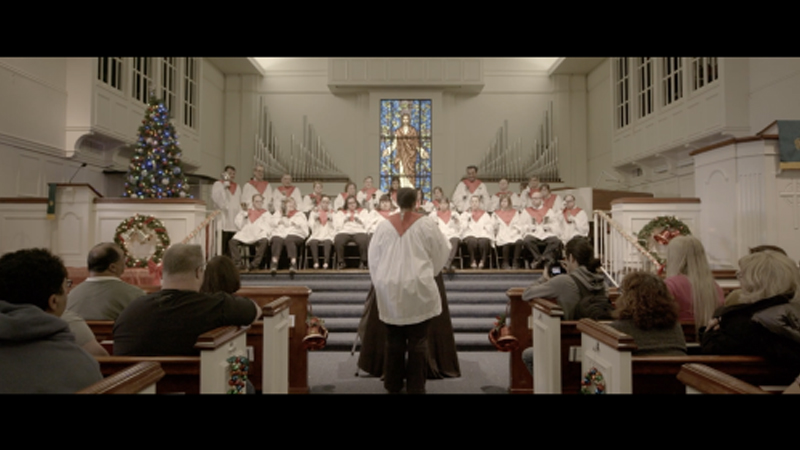
Mumbai: GRB Media Ranch president Sophie Ferron is delighted to announce the acquisition of Carol of the Bells (1 x 100), an innovative, touching Christmas movie directed by Joey Travolta as well as a documentary on the making of this unique film, Carol of the Bells: Behind the Scenes (1 x 25). This film not only tells a heartwarming holiday story but also represents a significant step forward by demonstrating inclusivity by featuring a cast and crew with a range of disabilities.
Carol of the Bells stars RJ Mitte (known for his role in the highly acclaimed Breaking Bad) portraying a young man with a troubled past who embarks on a journey to find his biological mother, only to discover that she is developmentally disabled. The film was produced by Inclusion Films in partnership with Futures Explored, Inc and Options for All, with 70 per cent of the crew members having developmental disabilities. The feature won the Audience Favorite Feature award at the San Diego International Film Festival in 2019.
In addition to the film, a behind-the-scenes documentary is also available, offering an in-depth look at the remarkable journey of the cast and crew. This emotionally uplifting documentary showcases how Joey Travolta’s Inclusion Films’ workshops started in 2007 in Bakersfield California to teach the art of filmmaking to the developmentally challenged. The film highlights how this workshop is transforming lives and reshaping perceptions of individuals with disabilities. The workshops provide training and empower participants to contribute meaningfully to the film industry, illustrating the profound impact of inclusivity.

Ferron stated, “GRB Media Ranch is honored to bring Carol of the Bells and its behind-the-scenes documentary to international audiences. It is not often that we come across a special film like this—entertainment with a purpose. This film and its making-of feature offer a powerful portrayal of individuals on the autism spectrum and reflect a message of inclusivity that will resonate globally. We are thankful to Joey Travolta for his dedication to this project and for sharing this inspiring story with us.”
Travolta commented, “We are thrilled to partner with GRB Media Ranch to present Carol of the Bells and the accompanying documentary to viewers around the world. Our film and the behind-the-scenes look at our film camp in Bakersfield highlight a profound commitment to inclusivity. By employing 70% of our cast and crew from the autism community, we aim to foster a sense of belonging and challenge perceptions of disability. These efforts are rooted in the values of kindness and equality that my family instilled in me and continue to guide my work. We hope that this film and its documentary will inspire others and change the way we view and engage with individuals with disabilities.”



International
Russia-India cinematic spectacle Persimmon of My Love set for grand Moscow debut
Hindi cinema style musical revives Indo-Soviet cinema ties for today

MUMBAI: A new chapter in cross-border storytelling is set to unfold as Persimmon of My Love gears up for its premiere in Moscow on 1 April 2026, marking the first large-scale cinematic collaboration between Russia and India in decades.
Positioned as a modern nod to the cultural exchange that once brought Indian classics to Soviet audiences, the film blends Hindi cinema flair with Russian storytelling, aiming to rekindle a long-standing cinematic friendship.
Directed by Marius Weisberg, the musical comedy follows two brothers navigating a lively world of music, family and romance. The lead roles are played by Demis Karibidis and Mikhail Galustyan, with Karibidis also contributing as a screenwriter.
Shot entirely in India, the production leans heavily into Hindi cinema style spectacle. Filming took place across Mumbai studios and the cities of Udaipur and Jodhpur, whose architecture was used to create the fictional setting of Khurmada. A crew of over 350 worked on the project, with large-scale sequences featuring up to 1,000 extras.
The film also brings Indian creative talent into the mix. Dance sequences are choreographed by Jay Kumar, while music by Zurab Matua features songs in both Hindi and Russian, adding to its cross-cultural appeal.
Backed by TNT channel, MyWayStudio and the Russian Cinema Fund, the project reflects a broader push to strengthen cultural ties between the two countries.
With its mix of colour, comedy and cross-border collaboration, Persimmon of My Love is not just a film release but a reminder that cinema, much like music, travels well across borders.






