News Broadcasting
Govt hands NDTV India 24-hr ban for breach of content code


MUMBAI: In what is being viewed in certain quarters as an assault on media freedom reminiscent of Rajiv Gandhi government’s bid to gag media in late 1980s, the Prannoy Roy and family-controlled NDTV India, has been directed by the government to go off air for 24 hours from 9 November 2016 as a penalty for breaching telecast norms related to security issues.
NDTV is exploring all options against this 24-hour ban with opinion split on the issue. While a section of views on social media supported the government action, many who part of the Indian media criticised it saying it reminded them of Indira Gandhi-imposed Emergency in India in 1977.
Confirming the recent development, Ministry of Information and Broadcasting (MIB) sources said that Hindi news channel NDTV India has been accused of airing images and revealing information regarding defence locations while covering the Pathankot terrorist attack a few months back. The sources added that NDTV India was given a chance by an inter-ministerial committee (IMC) of the government to put forth its viewpoint on the allegations and was found wanting.

Indiantelevision.com made futile attempts to get in touch with NDTV for independent reactions, including newly-anointed group CEO KVL Narayan Rao and his predecessor Vikram Chandra.
However, in a statement put out by NDTV on its website (http://www.ndtv.com/communication/ndtv-statement-on-order-against-our-hindi-channel-ndtv-india-1621155), the company said, “The order of the MIB has been received. It is shocking that NDTV has been singled out in this manner. Every channel and newspaper had similar coverage. In fact NDTV’s coverage was particularly balanced. After the dark days of the Emergency when the press was fettered, it is extraordinary that NDTV is being proceeded against in this manner. NDTV is examining all options in this matter.”
The IMC, the government sources said, was earlier in favour of handing out a one-month ban, which was diluted to 24 hours later.
The matter pertains to the coverage of Pathankot defence areas after a terrorist attack in January this year. The IMC has blamed NDTV India of providing on-air information about ammunition stockpiled in the airbase, fighter-planes, rocket-launchers, fuel-tanks, etc. The committee felt that such crucial information could have been readily picked by up by hostile nations and could have compromised lives of civilians and defence personnel.
The committee has also mentioned that the channel appeared to give out the exact locations of terrorists on air, thus compromising counter offensives by India.
In its reply, the channel said that it was a case of subjective interpretation and most of the information they had put out was already in public domain in print, electronic and social media.
A section of Indian media reacted strongly against such a government move.
“Govt pulling TV news channels off air is a dangerous trend. Don’t want sarkari babus deciding what content they like and what they don’t,” India Today (TV) and Aaj Tak Managing Editor Rahul Kanwal tweeted.
A former NDTV star and presently with India Today group, Rajdeep Sardesai, said in a series of tweets, “One of India’s most sober and responsible channels NDTV India to be banned for a day by I and B ministry. NDTV today, who tomorrow? Media should be accountable, scrutinised, but with transparency and not selectively.”
Shekhar Gupta, former editor of the Indian Express Group and presently anchoring a digital news venture, said in a tweet, “What’s shocking is lack of protest/outrage. Reprehensible, somebody in Ind(ia) having power to ban news channels as in Pak(istan). Tom(orrow), it’ll be print.”
Meanwhile in an another development, the NBSA (News Broadcasting Standards Authority), the self-regulatory body of news channels under the News Broadcasters’ Association ( NBA) late last month asked NDTV, the English news channel, to air an apology covering for showing an incorrect map of India
The letter from NBA to NDTV stated the complaint was studied and the channel was directed to run an apology (full screen) prior to 9 pm on 5 November.
While NBA refused to comment on this matter, it is learnt that MIB had forwarded to NBSA complaints received by it from people, especially by one person who had taken up this issue on social media in a big way.




News Broadcasting
CNN-News18 to host Fury in the Gulf conclave on West Asia crisis
Three-hour summit to unpack geopolitical fallout and impact on India
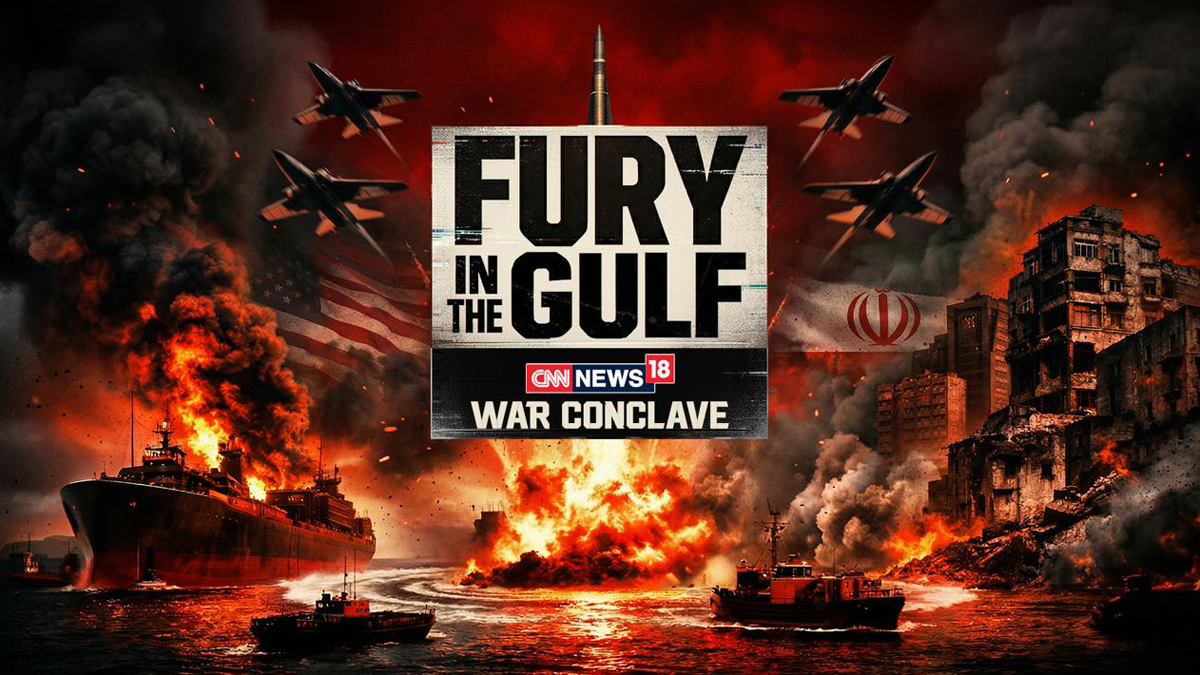
MUMBAI: CNN-News18 is set to host a special three-hour broadcast, Fury in the Gulf – War Conclave, on April 7, aiming to decode the escalating West Asia crisis and its far-reaching implications for India.
Scheduled from 4:00 PM to 7:00 PM, the conclave comes at a time when tensions between Iran and the United States are reshaping global geopolitics and triggering economic uncertainty. With India’s deep energy ties, trade links and large diaspora in the Gulf, the developments carry significant domestic relevance.
Built around the theme ‘Conflict, Consequences, and The Future,’ the programme will feature six curated sessions combining one-on-one interviews and panel discussions. The focus is to cut through the clutter and offer viewers a clearer understanding of the fast-evolving situation.
Key sessions include ‘Diplomacy in Times of War’ featuring Shashi Tharoor, and ‘World After the Iran Conflict’ with voices such as Ram Madhav, Reuven Azar, representatives from the European Union and the Iranian Deputy Envoy. Another session titled ‘Another Dunkirk?’ will bring together K. J. S. Dhillon and Jitin Prasada among others.
CNN-News18 editorial affairs director Rahul Shivshankar said, “In times of war, clarity becomes the most powerful tool. Fury in the Gulf – War Conclave brings together credible voices to address the questions and confusion that arise amid an overwhelming influx of information.”
He added that the initiative is aimed at delivering “facts, perspective, and insight” at a time when misinformation can easily cloud public understanding.
Echoing the sentiment, CNN-News18 CEO– English and business news Smriti Mehra said the conflict marks a defining global moment, with consequences that extend well beyond the region. She noted that the conclave seeks to present the crisis with “depth, nuance and responsibility” so audiences can better grasp its real-world impact.
As geopolitical tensions continue to dominate headlines, the conclave positions itself as an attempt to bring order to the noise, offering viewers a structured, insight-led look at a complex and rapidly shifting global situation.






