I&B Ministry
Govt earns Rs 7.41 crore as processing fee from MSOs since 2011

NEW DELHI: The Government has earned Rs 7.41 crore as processing fee from multi system operators from April 2011, the Lok Sabha was informed on 20 March.
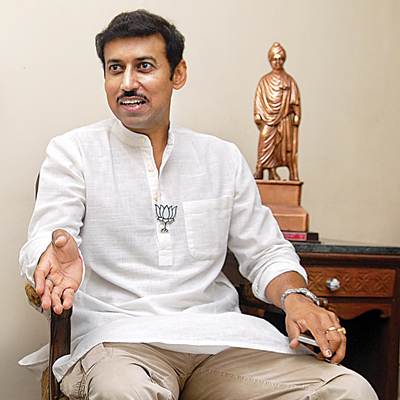
Minister of State for Information and Broadcasting Rajyavardhan Rathore said a process fee of Rs 1 lakh was collected from MSOs at the time of submission of application for registration for providing digital addressable system.

A sum of Rs 4.79 crore was earned till 27 January this year during 2014-15 as processing fee from MSOS.
In comparison, the processing fee received in previous years was Rs 79 lakh in 2013-14, Rs 1.8 crore in 2012-13, and Rs 3 lakh in 2011-12.
In addition, some states have levied entertainment tax collected directly by them, and MSOs also have to pay service tax and any other applicable taxes to the central government, the Minister said.





I&B Ministry
AIDCF moves TDSAT over Waves plan to stream linear TV channels
Industry body flags regulatory gap as OTT push sparks broadcast turf war
NEW DELHI: The battle between traditional television distributors and digital platforms has found its way to the courts, with the All India Digital Cable Federation (AIDCF) moving the Telecom Disputes Settlement and Appellate Tribunal (TDSAT) against Prasar Bharati’s latest OTT play.
At the heart of the dispute is Waves, Prasar Bharati’s OTT platform, which has invited applications to onboard linear satellite TV channels. Aidcf, which represents multi-system operators (msos), argues that this move sidesteps existing broadcasting rules and risks tilting the playing field in favour of digital platforms.
The federation’s petition hinges on a key provision in the Uplinking and Downlinking Guidelines, 2022. Clause 11(3)(f) allows broadcasters to downlink channels only if they provide signal decoders to recognised distribution platforms such as MSOS, DTH operators, hits operators and iptv platforms. OTT platforms, aidcf points out, do not feature on that list.
In simple terms, AIDCF’s argument is this: if OTT platforms are not officially recognised distributors, they should not be receiving broadcast signals in the first place. By inviting channels onto Waves, the federation claims, Prasar Bharati is opening a backdoor that lets broadcasters bypass long-standing rules.
The concern goes beyond legal interpretation. Aidcf says OTT platforms currently operate without a clear regulatory framework, allowing them to expand into traditional broadcasting territory without the compliance burden that cable and satellite operators must carry. That, it argues, creates an uneven contest.
There is also a warning for broadcasters. If they provide signal decoders to an OTT platform like Waves, they could risk breaching the very conditions under which their downlinking permissions were granted.
For its part, Prasar Bharati’s Waves initiative is positioned as a step towards wider access and digital reach, bringing linear television into the streaming era. But critics say the move blurs the line between regulated broadcasting and largely unregulated streaming.
The matter is expected to come up before tdsat next week. The outcome could do more than settle a single dispute. It may help define how India regulates the fast-merging worlds of television and OTT, where the lines are getting fuzzier by the day and the stakes, sharper than ever.