Hardware
Government refers uplinking norms issue to GoM

NEW DELHI: The government today referred to a group of ministers (GoM) the various changes being suggested in the uplinking policy.
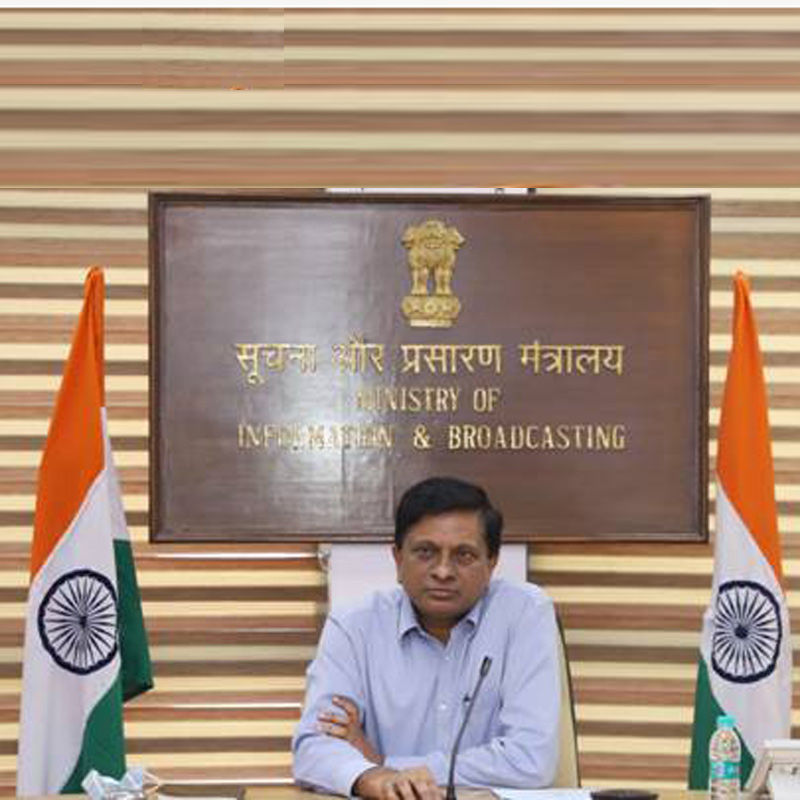
I&B minister Jaipal Reddy told newspersons after a Cabinet meeting that this decision has been taken as wider debate on various aspects of uplinking is needed.
However, he said that the GoM, yet to be formalised, would be expected to submit its report on the uplink policy within two weeks.

Asked about the aspects of the uplink policy that the I&B ministry had sought to amend, Reddy said that the
following things had been proposed, amongst others:
#Allowing FII investment in news channel ventures in India within the overall foreign cap of 26 per cent.
#Allowing all channels and teleports to uplink to KU-band transponders from India. At the moment only C-band uplinking is allowed and KU-band is reserved for DTH services.
#Making it mandatory for any broadcaster to share on a commercial basis with pubcaster DD the terrestrial feed of any event of national importance, including sports.
According to Reddy, in the Cabinet meeting there was a lack of consensus on the issue of sharing of rights
with DD on a compulsory basis. “It has to be debated and modalities discussed,” the minister said.
Keep tuned in for more on the issue.




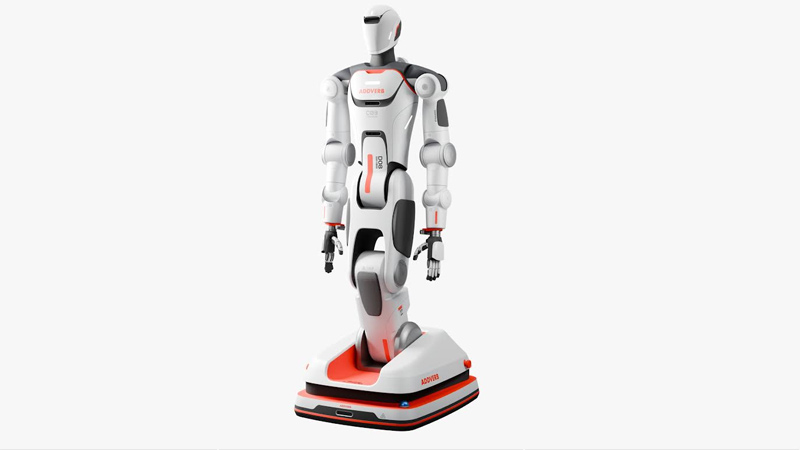
MUMBAI: Addverb has taken a decisive turn on the road to humanoid automation, unveiling its first wheeled humanoid robot, Elixis-W, at LogiMAT India 2026 in Mumbai. Built and manufactured in India, the robot signals the company’s push to make so-called physical AI a practical presence on the factory floor rather than a futuristic concept.
Unlike traditional fixed automation, Elixis-W is designed to move, think and work alongside people in dynamic industrial settings. The robot combines adaptive wheeled mobility with dual arms, each fitted with five-fingered dexterous hands, allowing it to handle tasks that demand precision as well as flexibility.
At its core sits a Physical AI-ready architecture, supported by dual Nvidia Jetson Orin and Thor computing units. This setup is intended to give the robot the ability to perceive, plan and adapt to changing environments, rather than simply follow pre-programmed routines.
According to Addverb CEO and co-founder Sangeet Kumar, the humanoid reflects the company’s long-standing belief in human-robot collaboration. He said the robot is designed to take on repetitive, risky or physically demanding tasks, freeing human workers to focus on higher-value decision-making roles.
Alongside the humanoid, Addverb also showcased two new intralogistics solutions. The Cruiser 360, a four-way pallet shuttle, is aimed at high-density storage environments where space and speed matter. The FlowT, an autonomous forklift, is designed to move materials safely in busy warehouses and factory spaces.
Visitors also saw Trakr, the company’s quadruped robot, navigating the exhibition floor, offering a glimpse of how legged machines could assist in future warehouse and industrial operations.
Addverb, which began as a warehouse automation specialist, has steadily expanded its global footprint across the United States, Europe, Australia and Asia. Its client list includes Reliance, HUL, PepsiCo, Maersk, Mondial Relay and DHL.
With the launch of Elixis-W, the company is steering towards a future where robots are not just bolted to the floor, but rolling, reasoning and working shoulder to shoulder with people on the shopfloor.








