News Broadcasting
GoM on paid news to meet soon: Soni


NEW DELHI: A Group of Ministers (GoM) will shortly meet to examine the report of the Press Council of India on paid news, according to Information and Broadcasting minister Ambika Soni.
Soni informed the Rajya Sabha today that the GoM was constituted in January last year but could not meet before September due to various reasons including the fact that Panel chairperson and Finance Minister Pranab Mukherjee was tied up in other matters.
The Press Council had submitted a report on paid news to the government for necessary action after a sub-committee studied the issue. Although the Government had initially released only a short summary of the report, it had later placed the report on the Council’s website following an RTI application.

The Minister said the GoM was set up in view of the “wider ramifications” of the recommendations, to prepare a comprehensive policy and institutional mechanism to address the issue.
The PCI has recommended amendment to the Representation of the People’s Act 1951 to make incidence of paid news a punishable electoral malpractice and suggested that the PCI must be fully empowered to adjudicate the complaints of “paid news” to give final judgment in the matter among others.
The report has also suggested measures to curb the menace of paid news like setting up of a special cell in the Election Commission for action on such complaints and self-regulation by media and awareness generation.
PCI has cautioned the media to refrain from publishing news masquerading as advertisement and vice-versa.
The Election Commission has also taken cognizance of this malaise and initiated steps to check incidence of election time paid news, which includes transparency in the money spent by candidates on advertising, a ban on exit and opinion polls until the last round is over, and similar other measures.






News Broadcasting
News18 India launches Command Centre war explainer with Arya
New show shifts from debates to decoding global conflicts and impacts
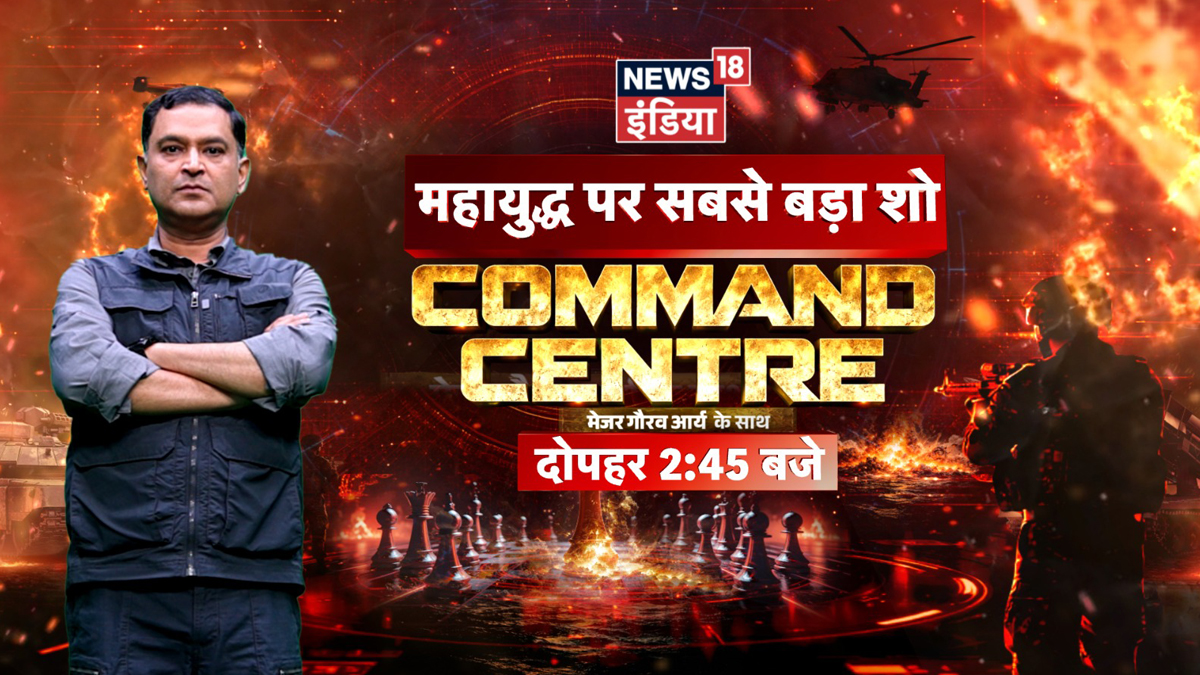
MUMBAI: News18 India has rolled out a new war-focused programme, Command Centre, featuring Gaurav Arya, as it looks to offer viewers a sharper, more grounded take on global conflicts amid rising tensions in West Asia.
Positioned as an “insider war room”, the show moves away from conventional panel debates and instead focuses on explaining military developments, decoding strategy and connecting global events to their everyday impact, from fuel prices to economic shifts.
The format leans heavily on visuals and data. The studio has been designed like a command hub, complete with large LED war maps, real-time graphics and an alert system to track developments as they unfold.
At the centre of it all is Arya, who brings his military background to simplify complex war strategies for viewers. His signature line, “Seedhi baat samjhiye”, anchors the show’s promise of clarity over noise.
News18 India managing editor Jyoti Kamal said, “Command Centre, featuring Major Gaurav Arya is designed to deliver accurate insights and a clear perspective on how evolving conflicts impact everyday life, from household budgets to national security. With expert voices analysing every development in real time, the show goes beyond headlines to decode what’s happening now, what it means, and what could come next.”
Echoing the intent, Gaurav Arya added, “In times of war, confusion is the biggest threat. With News18 India’s Command Centre, we are bringing viewers inside the war room, decoding strategies, tracking every escalation, and explaining, in the simplest terms, what it means for India and for every household. Seedhi baat samjhiye, this is where you understand not just what is happening, but what happens next.”
The weekday show will air in the afternoon slot and will also feature Gaurav Shukla, adding to its editorial depth.
With its mix of analysis, visuals and a clear focus on impact, the show reflects a broader shift in news consumption. Viewers are no longer just watching events unfold, they are looking to understand what those events mean for them.







