Gaming
GEMS2020: Gaming & e-sports making its way into the mainstream

MUMBAI: Thanks to the 4G mobile data boom, the cult of e-sports and gaming is going mainstream. The Indian online gaming industry is growing at an exponential rate year upon year, and is expected to be worth $1.1 billion by 2021. During GEMS, there was a growing consensus among experts and industry leaders that yes, gaming is indeed “Getting Into The Mainstream”.
Moderated by GroupM ESP business head Vinit Karnik, the panelists included ITC Foods business division digital strategy and media head Anushree Ghosh, Parle Products senior category head – marketing Krishnarao S.Buddha, Airtel Media VP Archana Aggarwal, MSI regional marketing manager Green Chang-Ching Lin, NVIDIA South Asia consumer marketing head Pawan Awasthi.
Karnik started the session by setting up the context for the audiences from a marketing point of view. He highlighted that India is among the top five gaming countries and most of the players prefer mobile over personal computer, making India a predominantly mobile-first market.

The experts shared their insights on how families need to understand that being a gamer and an e-sports player can be viable career options. Also, the world of gaming and e-sports is no longer taboo – more and more brands and media organizations have seized upon its potential, and have been reaching out to gamers, and through them, to their sizeable audience and followers.
Watch the session here:
Awasthi touched upon various factors that have substantiated the growth of gaming. He said: “Globally there are close to two billion gamers. When we talk to gamers, 60 percent of them game on the PC as a platform, not mobile. Worldwide, the average age is 30 plus. In India, it is less than 20 years, so it follows that our audience is of an equally young age; this is possible because of the hardware and the platform which mobile provides. It is the freemium model which is leading to the growth in India.”
For instance, game casters Dynamo and Scout, who love to play on mobile, have a following of around nine million subscribers. And there are many such players in the country.
As India has rapidly emerged as one of the most lucrative markets comprising over 300 million gamers, Taiwanese gaming laptop giant MSI is looking to move into the Indian e-sports landscape in a big way.
“We’ve been working on gaming laptops and talking to the community. India is one of the world’s fastest-growing markets. So especially for a mobile gamer, there’s a huge growth and so they’re also looking for a better device to enjoy their gameplay,” said Chang-Chin Lin, adding that India will continue to be a key focus market where MSI is looking to expand its footprints.
Talking about Indian players’ preference for mobile gaming, Chang-Chin Lin shared that during major e-sports tournaments that take place here, the majority turns up for PC gaming, but mobile gaming is certainly not to be discounted. In the gaming market, there are 160 PDM and the mobile market takes 50 per cent of it. There will be an uptick in mobile tournaments happening in India in the coming years, he predicted. Already, the success of the Mobile Premier League (the platform recently raised $90 million in financing) is testimony to this fact.
Read more news on Gaming Industry
Aggarwal agreed that the e-sports landscape is booming with the influx of players and corporate investment, but there is a need for a platform where streamers or gamers can professionally play tournaments. She asserted, “Earlier, the structure was unorganized but now I am seeing a lot of media houses and companies organizing tournaments. I believe that is when the brands will start following it.”
On the marketeers side, both Buddha and Ghosh pointed out that although there is a captive audience which is playing a game, the challenge is how engaging and brand-safe it is. Hence, gaming is still two per cent of the media mix. While they see a huge scope in the gaming and e-sports space, they still need more information, proof-points, research, validation and case studies to understand how it can be a profitable investment.
“Being the household brand with a whole lot of large CPG brands, we kind of traverse in terms of the target audience that one wants to reach out to,” said Ghosh.
Elaborating on the challenges they face as marketeers, Ghosh explained: “To begin with, to advertise on gaming (and we do advertise on gaming) there are brands that talk to that 15-30 age group – whether it is a snack brand or a confectionary brand – and we are consistently reaching out to these audiences.”
Young viewers in the e-sports industry demand authentic brand interactions. As brands attempt to analyse this space, there are qualms as to whether the gaming audience will like the interruptions, given the engaged nature of the platform.
“Our question is whether interruption-based communication becomes annoying especially when audiences are engaged and suddenly there is an advertisement. We also have questions around the efficacy of media advertising. Because these are extremely engaged platforms and the consumer is actually paying to get rid of advertising. Given the nature of the platform, its effectiveness also needs to be established,” added Ghosh.
With marketeers expressing reservations on how to seamlessly integrate branded content with online gaming, there seems to be a huge question mark looming over the e-sports sector. But given the pace at which it is growing, we’re certain that in the not-so-distant future, brands would be engaging with this medium with much more enthusiasm.




Gaming
Konami concludes successful eFootball India campaign
Campaign featuring Rinku Singh, Varun Chakravarthy and other stars boosts engagement ahead of FIFA World Cup 2026.
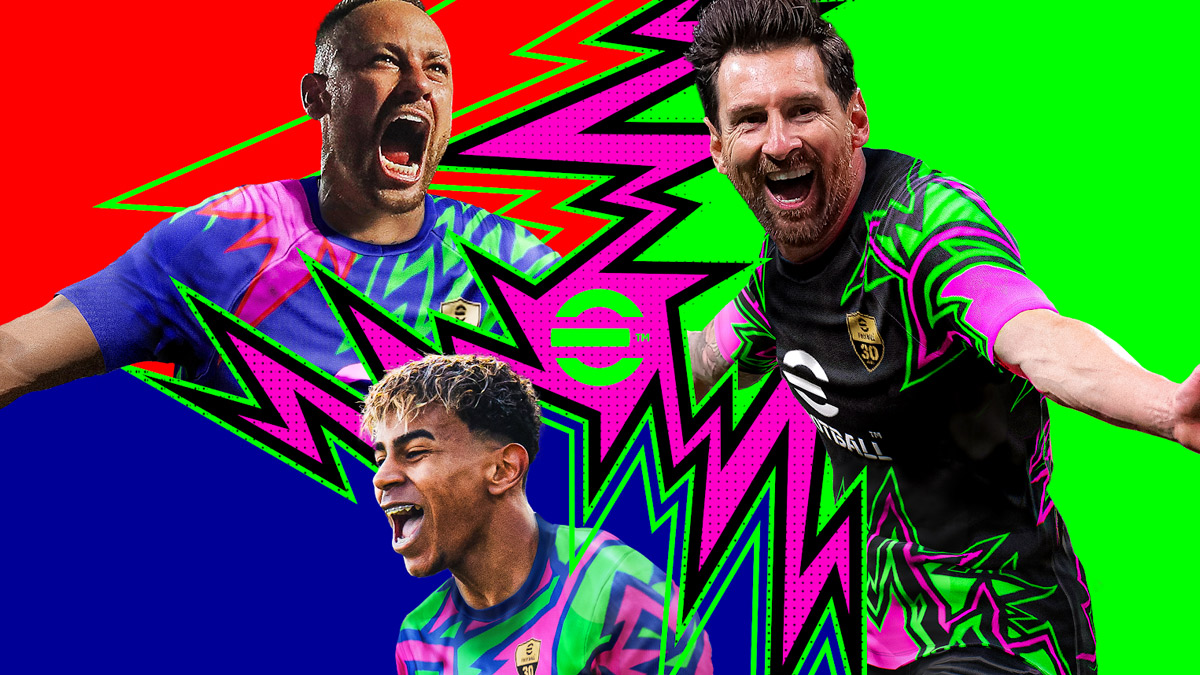
MUMBAI: When cricket meets football in the virtual world, even the biggest fans can’t help but score and Konami’s latest eFootball campaign in India has clearly hit the back of the net. Konami Digital Entertainment has successfully wrapped up its India campaign for eFootball, which brought together cricketers Rinku Singh and Varun Chakravarthy, actors Naslen Gafoor and Chandu Salim Kumar, and footballers Sahal Abdul Samad and Shubhasish Bose. The multi-star campaign generated strong excitement across gaming, football, and creator communities through social content, fan participation, and in-game engagement.
Building on the initial launch that featured a limited-time Lionel Messi card, the campaign united fan communities, lifestyle creators, football creators, and competitive eFootball influencers. It significantly expanded the game’s visibility and deepened engagement with fans across the country.
The campaign also saw thousands of entries submitted as part of its social media engagement challenge, reflecting high levels of community enthusiasm and active creator involvement.
Looking ahead, Konami plans to build on this momentum with more eFootball experiences for Indian fans as the FIFA World Cup 2026 approaches. With global attention on the tournament set to rise, India will remain a key market for deepening community engagement and bringing fans closer to the action.
In a country that lives and breathes sport, Konami has shown that mixing real-world stars with virtual thrills is a winning formula leaving fans eagerly waiting for the next goal.






