Gaming
Gaming on Reliance


MUMBAI: There’s a saying: a prophet is respected but in his own country. And that applies quite well to Reliance Games, the mobile gaming division of Reliance Entertainment (Digital). It has successfully been involved in developing games for a slew of Hollywood studios and has been struggling to get Indian film producers to invest in them.
The company recently launched the official mobile game of The Hunger Games: Catching Fire that released in the US on Friday. It is one of the first multi-player games to be developed in India and Reliance is hoping that it will gain traction. Just like its 17 October 2013 release — “Real Steel: World Robot Boxing” – did with seven million downloads in about a month.
Reliance Entertainment (Digital) CEO Manish Agarwal thinks the company’s gamble in the gaming business has worked well for them

Reliance Entertainment (Digital) CEO Manish Agarwal says that he is amazed with the strong response to Real Steel. “We were expecting 10 million downloads in three to four months’ time but I guess that will happen within 40-50 days,” he says, adding that the expectations from the recent game too are high because it’s different in itself as it can’t be played solo.
“Making just a multi-player game is a bold move for us,” explains Agarwal, who thinks that in India the game might not work well because of the rather low internet speeds, “But it has huge potential to work in countries like Korea, US, UK etc where MOGs are the norm.”
The company signed a deal with Lionsgate, the studio that has produced the movie, to develop the game earlier this year. Agarwal says that getting the deal wasn’t really difficult for Reliance.
“What has been an advantage for us is that we have become very close to many of the Hollywood studios with credible works like Snow White, Total Recall, Real Steel etc in our portfolio. The studios have a comfort level with us. And our game based on the movie After Earth (that was launched earlier this year) became a real advantage for us as the recent game is along the same lines and helped us close the deal with Lionsgate Films,” affirms Agarwal.
The deal was inked on a revenue-sharing basis. Agarwal thinks that a set-up like this works best for both the parties. “Unlike Bollywood that works largely on minimum guarantees, Hollywood is much more mature and the studios there look at gaming as an integral part of the entire process. They don’t take it just as a pre-launch marketing gimmick but look at building it as a franchise, which makes working with them much more exciting,” emphasises Agarwal, who thinks that in India something similar would happen when the gaming market becomes big.
“The Indian movie gaming industry is still very small. And we would only be able to ape Hollywood when the Indian movie guys truly believe that their movies will be played by millions and they see sizeable revenue coming out of it,” he explains.
Currently, Agarwal thinks that since the gaming industry is small, the question of revenue-sharing between the game developers and studios in India is completely out of tune as every producer wants to earn his or her pound of flesh.
“Once the movie guys see profit coming out of it, they will start spending. In Hollywood, they don’t hesitate in spending on games because there’s huge revenue coming out of it from markets like the UK, the US, Australia, Canada, Korea etc.”
Though the company has had both success and failure in the gaming business with something as popular as World Robot Boxing to a complete flop like Dancing With The Stars, Agarwal says that overall it has been an enjoyable journey.
“In a portfolio of business, we need to ensure that we maximise whichever is the hit and cover for the losses or failure and that’s what we are doing. Our gaming business will double this year, it has been really profitable giving us confidence to plan on a higher scale for next year,” says Agarwal.
After producing successful games this year in India, another positive that he has come across is that the company’s Indian team is capable of delivering a world-class product. “That has given us even more confidence to bring many other international projects to India. Today in India we don’t have any competition. We are far ahead of anybody else because the Reliance group has supported us in terms of investments as each of the games is anywhere between half-a-million to a million dollar. It’s a gamble in which we have succeeded,” he concludes.





Gaming
Konami concludes successful eFootball India campaign
Campaign featuring Rinku Singh, Varun Chakravarthy and other stars boosts engagement ahead of FIFA World Cup 2026.
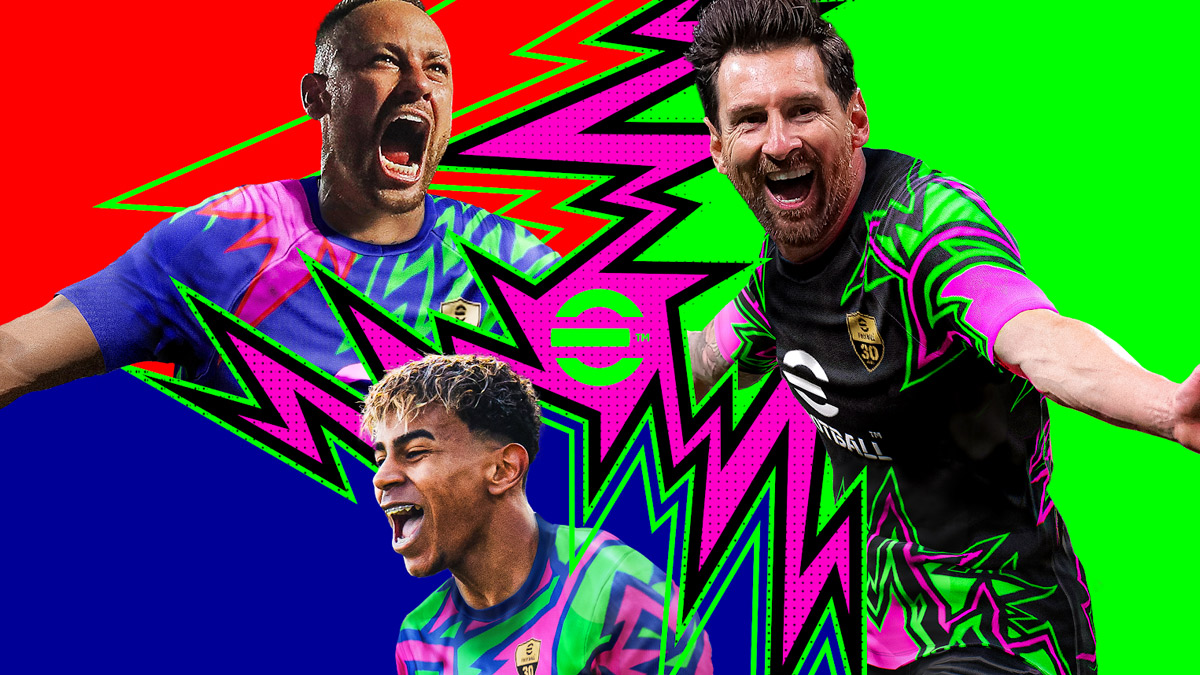
MUMBAI: When cricket meets football in the virtual world, even the biggest fans can’t help but score and Konami’s latest eFootball campaign in India has clearly hit the back of the net. Konami Digital Entertainment has successfully wrapped up its India campaign for eFootball, which brought together cricketers Rinku Singh and Varun Chakravarthy, actors Naslen Gafoor and Chandu Salim Kumar, and footballers Sahal Abdul Samad and Shubhasish Bose. The multi-star campaign generated strong excitement across gaming, football, and creator communities through social content, fan participation, and in-game engagement.
Building on the initial launch that featured a limited-time Lionel Messi card, the campaign united fan communities, lifestyle creators, football creators, and competitive eFootball influencers. It significantly expanded the game’s visibility and deepened engagement with fans across the country.
The campaign also saw thousands of entries submitted as part of its social media engagement challenge, reflecting high levels of community enthusiasm and active creator involvement.
Looking ahead, Konami plans to build on this momentum with more eFootball experiences for Indian fans as the FIFA World Cup 2026 approaches. With global attention on the tournament set to rise, India will remain a key market for deepening community engagement and bringing fans closer to the action.
In a country that lives and breathes sport, Konami has shown that mixing real-world stars with virtual thrills is a winning formula leaving fans eagerly waiting for the next goal.






