Gaming
Gaming ad spend hits $25bn as paid installs rise 10 per cent: AppsFlyer report


MUMBAI: Artificial intelligence has made building games faster, cheaper and easier. Standing out, however, has never been harder.
That is the central takeaway from The State of Gaming for Marketers – 2026 Edition, a new report by AppsFlyer that paints a picture of an industry bursting with content, cash and competition. The tools of creation are now widely available. Attention is not.
In 2025, paid installs for mobile games rose 10 per cent year on year, while ad impressions jumped 20 per cent. The reason is simple. AI has turbocharged development and creative production, allowing even small studios to churn out games and marketing assets at speeds once reserved for blockbuster titles. The result is a crowded marketplace where marketing muscle and data savvy matter more than ever.

“Production is no longer the problem,” the report suggests. “Attention is.”
Money is still flowing in. Global gaming user acquisition spend hit 25 billion dollars in 2025, up nearly four per cent from the previous year. But the geography of that spending is shifting. Almost half of all budgets still go to the United States, yet US spend actually fell five per cent as high costs make incremental growth harder to justify.
By contrast, markets such as India and Turkey are enjoying a surge. Spend jumped 19 per cent in India and 29 per cent in Turkey, reflecting cheaper scale and growing ad based monetisation. For marketers willing to look beyond traditional strongholds, opportunity is knocking loudly.
Genres are also moving in different directions. Casual games continue to command more than half of all acquisition budgets, but their Android spend dipped seven per cent as returns softened. Hypercasual titles remain heavily reliant on paid traffic, thriving on Android where costs are lower, but struggling on iOS where spend fell 14 per cent. Midcore games, meanwhile, are enjoying a renaissance on iOS, with budgets up 26 per cent year on year as publishers chase higher lifetime value players.
One of the most striking shifts comes from China based publishers. Their share of global gaming acquisition spend outside China rose 22 per cent to reach 35 per cent of the market. Once focused on domestic success, these companies are now aggressively expanding into Western and mature Asian markets. Growth in the US, UK, Germany and France shows that creative localisation is working, while gains in Japan and South Korea signal direct competition with long established local players.
Monetisation models are also evolving, albeit slowly. Around seven per cent more games adopted hybrid monetisation in 2025, combining in app purchases with advertising. Even so, fewer than a third of games currently use a hybrid approach. Developers are experimenting, not yet committing, as they search for the right balance between player experience and revenue resilience.
Behind the scenes, AI is becoming an everyday companion for gaming teams. Nearly half of all AI assistant queries are now about reporting and performance breakdowns. Hypercasual teams use AI for speed, checking what works and cutting what does not. Midcore and Casino teams dig deeper, asking AI to explain anomalies and interpret shifts that affect long term monetisation.
Creativity, however, remains the ultimate numbers game. Top spenders now produce between 2,400 and 2,600 creative variations every quarter, up as much as 30 per cent year on year. Smaller advertisers are scaling up too, while some mid tier players risk falling behind by cutting output. In a world awash with ads, testing velocity has become a competitive weapon.
The report also highlights growing diversification on iOS, where advertisers are spreading budgets across more media sources rather than squeezing existing channels. This broader mix offers incremental scale and some insurance against platform volatility.
Taken together, the findings point to a simple truth. AI has levelled the playing field on creation, but raised the bar on marketing. Winning in 2026 will not be about making more games. It will be about reading the data better, testing faster, and knowing where attention and value truly lie.
For an industry once defined by play, the real game now is focus.







Gaming
Konami concludes successful eFootball India campaign
Campaign featuring Rinku Singh, Varun Chakravarthy and other stars boosts engagement ahead of FIFA World Cup 2026.
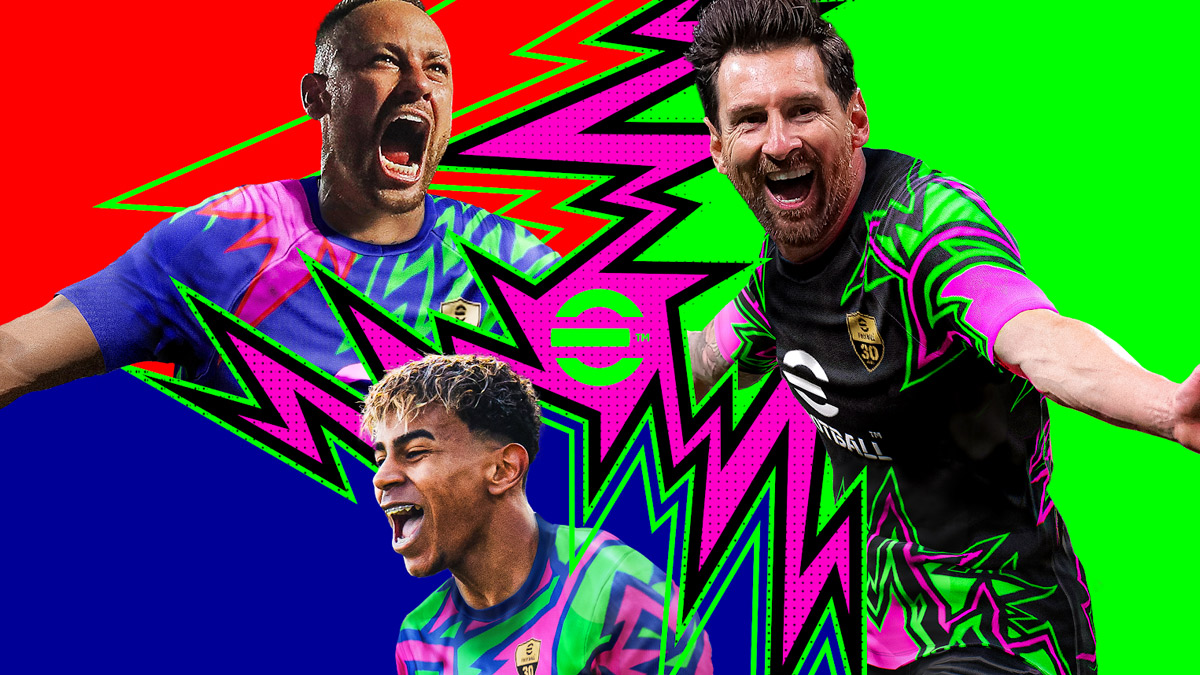
MUMBAI: When cricket meets football in the virtual world, even the biggest fans can’t help but score and Konami’s latest eFootball campaign in India has clearly hit the back of the net. Konami Digital Entertainment has successfully wrapped up its India campaign for eFootball, which brought together cricketers Rinku Singh and Varun Chakravarthy, actors Naslen Gafoor and Chandu Salim Kumar, and footballers Sahal Abdul Samad and Shubhasish Bose. The multi-star campaign generated strong excitement across gaming, football, and creator communities through social content, fan participation, and in-game engagement.
Building on the initial launch that featured a limited-time Lionel Messi card, the campaign united fan communities, lifestyle creators, football creators, and competitive eFootball influencers. It significantly expanded the game’s visibility and deepened engagement with fans across the country.
The campaign also saw thousands of entries submitted as part of its social media engagement challenge, reflecting high levels of community enthusiasm and active creator involvement.
Looking ahead, Konami plans to build on this momentum with more eFootball experiences for Indian fans as the FIFA World Cup 2026 approaches. With global attention on the tournament set to rise, India will remain a key market for deepening community engagement and bringing fans closer to the action.
In a country that lives and breathes sport, Konami has shown that mixing real-world stars with virtual thrills is a winning formula leaving fans eagerly waiting for the next goal.






