Broadband
Futures broadband, personalized services: experts

NEW DELHI: Top experts in telecom have forecast that soon converged networks would deliver personalized services like video-on-demand, music-of-choice and financial services to millions of users at affordable prices.
New games would be invented and played by multi-users simultaneously, and home entertainment and entertainment would be recast in so far unthinkable ways, the experts further sketched a picture for the future, while speaking at a session on ‘Access Technologies’ at the 12th Convergence India 2004 that opened in Pragati Maidan here today and also during the inaugural function.
Qualcomm Inc. group president Dr Paul Jacobs said added that technology has helped the common man to access cricket and data networks.

Recollecting a recent trip from Delhi to Agra, he said that while traveling from Delhi to Agra, he stayed ‘connected’ on his laptop all the way.
“Access makes a huge difference in the lives of people. This access to information and communications is an incredible power. So many changes are converging on devices around us. One needs to be an expert in all of these areas to make these changes. I am proud that Qualcomm has been able to
promote this convergence.”
He noted that India was fast moving ahead toward a leadership position in 3G. Pointing out that 3G networks have also converged, Dr Jacobs said, “The punch line today is to get the services rolled out and serve the market. India is poised for growth and is deploying 3G technologies.”
Discussing a vision for the future of telecom Dr Jacobs, Dr Yong-Kyung Lee, president and CEO of Korea Telecom and Dr Neil Ransom, chief technology officer of Alcatel, told the audience that India too would be partnering this global change. Their statement comes in the context of the big thrust in broadband and high-speed Internet that the departments of information technology and communications are planning to introduce in the country.
Telecom and broadcast regulator Telecom regulatory Authority of India (Trai) is also in the final stages of making its recommendations for broadband.
Dr Jacobs pointed out that 100 million people were already using 3G technology. Using Qualcomms Brew technology, globally uniform, but highly personalized killer applications were beginning to be built covering mobile TV, educational programs, traffic views and location information, among
other things.
“Everybody will be able to afford these services,” he assured. The emerging mobile Internet would be sensitive to locality and time, and always-on and always-with-you mode.
Dr Lee said that over 73 per cent of the households in Korea were connected online and 11 million people were using broadband, making Korea the largest broadband user in the world. Whats more cable TV was getting integrated with high-speed Internet to provide maximum coverage and services.
DSL and VDSL are being used for broadband traffic on copper lines, he said, explaining how the next-generation network would provide e-learning, e-health services, etc., on mobile terminals. He also described how new mass games were evolving using broadband mobile and being played in large
stadia.
“India has now taken up the word convergence and is on the road to IT progress. We are here at the show, looking at opportunities to connect with Indian operators,” he said.
According to Dr Neil Ransom, CTO, Alcatel, with the increasing capability of FTTH (fiber-to-the-home), broadband would be covering many services that would be both personalized and affordable.
He said Alcatels technology would provide converged video services.
Earlier, during the inaugural function, while pointing out the relevance of a show like Convergence India, Trai chairman Pradip Baijal said, “I admitted yesterday (at a pre-event function) that I used to have an inferiority complex vis-a-vis China in terms of tele-density and subscriber growth. We are excited about working on broadband. We will soon catch up with other countries as technologies are becoming cheaper and easy to access.”
BSNL CMD V P Sinha touched on the burgeoning telecom subscriber segment, adding that the total subscriber base, currently at 70 million in India, will soon cross the 100-million mark.
Exhibitions India Pvt. Ltd. MD Prem Behl and organizer of the event said, “Over the years, the event has become an annual event where industries and policy makers worldwide gather to frame policies and enhance business opportunities. We look upon BSNL as an institute of change, and as the largest telecom player in India as well as a global player.”




Broadband
ACT Fibernet elevates Aditya Singh to chief customer experience officer
Former senior vp to drive service, retention and delivery revamp
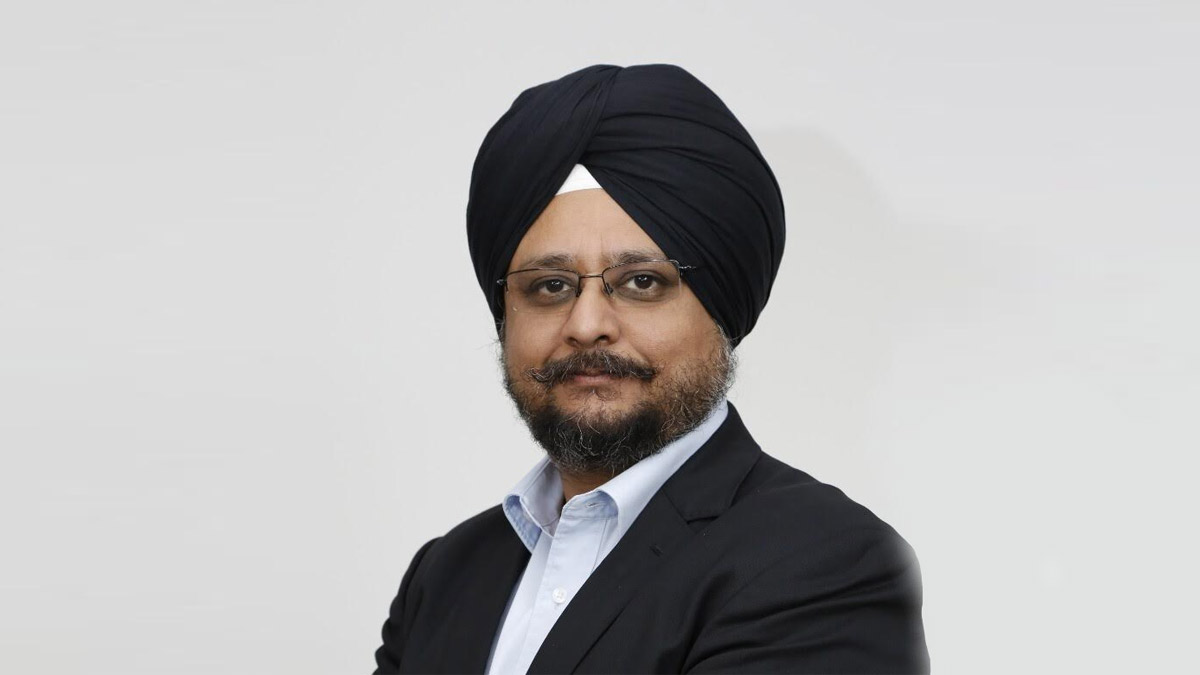
BENGALURU: ACT Fibernet has elevated Aditya Singh to chief customer experience officer, effective 1 January, 2026, as the broadband provider seeks to tighten its grip on service quality in an increasingly competitive market.
Singh, who previously served as senior vice-president – customer experience and loyalty at group level, will now join the executive committee and lead the company’s end-to-end customer transformation agenda.
The move gives him oversight of customer service, customer retention and service delivery, alongside a broader mandate to strengthen network resilience and field operations. The company said the reshuffle underlines its intent to deliver a “consistent, seamless and superior” experience to its 2.3m subscribers across more than 30 cities.
Headquartered in Bengaluru, ACT Fibernet, the consumer-facing brand of Atria Convergence Technologies Limited, is one of India’s largest wired internet service providers. It has built its pitch on high-speed connectivity and responsive customer support, at a time when fibre roll-outs and price wars are redrawing the broadband map.
In a statement, Singh said he was “deeply honoured” to take on the expanded brief and join the executive committee as the company sharpens its focus on simplifying customer touchpoints and turning subscribers into brand advocates.
The elevation signals a clear priority: in a crowded fibre market, customer experience is fast becoming the decisive battleground.