iWorld
Future Watch: Expectations from Indian OTT Industry in 2017

India has witnessed an over-the-top (OTT) explosion in 2016. The entry of leading international players, coupled with the rise of local OTT ventures, has only intensified the competition in a market earmarked for exponential growth.
Statistics underline why OTT is fast becoming the primary medium of entertainment consumption for Indian viewers. Over 65% of the 450+ million internet users in India are currently mobile-only, and the country is adding 6 million new internet users every month who are exclusively accessing digital connectivity through on a mobile phone.
With almost 2.1 billion people, or 28.7% of the world’s population, already estimated to own smartphones, the rate of smartphone adoption will continue to be robust across the globe with double-digit growth. Smartphones will also outstrip feature phones when it comes to sales and adoption. “Nearly 47.4% of mobile phone users own a smartphone at present. Keeping in mind the industry trends, smartphone users could very well outnumber feature phone users by the end of 2017.”

Nearly 47.4% of mobile phone users will possess smartphones by the end of this year. By the end of 2017, smartphone users will outnumber feature phone users. (Source: eMarketer)

Source: eMarketer

Source: iCube
Mobile is driving the growth for Internet in India; the country is predicted to be home to 640 million internet users and 700 million smartphone users by 2020 (Source: iCube). Online video content, as a result, is thriving; videos comprise 50% of total mobile data traffic at present. This clearly shows the potential that the Indian market is sitting on. The gold rush will continue in the future as well, as more viewers shift towards easy-to-use, on-demand services that offer cross-platform access.

The Indian OTT industry has been majorly driven by disruption. OTT Trends to watch for in 2017 (Source: MUVI):
LIVE Streaming:
As more consumers shift towards anytime, anywhere viewing experience, live streaming will continue to be in demand in 2017. To make the most of it, OTT platforms must have to leverage the following:
– Capture live on Ad-hoc/breaking stories (to capture the thrill)
– Live Sports & Events
– Linear TV schedule of the series programming (creating a VOD playout)
People are demanding more and more live experiences for their favorite content over-the-top, especially for top content such as news and sports. Studies suggest that viewers in fact demand this content later if they miss the live broadcast.
Sports live streaming saw impressive reception in the year 2016, with UEFA European Champions 2016 in France scoring massive viewership on SonyLIV’s web and mobile app platforms. With much more expected in the live streaming space in the coming year, the trend is here to stay.
AR, VR & 360 videos:
Videos in recent times have moved beyond their traditional boundaries and have become more immersive with the advent of augmented reality and virtual reality tech. With 4K becoming the hot new trend for device manufacturers, video qualities have improved dramatically. As a result, engaging life-like experiences through videos are no longer far-fetched fantasies, but are actively becoming a part and parcel of the overall entertainment viewing.
Original Content:
OTT players have started coming up with their own original series to hook viewers’ attention. This is generating impressive traction and has viewers switching over from the expensive Pay TV, thanks to the freshness and greater relevance of the content as well as the increased convenience of anytime, anywhere viewing.
Hybrid Platforms:
OTT right now, is at a position where e-commerce was a few years ago – new, and trending, and adapting to new ways of winning. Making OTT platforms capable of selling physical products along with audio and video service offerings is definitely going to be an upward trend in 2017 due to the synergy between the two sectors. A prime example of this is Amazon, an e-commerce company, which has now jumped into video streaming. Allowing free shipping of Amazon products on Prime Video memberships has very quickly allowed the company to transform most of its e-commerce consumers as streaming service subscribers.
Rural will drive the internet growth and local languages content will rise:
India is estimated to have 250 million rural internet users, while non-metros are driving 60% of the overall e-commerce growth. Nearly 43% of internet users are non-English, a number which is estimated to grow to 62% by 2020. This could see a tangible increase in regional language-based content available on the digital medium, as more and more OTT platforms and production houses develop entertainment tailored to meet the specific requirements and sensibilities of their regional audiences.

Source: IAMAI India Internet Report, Indian Readership Survey
Micro transactions & cashless transactions:
According to a Frost & Sullivan report, there are 66 million unique connected video viewers in India, of which 1.3 million are paid video subscribers. These video subscription numbers, however, are not absolute, and fluctuate drastically every month. But with the country heading towards becoming a cashless economy and colossal changes expected in the way netizens make their day-to-day transactions, the number of OTT subscribers is expected to grow and stabilize, even as the number of unique online video viewers grows to 355 million by 2020.
E-payments and mobile wallets are getting more popular among the millennials in the country. Digitization of cash will accelerate over the next few years. Non-cash payments, which today constitute 22% of all consumer payments, will overtake cash transactions by 2023.
Digital payments instruments will drive the growth in non-cash payments, according to a Google BCG Report. Micro-transactions will form a substantial portion of the industry, with over 50% of person-to-merchant transactions expected to be under INR 100 according to the study. The report also predicts that the value of remittances and money transfer that will pass through alternate digital payment instruments will double to 30% by 2020.

Source: Google – BCG
TV ad revenue to shift to Digital by 2017 in Asia-Pacific
Net advertising revenue in the Asia-Pacific has grown at 5.8% in 2016 and is expected to increase at a compound annual growth rate (CAGR) of 5.5% till 2020. This reflects stable but moderate growth across both mature and emerging markets in the region.
India and China will continue to be the fastest growing ad markets in the region, expanding in excess of 10% and 8% respectively according to a new report by Media Partners Asia, an advisory, research, and consulting firm. The share of digital media in the advertising market in Asia-Pacific is projected to overtake that of television by 2017 and increase to 44.2% by 2020, up from 30.7% in 2015. The biggest contributors to this growth will be Australia, China, Korea, Japan, and Taiwan.
Although television will remain a critical advertising medium, its regional advertising share will decline as ad spending in Australia and China shifts to digital. However, television will continue to be the biggest advertising medium in key markets such as India, Japan, and Korea even in 2020. The Media Partners Asia report forecasts that over the next five years, the fastest growing markets in Asia-Pacific will be India at 10.7%, China at 8.4% and Indonesia at 8.2%. In 2015, the net advertising revenue in Asia-Pacific grew by 5.3%, the slowest rate of growth since 2009. Advertising expenditure growth continued to remain slow in Indonesia and contracted in Singapore, Malaysia, and Hong Kong.
Social Platforms
Mobile video accounts for 50% of mobile traffic around the world and, by 2021, video will account for 70% of the overall mobile internet traffic. (Source: Ericsson Mobility Report).
1 out of 8 people around the world accesses Facebook on a mobile phone at least once a day. (Source: BI Intelligence estimates, Facebook)
Snapchat is the up-and-coming disrupter. It isn’t just mobile-first; it is mobile-ONLY and is witnessing exponential growth in its mobile audience. (Source: Snapchat, BI Intelligence estimates)
Skype, WhatsApp video call has brought the world and its people closer to one another. LIVE serves the same purpose, allowing brands an opportunity to add personality and a personal touch to their communication. LIVE comes as a breath of fresh air to engage with dormant audiences and boost engagement. From a brand’s point of view, this can be a way of showing people what actually happens behind the scene rather than pushing out branded content all the time. This will allow them to tap Audiences which might have otherwise been inaccessible to them. For example, while only a few thousands could attend the Coldplay concert in India, millions could view it on the LIVE broadcast. Additionally, when a brand goes LIVE, it gives an assurance to audiences that there is no gimmick involved and everything that is being showcased is true, which adds credibility. With LIVE, the brand and consumer relation stands to evolve. Facebook LIVE has started a new trail of information share from brands. Some good examples of LIVE video are the El Clasico LIVE voting on SonyLIV, which got a reach of 1 million organically in only 90 minutes while the match was live. Multiple creative uses of the feature can be seen in the coming year, as marketers will look to use it differently to engage their target audiences. With LIVE expected to evolve further in future iterations, brands and marketers can look forward to exciting times ahead.
Cord Cutting:
The increased digitisation of entertainment means that cord cutting will continue to grow in the coming year as well. One in every four millennials does not subscribe to pay TV, and 13% have never used a pay TV subscription. Digital TV Research estimates that the number of pay TV subscribers in Canada and the U.S. will fall, while Statista predicts that there will only remain 96.4 million pay TV households by 2019.
People have been ditching their pay TV connections due to the lack of interesting content on-demand and the high costs of subscriptions. OTT platforms, by providing viewers the flexibility of accessing their favourite content at their fingertips, anytime, anywhere, have been winning this battle.
On-demand platforms are adding TV programs to their bundles, bringing in a better content library of old as well as original programming, localizing in niche territories, and keeping up with technological innovations such as 4K, AR, VR and 360-degree video production. This will allow them to leapfrog appointment-based TV broadcasters and establish OTT platforms as the default medium of entertainment content consumption.
 |
(Abhishek Joshi is Sony Pictures Networks India VP & Head – Marketing & Analytics, Digital Business. The views expressed here are personal, and Indiantelevision.com need not necessarily subscribe to them.)
|






iWorld
Hari Om OTT premieres Bhagwan Jhulelal Sai series
First devotional show on Jhulelal Sai streams in Sindhi and Hindi.
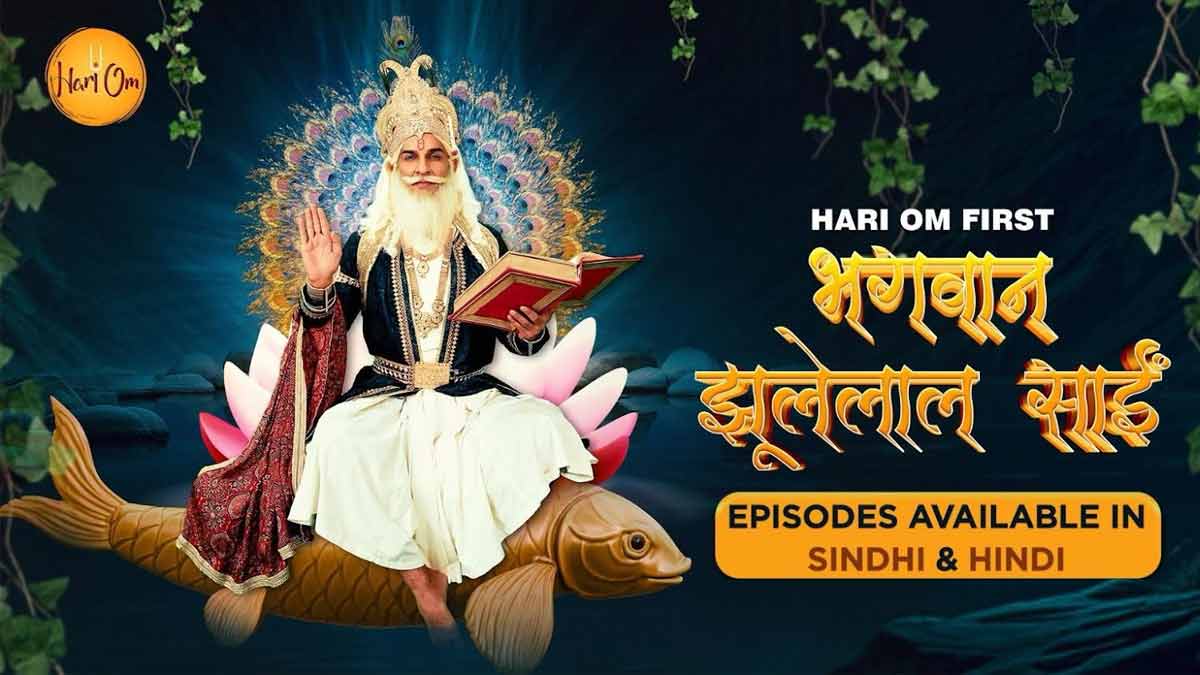
MUMBAI: Hari Om OTT just turned the tide for devotional dramas because when Jhulelal Sai steps onto the small screen, even the waves start streaming in two languages. Hari Om OTT, India’s leading devotional streaming platform launched in June 2024, has premiered Bhagwan Jhulelal Sai, a milestone series that marks the first-ever show dedicated to the revered deity of the Sindhi community. The show, starring Manish Raisinghani as Jhulelal Sai / Varun Dev and Parag Tyagi as Mirkh Shah, launched on Jhulelal Jayanti and is available in both Sindhi and Hindi.
The series chronicles the life, journey and teachings of Bhagwan Jhulelal Sai, blending mythology with historical elements to deliver an authentic and inspiring narrative for global audiences.
Manish Raisinghani said, “Portraying Jhulelal Sai and Varun Dev was not just a role, it was a spiritual journey and a moment of immense pride for my family and community. This one holds a special place in my heart, especially since the show is coming in our very own Sindhi language as well.”
Parag Tyagi added, “Jhulelal Sai is the first-ever show that beautifully blends mythology with history. Hari Om has achieved something truly special by bringing the stories of our gods and goddesses to audiences in their authentic language.”
Hari Om OTT CEO Avinash Dugar said, “With Bhagwan Jhulelal Sai, we’re excited to share this inspiring story with the Sindhi community and beyond. We will continue to showcase the stories of Indian culture and Sanatan Dharma to the world, presented in their own language.”
The premiere builds on Hari Om OTT’s track record of acclaimed devotional titles including Mata Lakshmi, Jai Jagannath, Shri Tirupati Balaji, Mata Saraswati and Chandra Dev, all focused on celebrating India’s cultural and spiritual legacy through high-quality storytelling.
In a streaming landscape crowded with fiction, Hari Om OTT is quietly proving that the most powerful stories aren’t made up, they’re the ones that have already inspired generations, now delivered straight to your screen in the language of devotion. Bhagwan Jhulelal Sai is now streaming on Hari Om OTT.